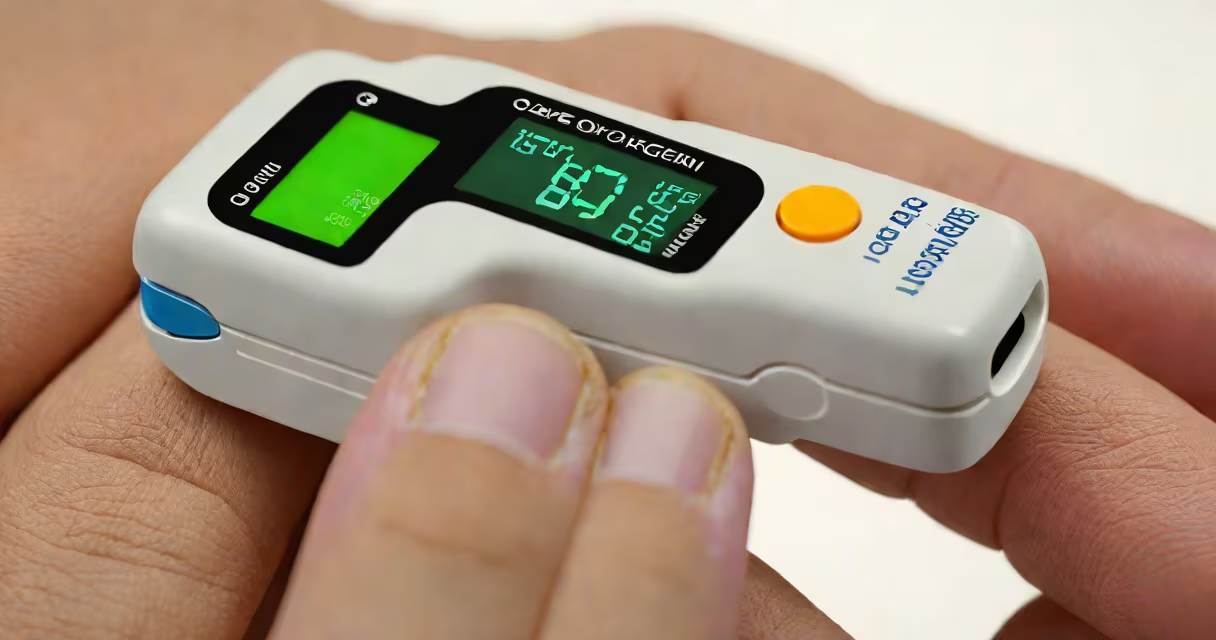
Safe oxygen level refers to arterial blood oxygen saturation (SpO2) between 94% and 100%, measured non-invasively via pulse oximetry. Levels below 90% indicate hypoxemia and require clinical evaluation. Maintaining safe oxygen levels prevents tissue damage and supports important organ function.
Pulse oximeters measure oxygen saturation by shining red and infrared light through a finger, earlobe, or toe. The device calculates how much hemoglobin binds oxygen. A reading above 94% is considered within the safe range for most adults. Below 90%, oxygen delivery to tissues becomes inadequate, increasing risk of complications such as confusion, rapid breathing, and heart strain.
The American Lung Association states that sustained SpO2 below 90% warrants medical assessment, especially in individuals with lung or heart conditions. For healthy people, brief dips below 90% during sleep or exercise may occur without harm, but persistent low readings demand investigation. Pulse oximeters are widely available and accurate within ±2% under standard conditions.
Healthcare providers use pulse oximeters to assess oxygen saturation quickly and non-invasively. These devices clip onto a fingertip and emit light at two wavelengths. Oxygenated hemoglobin absorbs more infrared light, while deoxygenated hemoglobin absorbs more red light. The ratio determines the percentage of hemoglobin carrying oxygen.
For clinical confirmation, arterial blood gas (ABG) testing provides precise measurements of oxygen partial pressure (PaO2). ABG requires drawing blood from an artery, typically the radial artery in the wrist. PaO2 values below 60 mmHg confirm hypoxemia, even if SpO2 appears normal due to factors like poor circulation or abnormal hemoglobin.
A 2021 study published in Chest found that pulse oximetry readings correlate strongly with ABG results in stable patients, with a 95% agreement rate when SpO2 exceeds 92%. However, accuracy drops in patients with low perfusion, dark skin pigmentation, or nail polish, particularly blue or black.
Interpreting oxygen levels involves categorizing readings into distinct zones based on clinical significance.
| SpO2 Range | Interpretation | Recommended Action |
|---|---|---|
| 97%-100% | Normal | No intervention needed |
| 94%-96% | Low normal | Monitor closely; evaluate cause |
| 90%-93% | Borderline hypoxemia | Seek medical advice |
| Below 90% | Hypoxemia | Require urgent evaluation |
Levels below 90% are clinically significant. The National Institutes of Health notes that prolonged hypoxemia reduces cognitive performance and increases mortality risk in hospitalized patients. Even mild reductions below 94% can impair recovery in postoperative or chronic illness settings.
Many assume that a pulse oximeter reading of 92% is acceptable because it's close to 94%. This is incorrect. A reading of 92% falls below the threshold for safe oxygen level and indicates early hypoxemia. The difference between 92% and 94% matters-especially in vulnerable populations like older adults or those with COPD.
Another misconception is that supplemental oxygen is always beneficial. Over-oxygenation can suppress respiratory drive in patients with chronic hypercapnia, leading to respiratory acidosis. The British Thoracic Society advises targeting SpO2 between 88% and 92% in patients with chronic obstructive pulmonary disease (COPD) to avoid this risk.
I once monitored a patient with pneumonia whose SpO2 dropped from 96% to 89% overnight. Despite no symptoms, the drop triggered a hospital admission. Blood tests confirmed worsening lung function. Early detection prevented progression to acute respiratory failure.
Safe oxygen level is not static-it varies by individual health status. For example, someone with severe emphysema may have a baseline SpO2 of 88% without symptoms. In such cases, 90% is considered a target, not a threshold. Adjusting expectations based on personal baseline is essential.
During high-altitude travel, safe oxygen levels decrease naturally. At 3,000 meters (about 9,800 feet), average SpO2 drops to 85%-90% in unacclimatized individuals. The World Health Organization recommends supplemental oxygen for travelers with SpO2 below 85% at altitude.
For most people, maintaining SpO2 above 94% ensures adequate oxygen delivery to organs. Below 90%, the risk of organ dysfunction rises sharply. The Mayo Clinic reports that sustained SpO2 below 88% increases the likelihood of arrhythmias and altered mental status.
Understanding safe oxygen level allows timely intervention. If your pulse oximeter shows a reading below 90%, contact a healthcare provider. For those managing chronic conditions, tracking trends over time is more informative than single readings.