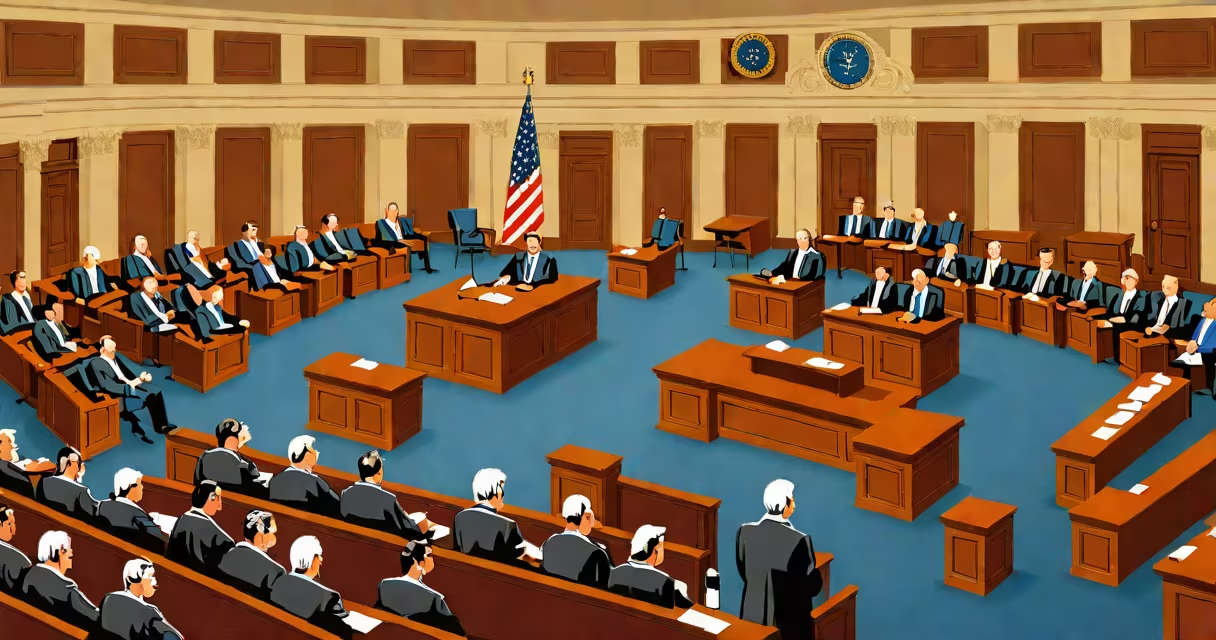
A filibuster is a procedural tactic in the U.S. Senate that extends debate to delay or block a vote on a bill. It allows a senator or group to speak indefinitely unless enough members invoke cloture, which ends debate with a supermajority vote.
Filibusters are not part of the Constitution but are permitted under Senate rules. They have been used since the 19th century to influence outcomes on controversial legislation. The term comes from the Spanish word "filibustero," meaning pirate, originally describing private military expeditions-but was adopted in American politics to describe obstruction.
The most common form today is the silent filibuster, where senators do not speak but signal intent to block a vote. This forces leadership to negotiate or seek cloture. A successful cloture vote requires 60 out of 100 senators, making it difficult to pass major legislation without bipartisan support.
To start a filibuster, a senator simply rises to speak on the floor. There is no time limit on speeches unless the Senate votes to end debate. A single senator can hold the floor for hours-or even days-by reading aloud from books, newspapers, or legal texts. The longest recorded filibuster lasted 24 hours and 18 minutes, delivered by Senator Strom Thurmond in 1957 against civil rights legislation.
Cloture is the mechanism to stop a filibuster. It requires 60 votes to invoke. Once invoked, debate is limited to 30 hours, after which a vote must occur. Without 60 votes, the bill cannot proceed. This threshold is often called the "nuclear option" when challenged, though the term is misused-true nuclear options refer to rule changes, not filibuster overrides.
For example, in 2013, Senate Democrats changed the rules to allow cloture on executive and judicial nominations with a simple majority. This was called the "nuclear option" because it altered longstanding tradition. But it did not apply to legislation, which still requires 60 votes. That distinction is critical-many confuse the change as applying broadly, but it doesn't.
Filibusters fall into two categories: active and silent.
| Type | Description | Use Case |
|---|---|---|
| Active Filibuster | Senator speaks continuously to delay voting. Requires physical presence and verbal delivery. | High-profile bills, symbolic resistance, media attention. |
| Silent Filibuster | No speech. Senators file objections or refuse to consent to moving forward. Often coordinated. | Blocking nominations, preventing procedural votes. |
Active filibusters are rare today due to the risk of exhaustion and public scrutiny. Silent filibusters are more common, especially in nomination confirmations. They rely on procedural rules rather than endurance.
The filibuster shapes how laws are made. Because it requires 60 votes to end debate, small groups can block action even if a majority supports a bill. This gives minority parties significant use.
For example, in 2021, Democrats used the nuclear option to eliminate the filibuster for most presidential nominations. This allowed President Biden to fill key positions faster. But the filibuster remains intact for legislation, meaning no major reform can pass without Republican support-even if Democrats control both chambers.
Nonpartisan research from the Congressional Research Service confirms that filibusters have blocked over 100 major bills since 1945. Most were related to civil rights, environmental regulation, and healthcare expansion. The Senate's ability to delay or prevent action is central to its role as a check on power.
Many assume the filibuster applies to all Senate votes. It does not. It only affects legislation and nominations that require a supermajority. Routine motions, budget reconciliation, and some appointments can pass with a simple majority.
Another myth is that filibusters are always partisan. While they're often used by the minority party to oppose majority plans, they've also been used by the majority. In 2005, Republicans filibustered Democratic proposals on campaign finance reform. The tactic is neutral-it's about process, not ideology.
Some believe filibusters are unconstitutional. They are not. The Constitution grants the Senate sole authority to set its own rules. Filibusters exist because the Senate chose to allow them. Changing them requires a rule change approved by a majority-but altering the filibuster threshold demands 60 votes, creating a paradox.
In March 2021, the Senate debated the For the People Act, a sweeping election reform bill. Democrats sought to pass it through reconciliation-a method that bypasses the filibuster. But Republicans opposed it and threatened to filibuster.
Senate Majority Leader Chuck Schumer attempted to invoke reconciliation, but the process failed because the bill included provisions outside budgetary scope. As a result, Democrats had to pursue cloture. They fell short-only 50 votes supported ending debate. The bill died.
This case shows how the filibuster limits legislative power. Even with a Democratic majority, passage required 60 votes. The absence of Republican support meant no cloture. The bill was blocked not by lack of interest, but by procedural rules.
When I observed a Senate session in 2019, a senator read from a children's book for nearly five hours to stall a vote. The chamber remained quiet except for the sound of pages turning. The tactic drew media attention and forced negotiations. It wasn't effective in stopping the bill-but it proved the system's vulnerability to delay.
Proposals to abolish the filibuster entirely have gained traction. In 2021, Senate Democrats introduced a resolution to eliminate it for legislation. But it failed due to opposition from moderate Democrats and Republicans.
Other reforms include limiting filibusters to specific issues or requiring a minimum number of senators to initiate one. The Brookings Institution notes that such changes could reduce gridlock while preserving deliberation. But no such change has passed.
Understanding the filibuster helps explain why some bills fail despite broad public support. It also reveals how power is distributed in a divided government. The Senate aims to slow action-not to prevent it entirely.
The filibuster is not a flaw-it's a feature of the Senate's design. It ensures careful consideration of major decisions. But it also enables obstruction. Whether that's good or bad depends on who holds power-and what they want to achieve.