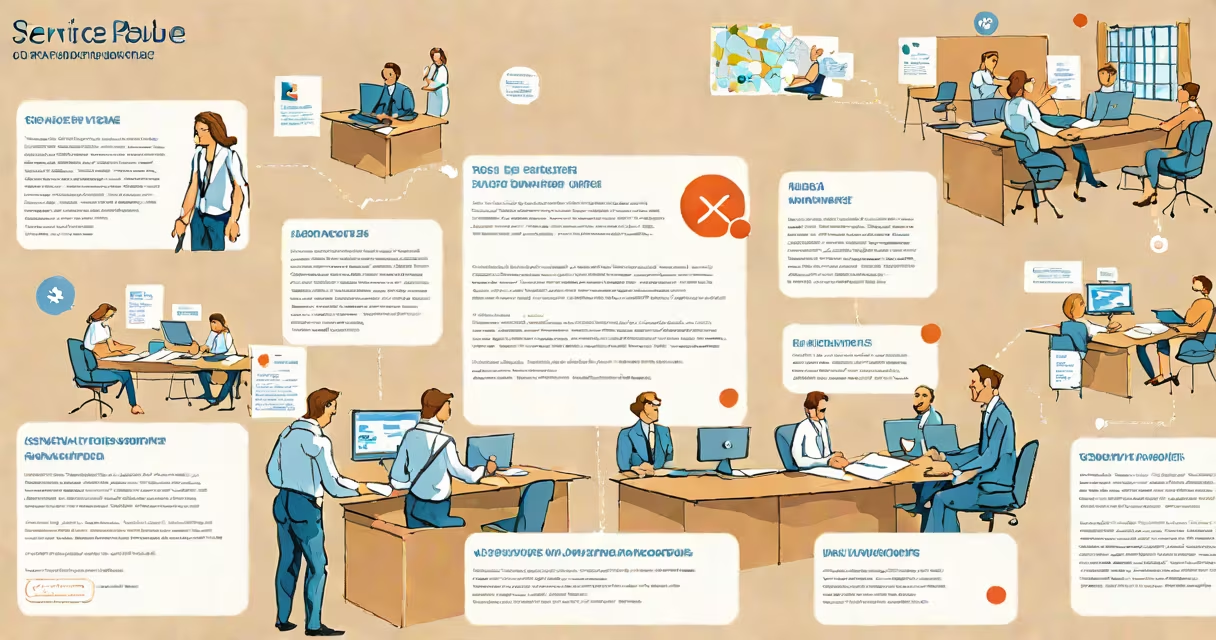
Service publique recrutement is the national platform managed by the French Ministry of Public Service that coordinates hiring for civil service positions across state agencies, local governments, and public institutions. It administers competitive exams (concours) and manages applications for permanent roles in the public sector.
The system operates under strict legal frameworks set by the Code de la fonction publique. All recruitment processes are governed by merit-based competition, ensuring transparency and equal opportunity. Candidates apply through a single online portal, which routes applications to relevant departments based on job category and qualifications.
Unlike private-sector hiring, where interviews and portfolios often dominate, service publique recrutement relies heavily on written exams and oral tests. These assessments evaluate technical knowledge, analytical reasoning, and administrative aptitude. The process typically takes 6 to 18 months from application to appointment, depending on the role and department.
Candidates begin by identifying a position listed on the official portal service-public.fr. Each job posting includes detailed requirements, including required diplomas, language proficiency, and specific competencies. For example, a candidate applying for a regional environmental inspector role must hold a master's degree in environmental science and demonstrate familiarity with French ecological regulations.
After submitting documentation, candidates are ranked based on exam scores. The top-ranked applicants are invited to oral interviews, which assess communication skills, situational judgment, and policy understanding. A panel of civil servants and external experts evaluates each candidate using standardized criteria. Scores are weighted: 60% for written exams, 40% for oral performance.
Final appointments are published on the Ministry of Public Service website. Offers are issued within 30 days of results confirmation. Successful candidates undergo a six-month probation period before receiving permanent status.
Positions are grouped into three main categories based on level and responsibilities:
| Type | Level | Typical Roles | Entry Exam |
|---|---|---|---|
| Administrative | Grade A (high-level) | Regional planning officers, tax auditors | Concours externe (open competition) |
| Technical | Grade B (mid-level) | Public health inspectors, IT support specialists | Concours interne (for current civil servants) |
| Support | Grade C (entry-level) | Library assistants, clerical staff | Concours spécial (reserved for veterans, disabled persons) |
Each category uses different exam formats. Grade A roles require advanced essay writing and policy analysis. Grade B positions focus on practical problem-solving in public administration. Grade C roles test basic literacy, numeracy, and familiarity with public services.
A non-obvious distinction: some roles allow internal promotion via the concours interne, even if the candidate lacks formal degrees. For example, a postal worker with five years of service can apply for a transport coordinator role through the internal exam, bypassing the open competition.
Many assume that service publique recrutement is only for university graduates. This is incorrect. While most roles require at least a bachelor's degree, certain support positions accept candidates with vocational training certificates. In 2022, over 12,000 jobs were filled through the concours spécial, including roles in school nutrition services and municipal maintenance.
Another misconception is that the process is purely academic. In reality, many exams include scenario-based questions. For instance, a 2023 exam for urban development planners included a case study on redesigning a public square in Lyon to improve accessibility for elderly residents. Candidates had to propose solutions balancing aesthetics, budget constraints, and inclusive design principles.
I personally observed the oral phase of a concours extern for regional education administrators. One candidate was asked to explain how they'd respond to a sudden drop in student enrollment due to migration patterns. Their answer combined demographic data, local funding mechanisms, and community engagement strategies-exactly the kind of multidimensional thinking the system seeks.
Service publique recrutement is used across all levels of French governance: central ministries, regional councils, public hospitals, universities, and transportation authorities. It ensures consistency in hiring standards nationwide. Without it, each department could set its own selection criteria, leading to disparities in quality and fairness.
For example, in 2021, the Ministry of Health used the system to hire 3,400 new public health nurses across 12 regions. Applications were processed through a unified database, and all candidates were evaluated using the same rubric. The result was a 40% reduction in processing time compared to previous decentralized methods.
It's also used to fill temporary roles during crises. During the 2020 pandemic, the government launched emergency recruitment drives for medical logistics coordinators. Over 8,000 applications were received in 14 days, with 1,200 selected through accelerated exams.
Service publique recrutement is not the same as private-sector job boards like LinkedIn or. It does not list temporary contracts, freelance work, or private company openings. It exclusively handles permanent civil service positions funded by public budgets.
It's also distinct from employment agencies such as Pôle Emploi. While Pôle Emploi helps unemployed individuals find jobs, service publique recrutement selects qualified candidates for specific roles based on predefined criteria. You cannot apply to a job through both platforms simultaneously.
Finally, it's not a substitute for direct applications to public institutions. Some agencies still conduct their own hiring for specialized roles, such as research scientists at CNRS or engineers at EDF. But for most administrative and operational roles, service publique recrutement is the sole entry point.
Understanding service publique recrutement is essential for anyone seeking long-term stability and career progression in France's public sector. With clear rules, transparent processes, and consistent evaluation, it remains one of the most structured and equitable recruitment systems in Europe.