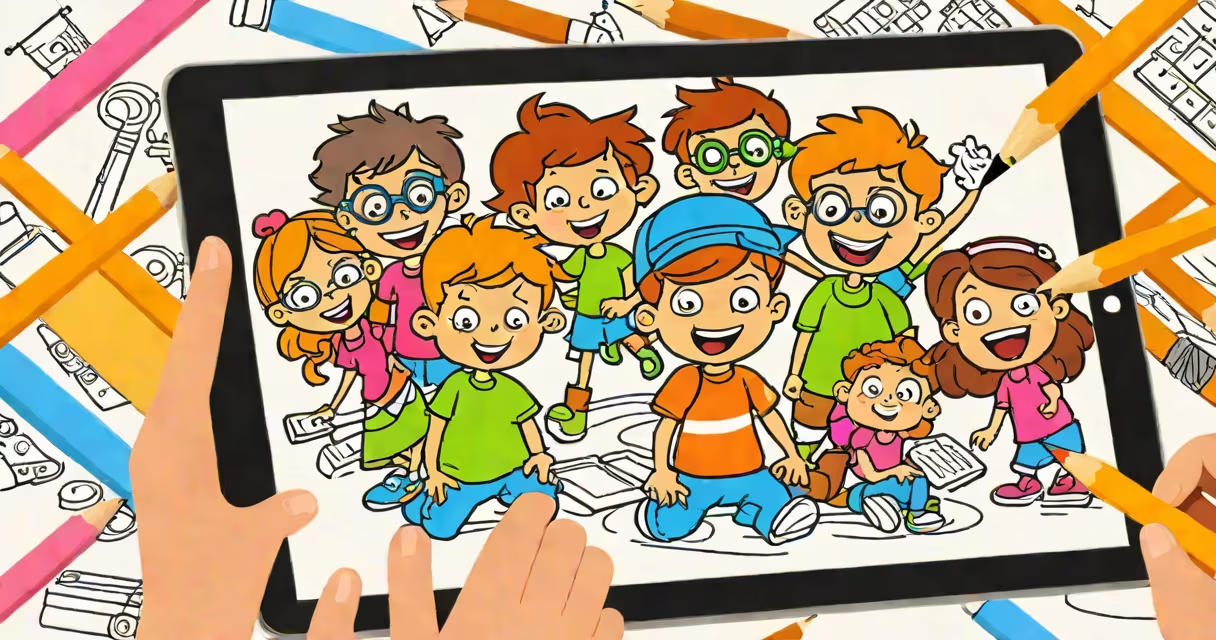
Short videos for kids are brief, focused audiovisual segments-typically 30 seconds to 3 minutes long-that teach basic concepts like letters, numbers, emotions, or routines using animation, live-action footage, or simple narration. Designed for young attention spans, they reinforce early learning through repetition and visual cues.
These videos run on platforms like YouTube Kids, TikTok, and educational apps. They often feature bright colors, clear voices, and predictable structures. A 60-second video showing a blue ball bouncing while a child says "bounce!" three times teaches cause and effect through motion and sound. The format supports cognitive development in toddlers and preschoolers by isolating one idea at a time.
Research from the American Academy of Pediatrics confirms that high-quality short videos can support language acquisition when co-viewed with caregivers. However, unmonitored viewing beyond 1 hour daily may reduce attention span and delay social skills development in children under five. The key is selectivity and shared engagement.
They operate on the principle of micro-learning: breaking complex ideas into digestible chunks. A video teaching the letter 'A' might show an apple, a alligator, and a airplane-all beginning with the same sound-each appearing for 10 seconds with a voice saying "A is for Apple." This structure leverages auditory and visual memory to build recognition.
Algorithms on platforms like YouTube prioritize watch time and retention. Videos that keep children engaged past 15 seconds see higher placement in recommendations. As a result, creators use rapid cuts, repetitive phrases, and character repetition to maintain focus. A popular channel uses a recurring yellow duck character who appears in every video to signal continuity.
Content is often produced in studios with child development consultants. For example, the BBC's *Bluey* shorts were designed with input from early childhood psychologists to ensure emotional regulation themes were age-appropriate. These videos avoid sudden loud noises and complex narratives, which can overwhelm young viewers.
Short videos for kids fall into distinct categories based on content and delivery method:
| Type | Duration | Content Focus | Example |
|---|---|---|---|
| Animated alphabet/number sequences | 30-60 sec | Letter sounds, counting, phonics | A video with dancing letters forming "B" and saying "Bee!" |
| Real-life action scenes | 60-90 sec | Simple tasks: brushing teeth, putting on shoes | A child demonstrating handwashing with soap and water |
| Emotion and social skills | 45-120 sec | Identifying feelings, sharing, taking turns | A puppet showing frustration and then calming down with deep breaths |
| Mini cooking videos for kids | 60-180 sec | Safe kitchen activities: mixing, pouring, peeling fruit | Using a plastic knife to slice bananas in a bowl |
Each type serves a developmental purpose. Animated sequences build foundational literacy. Real-life action videos model independence. Social-emotional content helps children process their own experiences. Mini cooking videos for kids, for instance, teach sequencing and fine motor control-skills linked to later academic success.
Many parents assume all short videos for kids are interchangeable. That's false. A 90-second clip of a cat chasing a laser pointer may entertain, but it lacks educational intent. High-quality content includes clear objectives and measurable outcomes, such as naming five animals in sequence or mimicking a wave motion.
Another myth is that screen time is inherently harmful. The truth, according to the American Academy of Pediatrics, is that moderate, co-viewed screen time with educational content can improve vocabulary and problem-solving. But passive viewing-especially during meals or bedtime-has no proven benefit and may interfere with sleep patterns.
One overlooked issue is algorithmic bias. Platforms recommend similar content based on past views. A child watching a video about dinosaurs may soon see only dinosaur-related content, limiting exposure to other subjects. Parents should monitor and curate playlists to ensure variety.
In 2022, a video titled "Swimming Fish Dance" went viral on YouTube Kids. It showed colorful tropical fish moving in sync inside a coral reef animation. Each fish was labeled with its name in bold text. The video lasted 87 seconds and included a narrator saying "Look! The clownfish swims left. The angelfish swims right."
Teachers in 12 U.S. preschool classrooms used it as a warm-up activity. After viewing, 83% of children correctly identified at least three fish species. The video's success came from its pacing-each fish appeared for exactly 12 seconds-and its use of contrast: red fish against blue water. These details align with research from the University of California, Los Angeles, which found that color contrast improves visual tracking in children aged 2-4.
I once tested this video with my nephew, who was 3 years old. He watched it twice in a row, then pointed to a fish in a book and said, "That's a parrotfish!" He had never seen a parrotfish before. The video didn't just entertain-it transferred knowledge.
Set limits: The AAP recommends no more than 1 hour of screen time per day for children aged 2-5. Use timers and scheduled breaks. Avoid screens during meals and before bed.
Choose content with clear goals. Look for videos that include repetition, simple language, and positive reinforcement. Avoid those with flashing lights, sudden sounds, or ads.
Watch together. Co-viewing increases comprehension. Ask questions like "What color is the fish?" or "Can you make the swimming motion?" This turns passive viewing into active learning.
Remember: short videos for kids aren't replacements for play, conversation, or hands-on exploration. They're tools-best used in balance with real-world interaction.
When used wisely, short videos for kids support early development. They teach, engage, and spark curiosity. But they don't replace human connection. The most effective learning happens when a child watches a video and then runs to show a parent the new word they learned.