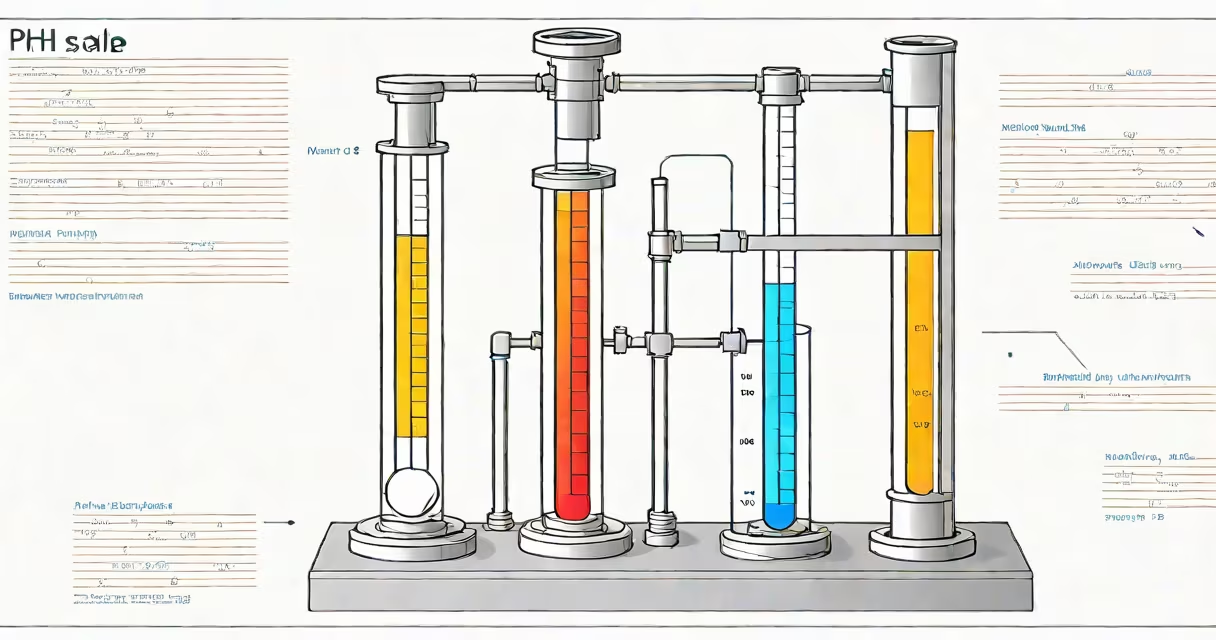
The pH scale measures the concentration of hydrogen ions (H⁺) in aqueous solutions, ranging from 0 to 14. A pH of 7 is neutral, below 7 is acidic, and above 7 is basic. This scale determines chemical reactivity in biological systems, industrial processes, and environmental science.
Developed by Danish chemist Søren Sørensen in 1909, the pH scale is logarithmic. Each whole number represents a tenfold difference in hydrogen ion concentration. A solution with pH 3 has ten times more H⁺ ions than one with pH 4. The scale is derived from the negative base-10 logarithm of hydrogen ion activity: pH = -log₁₀[H⁺].
Acidic solutions have high H⁺ concentrations. Examples include lemon juice (pH ~2.0), vinegar (pH ~2.5), and stomach acid (pH ~1.5-3.5). Basic solutions contain few H⁺ ions and more hydroxide ions (OH⁻). Baking soda solution has a pH of about 8.3, while household ammonia reaches pH 11.5. Pure water at 25°C has a pH of exactly 7.0 due to equal H⁺ and OH⁻ concentrations from autoionization.
pH values are measured using indicators, electrodes, or digital meters. Litmus paper changes color based on pH: red in acids, blue in bases. Universal indicator shows a spectrum from red (pH 1) to violet (pH 14). For precision, a glass electrode connected to a pH meter detects voltage differences between the sample and reference solution.
Temperature affects pH readings. Water's neutrality shifts with temperature. At 0°C, pure water has a pH of 7.47; at 100°C, it's 6.14. Most pH measurements assume standard conditions (25°C). Calibration with buffer solutions of known pH (e.g., pH 4.01, 7.00, 10.01) ensures accuracy.
For example, testing a soil sample with a pH meter yields a reading of 5.8. This indicates slightly acidic soil, which may limit nutrient availability for plants. Farmers adjust soil pH with lime (calcium carbonate) to raise it toward neutrality, improving crop yield.
Different environments maintain distinct pH ranges critical to function:
| Environment | pH Range | Significance |
|---|---|---|
| Human blood | 7.35-7.45 | Strict control prevents acidosis or alkalosis; deviations cause coma or death |
| Stomach contents | 1.5-3.5 | High acidity activates pepsin for protein digestion; protects against pathogens |
| Seawater | 7.7-8.4 | Alkaline; supports marine life; ocean acidification threatens coral reefs |
| Soft drinks | 2.5-4.0 | Acidic due to phosphoric or citric acid; contributes to tooth enamel erosion |
Each environment maintains homeostasis through buffering systems. Blood uses bicarbonate (HCO₃⁻) and carbonic acid (H₂CO₃) to resist pH changes. When CO₂ dissolves in blood, it forms carbonic acid, which dissociates into H⁺ and HCO₃⁻. The kidneys regulate bicarbonate levels; the lungs expel CO₂ to correct imbalances.
Many assume pH 0 and pH 14 represent extremes of all known substances. However, concentrated sulfuric acid (98%) has a pH of approximately -1.4 due to superacidity. Similarly, sodium hydroxide solutions at 10 M concentration reach pH 15. These values fall outside the standard 0-14 range but are valid in practice.
Another error is equating pH with strength. A weak acid like acetic acid (vinegar) can have a low pH (around 2.4) despite incomplete dissociation. Strength refers to degree of ionization, not pH. A dilute strong acid (e.g., HCl at 0.001 M) has pH 3 but fully ionizes. Concentration and strength are independent properties.
I once tested rainwater near a coal-fired power plant. Initial pH was 4.2, indicating acid rain caused by sulfur dioxide emissions. After filtering through limestone-rich soil, pH rose to 6.1. This demonstrated natural buffering capacity in ecosystems, a process monitored by the U.S. Environmental Protection Agency (EPA).
Food safety relies on pH control. Canned foods must reach pH below 4.6 to inhibit Clostridium botulinum growth. Fermented foods like yogurt (pH ~4.5) use lactic acid bacteria to lower pH and preserve nutrients. High-pH detergents dissolve grease because they increase surface tension and emulsify oils.
In medicine, urine pH reflects metabolic health. A consistently low pH (<5.0) may indicate kidney stones or diabetic ketoacidosis. High urine pH (>7.5) suggests urinary tract infections or renal tubular acidosis. Clinicians use pH alongside other markers for diagnosis.
Within the human body, pH regulation is important. Saliva maintains pH 6.5-7.5 to protect teeth and aid digestion. The small intestine reaches pH 7.5-8.0 to activate enzymes like trypsin. Disruptions in pH balance can lead to conditions such as metabolic acidosis, where blood pH drops below 7.35. Symptoms include confusion, fatigue, and rapid breathing.
Monitoring pH in agriculture, medicine, and environmental science prevents harm. The World Health Organization (WHO) states that drinking water pH should remain between 6.5 and 8.5 for safety. Values outside this range may corrode pipes or affect taste.
The pH scale is not just a scientific tool-it's a measure of stability in nature and industry. From the acidity of citrus fruits to the alkalinity of soap, pH governs reactions we encounter daily. Knowing what is the pH scale enables better choices in health, food, and environmental stewardship.