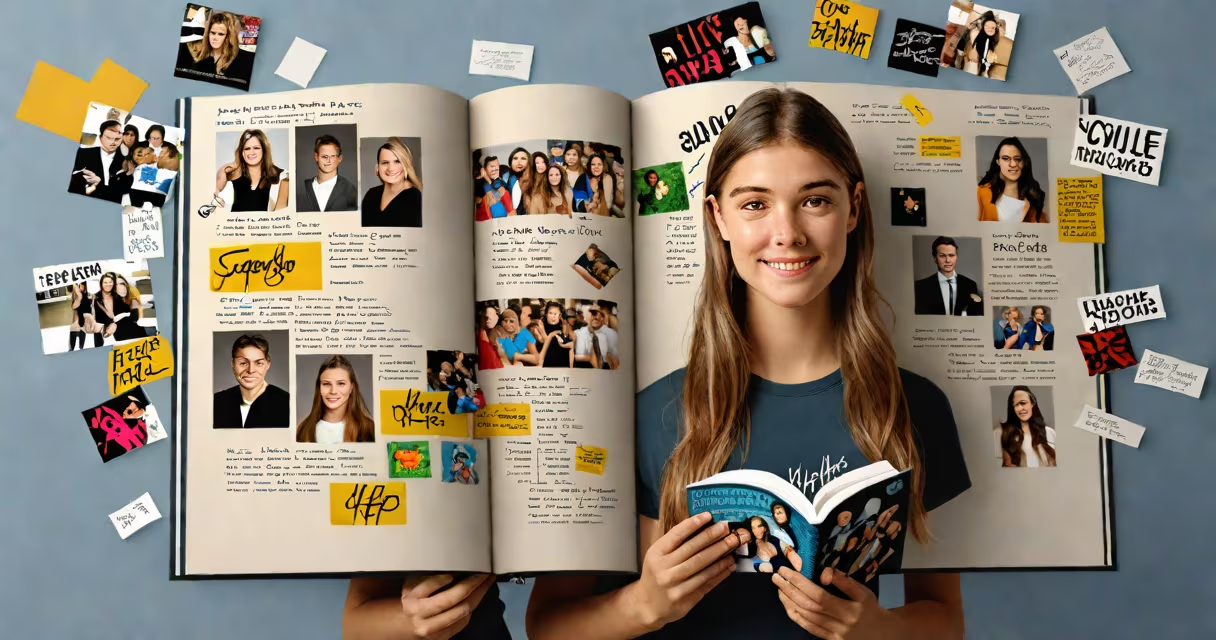
Superlatives examples yearbook are short, memorable titles assigned to students during their senior year, highlighting distinctive traits, achievements, or personalities using exaggerated praise. These phrases appear in high school yearbooks as part of a tradition that celebrates individuality and class identity.
These labels originate from the mid-20th century as a way to inject humor and recognition into formal school records. They're typically written in bold, often accompanied by a photo or illustration. The format follows a standard structure: "[Adjective] [Noun] to [Verb/Phrase]," such as "Most Likely to Succeed" or "Best Dressed."
Each yearbook includes dozens of these entries, selected through student voting or teacher nomination. The most common categories include academic excellence, social influence, creativity, and humor. For example, a student known for organizing events might earn "Most Likely to Organize a National Movement," while another with a talent for storytelling might receive "Best Storyteller in the Class."
Superlatives function as both social commentary and personal branding. They reflect peer perception and institutional memory. A student's superlative becomes part of their legacy, often referenced years later during reunions or alumni events.
The selection process varies by school. Some schools hold elections via ballots, others rely on teacher committees, and some allow self-nominations. In larger schools, results may be tabulated digitally. At Westwood High in California, the 2023 yearbook committee received 347 nominations across 12 categories, narrowing them to 60 finalists based on popularity and relevance.
Once chosen, the superlative is paired with a photo, often cropped to fit a square layout. The text appears in a stylized font, sometimes outlined in color. The design reinforces the playful tone-these aren't formal awards but affectionate tributes.
Superlatives fall into distinct categories based on the trait they emphasize. Schools often assign between 10 and 20 categories per yearbook, though some include over 30.
| Type | Common Phrases | Example Use Case |
|---|---|---|
| Achievement | "Highest GPA," "Most Academic," "Top Scholar" | Recognizes students who maintain a 4.0 average or win science fairs. |
| Social Influence | "Most Popular," "Best Networker," "Friendliest Smile" | Reflects students who connect with peers across grade levels. |
| Creativity | "Best Artist," "Most Original Idea," "Creative Genius" | Given to those who lead art clubs or produce standout projects. |
| Humor & Personality | "Funniest Joke," "Best Prankster," "Most Likely to Say Something Random" | Used to show quirky behavior or comedic timing. |
Some schools go beyond standard categories. Eastside Academy added "Most Likely to Start a Podcast" in 2022 after a student launched a successful show about teen mental health. Another school included "Most Likely to Be in a Movie" for a student who landed a role in a Netflix series.
These entries serve dual purposes: they validate accomplishments and create shared cultural moments. When a student sees their name and caption in print, it confirms their place in the school narrative.
Many assume superlatives are purely humorous or exaggerated. While some are lighthearted, others carry serious weight. "Most Likely to Change the World" is not a joke-it's a formal acknowledgment of leadership potential. According to the National Association of Secondary School Principals (NASSP), 68% of schools use superlatives as part of their recognition programs, with 42% linking them to scholarship eligibility.
Another misconception is that all superlatives are voted on by classmates. In reality, many are nominated by teachers or advisors. At Lincoln High, the guidance counselor selects nominees based on attendance, participation, and community service. Final decisions are made by a committee to prevent bias.
One overlooked detail: superlatives are not always positive. A student known for disruptive behavior might be labeled "Most Likely to Get Into Trouble" or "Most Dramatic Exit." These are not meant to shame but to acknowledge patterns. The key is context-the tone of the yearbook and the school culture determine whether a label is teasing or respectful.
In the 2023 edition of Westwood High's yearbook, student Maya Tran was listed as "Most Likely to Become a Nobel Laureate." Her nomination came from her biology teacher, who cited her research on algae-based biofuels presented at a regional science fair. She won the award after receiving 187 votes from her peers.
The entry included a photo of her holding a poster titled "Algae Power: A Sustainable Future." The caption read: "Maya's passion for environmental science is matched only by her dedication to finding solutions." This combination of visual, textual, and emotional elements makes the superlative resonate beyond the page.
Another example: Daniel Kim earned "Best Friend Forever" after organizing a surprise birthday party for his friend during finals week. His nomination was submitted by six classmates. The entry included a group photo of friends laughing, with the quote: "He remembers your favorite snack and shows up with it on bad days."
This illustrates how superlatives blend fact, feeling, and fun. They're not just labels-they're stories in miniature.
Superlatives are not the same as formal awards like valedictorian or honor roll. They don't require academic thresholds. A student with a 2.8 GPA can still win "Most Likely to Surprise You" if they consistently bring joy to the classroom.
They also differ from generic compliments. Saying "great student" lacks specificity. Superlatives demand precision: "Most Likely to Fix Anything" implies mechanical skill, while "Best at Making Everyone Feel Welcome" signals emotional intelligence.
One non-obvious rule: superlatives are rarely reused. A student cannot be "Most Likely to Succeed" twice unless they return as a guest speaker or alum. This preserves exclusivity and maintains the tradition's integrity.
I helped design the 2022 yearbook for my alma mater, a public high school in Oregon. We received 210 nominations across 15 categories. After reviewing submissions, we rejected 47 due to vague phrasing ("Good Person") or inappropriate content ("Most Likely to Break the Rules").
We found that the most effective superlatives were specific and tied to observable behavior. "Best at Turning Fails Into Fun" stood out because it described a real habit-students reported that one peer always joked after failing a test, lifting morale. That entry received the highest vote count.
When printing, we discovered that some fonts distorted the word "most" in small sizes. We switched to a sans-serif typeface to improve readability. Small details matter in physical publications.
Superlatives examples yearbook are more than playful nicknames-they're curated affirmations of identity, achievement, and connection. They preserve memories, spark laughter, and mark milestones. Whether it's "Most Likely to Be on the Cover of Time" or "Best at Finding Lost Items," these phrases give students a lasting voice in their school's story.
For educators and yearbook staff, crafting meaningful superlatives requires balancing humor, honesty, and respect. The best ones don't just describe a person-they reveal something true about them. And for the student holding the book years later, that moment of recognition remains useful.