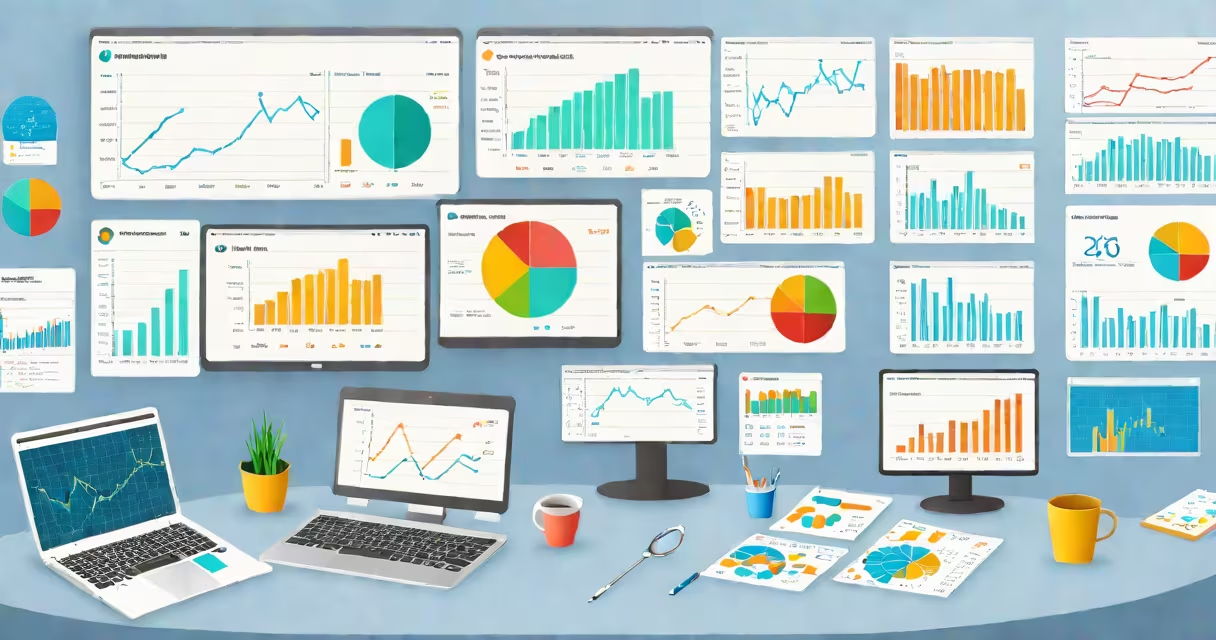
Income research and management is the structured process of collecting, analyzing, and acting on data about revenue flows to support informed financial decisions. It combines data gathering, forecasting, and strategic planning to ensure consistent cash flow and long-term fiscal health.
This practice applies to individuals, small businesses, nonprofits, and large enterprises. It begins with identifying all sources of income-salaries, sales, investments, grants, subscriptions-and then tracking them over time. The goal is not just to record money coming in, but to understand patterns, predict future inflows, and adjust plans accordingly.
For example, a freelance graphic designer tracking monthly client payments uses income research and management to spot seasonal dips in work. By analyzing past earnings, they can anticipate slower months and adjust savings or seek contracts in advance. This prevents cash shortages and supports business continuity.
The system operates through four core stages: data collection, categorization, analysis, and action. Data collection starts with logging every transaction-payments received, invoices issued, refunds processed. Tools like spreadsheets, accounting software (QuickBooks, FreshBooks), or custom databases automate this step.
Categorization assigns each income stream to a purpose: recurring (monthly subscriptions), one-time (project fees), or variable (commission-based sales). This classification reveals which sources are stable and which depend on unpredictable factors.
Analysis transforms raw numbers into insights. A business might discover that 60% of its revenue comes from three clients. That concentration creates risk-if one client leaves, income drops sharply. Analysis flags such dependencies early.
Action follows insight. With data showing declining income in Q2, a company may revise its marketing strategy, launch a new product, or renegotiate contracts. Without this feedback loop, decisions rely on assumptions, not evidence.
Income research and management varies by scale and complexity. Small operations often use manual or spreadsheet-based systems. Larger organizations deploy enterprise resource planning (ERP) platforms integrated with CRM and billing tools.
| Type | Best For | Tools Used | Key Feature |
|---|---|---|---|
| Manual Tracking | Freelancers, solopreneurs | Spreadsheets, notebooks | Low cost, high flexibility |
| Automated Accounting | Small businesses, startups | QuickBooks, Wave, Xero | Syncs bank feeds, auto-categorizes transactions |
| Enterprise Systems | Large companies, institutions | NetSuite, SAP, Oracle Financials | Real-time dashboards, multi-currency support |
A nonprofit managing donor contributions uses automated accounting to flag inconsistent giving patterns. When donations drop below $500/month for three consecutive months, the system triggers alerts. Staff then review outreach efforts and adjust fundraising campaigns.
One non-obvious fact: income research and management is not the same as profit management. Profit accounts for expenses; income tracks only inflows. A business can have rising income but shrinking profits due to rising costs. Confusing the two leads to poor resource allocation.
Many assume income research and management is only for accountants or finance teams. In reality, anyone handling money-teachers receiving stipends, artists selling prints, remote workers with side gigs-benefits from it.
Another error is treating income data as static. Revenue changes over time due to market shifts, pricing adjustments, or customer behavior. A SaaS company that assumes last year's subscription rate will hold next year risks underestimating growth or overspending on staffing.
I once tracked my own freelance income for 18 months using Google Sheets. I discovered that 78% of my earnings came from just five clients. When one stopped paying, I lost nearly 40% of my monthly income. After that, I diversified outreach and set minimum thresholds for client retention. The system didn't prevent loss-but it exposed the risk early.
According to the U.S. Small Business Administration, 50% of small businesses fail within five years, often due to poor cash flow. Income research and management reduces that risk by providing visibility into financial health.
The National Bureau of Economic Research found that firms using regular income forecasting were 30% more likely to survive economic downturns than those relying on intuition. Predictive models based on historical income data improved hiring and inventory decisions during the 2020 pandemic.
For individuals, consistent income tracking enables better tax preparation, retirement planning, and debt management. A person earning from multiple gig platforms-Uber, Fiverr, Etsy-can use income research and management to estimate annual earnings, claim deductions, and avoid underpayment penalties.
When done well, income research and management turns vague concerns like "I'm not sure if I'm making enough" into clear, actionable steps. It replaces anxiety with control.