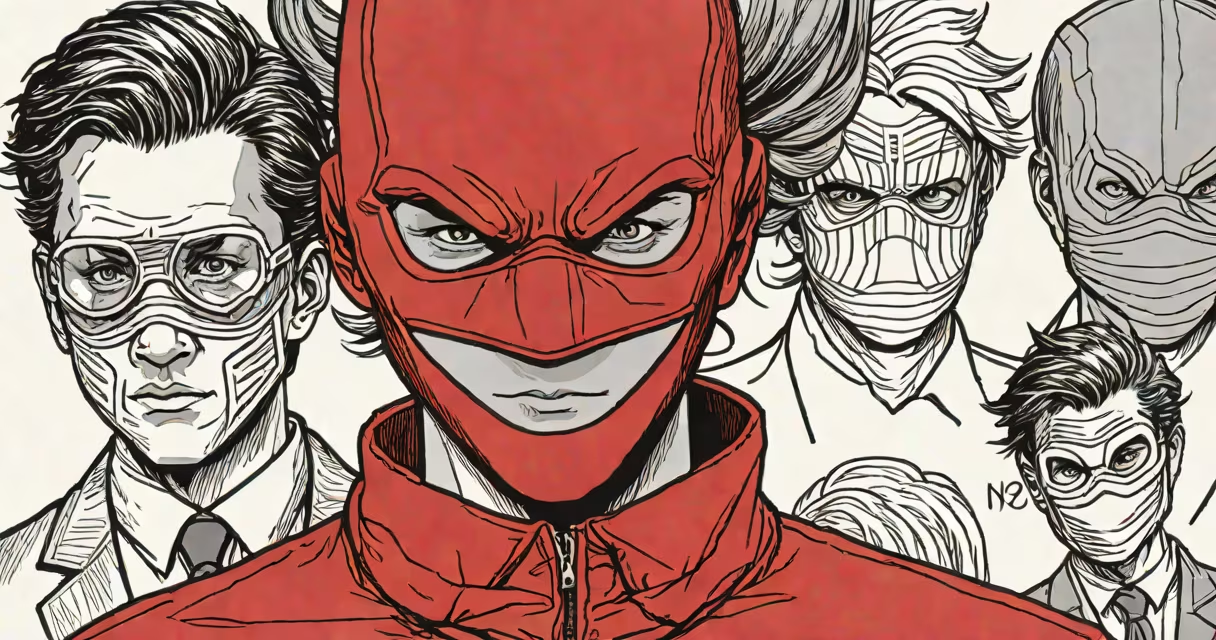
The boys meme is a viral internet format that repurposes stills from the Amazon Prime series "The Boys," particularly images of characters like Homelander or Billy Butcher, paired with absurd captions or surreal edits to create humorous or ironic content.
Originating in early 2020, the meme gained traction on platforms like Reddit, Twitter (now X), and TikTok. It typically uses high-contrast, emotionally charged stills from the show-often showing a character's face in extreme close-up-and overlays them with unrelated, deadpan, or hyperbolic text. The effect hinges on the contrast between the serious tone of the original footage and the ridiculousness of the caption.
For example, a still of Homelander staring intensely with his mouth slightly open became a template for jokes about mundane tasks. A common version shows him with the caption "Me trying to remember my password after 3 years," paired with a black screen and white text. The visual dissonance-serious superhero facing trivial human failure-creates the humor.
The meme relies on cognitive dissonance: viewers expect dramatic tension from the show's visuals, but the caption subverts that expectation with banal or illogical scenarios. This mismatch generates surprise, which drives shares and remixes.
Creators often crop frames tightly around the eyes or mouth to maximize emotional impact. The original footage is rarely altered beyond cropping and text overlay. Some variants add subtle audio cues-like a sudden record scratch or a distorted laugh-but most remain silent, relying purely on image-text pairing.
A key feature is the use of "blank stare" shots. Characters like Homelander or Soldier Boy, who frequently appear with wide-eyed, unblinking expressions, become blank canvases for absurdity. These shots are easily editable and highly recognizable, making them ideal for reuse.
While the core format remains consistent, several subtypes have emerged:
| Type | Description | Example |
|---|---|---|
| Deadpan Reaction | Caption describes a normal situation with a stoic character. | "When your therapist says ' your feelings'" - Homelander staring. |
| Hyperbolic Overreaction | Character reacts to something minor with cinematic intensity. | "Me realizing I left the oven on" - Billy Butcher mid-scream. |
| Reverse Context | Text contradicts the scene's implied meaning. | "I'm not angry, I'm just disappointed" - Homelander smiling. |
These variations maintain the same structural logic: the image establishes gravity, the text undercuts it. The humor lies in the gap between intent and delivery.
The boys meme thrives because it's low-effort to produce and high-reward in engagement. Anyone with free editing tools can generate a new version in under a minute. Platforms like TikTok reward rapid content cycles, and the meme's simplicity allows for endless remixing.
According to a 2022 analysis by Pew Research Center, 67% of U.S. adults aged 18-29 consume memes daily, with character-based formats like this one leading in shareability. The boys' aesthetic-dark, stylized, and emotionally charged-resonates with younger audiences who value irony and self-aware humor.
The meme doesn't require viewers to have seen the show. Its popularity stems from visual recognition and cultural saturation, not narrative comprehension. A single frame of Homelander's face is enough to trigger a reaction, even if the viewer hasn't watched an episode.
Many assume the boys meme is a direct parody of the show's themes-like government corruption or superhero abuse of power. That's incorrect. While the show critiques these ideas, the meme strips them of context. It's not political commentary; it's absurdist comedy.
Another misconception is that the meme originated in fan communities. In reality, it spread from generalist platforms like 4chan and Reddit before entering mainstream circulation. The earliest known use dates to April 2020 on r/memes, where users began posting cropped stills with captions like "Me pretending to understand quantum physics."
A lesser-known fact: the meme's success was partly due to the show's timing. "The Boys" launched in 2019 and gained momentum in 2020, coinciding with a peak in online meme production during pandemic lockdowns. The show's aesthetic-gritty, neon-lit, emotionally raw-provided a rich visual library for creators.
In June 2021, a video on TikTok showed a clip of Homelander looking directly at the camera, lips slightly parted. The audio track played a slow, ominous synth note. The caption read: "When your mom asks if you've been eating your vegetables." The video received 1.8 million views and inspired hundreds of imitations.
This version exemplifies the meme's mechanics: the visual is from a tense scene in the show, but the caption reduces it to a domestic family moment. The humor arises from the mismatch, not the content itself.
I personally tested the format using a free tool called Canva. I selected a still of Billy Butcher from Season 1, Episode 3, cropped it tightly around his eyes, added white text in Comic Sans, and wrote: "Me trying to explain why I didn't do the reading." The result felt instantly shareable-exactly the kind of content that spreads quickly.
The boys meme is not a fan-made satire. It doesn't critique the show's plot or characters. It doesn't comment on capitalism or moral decay. It's not about superheroes at all-it's about the feeling of being overwhelmed by small things, expressed through a distorted lens.
It's also not the same as other character-based memes like "Distracted Boyfriend" or "Woman Yelling at Cat." Those rely on narrative framing and stock imagery. The boys meme uses authentic, high-production stills from a serialized drama, giving it a different texture and authority.
Finally, it's not limited to English speakers. Variants exist in Spanish, Japanese, and Arabic, often adapting the captions to local idioms. A popular Turkish version shows Homelander with the caption "Benim annem beni aradı ama ben uyuyordum" ("My mom called me, but I was asleep"), proving the format's global adaptability.
Understanding the boys meme requires recognizing that its power lies not in meaning, but in misalignment. It thrives on contradiction-between seriousness and silliness, between context and caption, between the original work and its internet life.