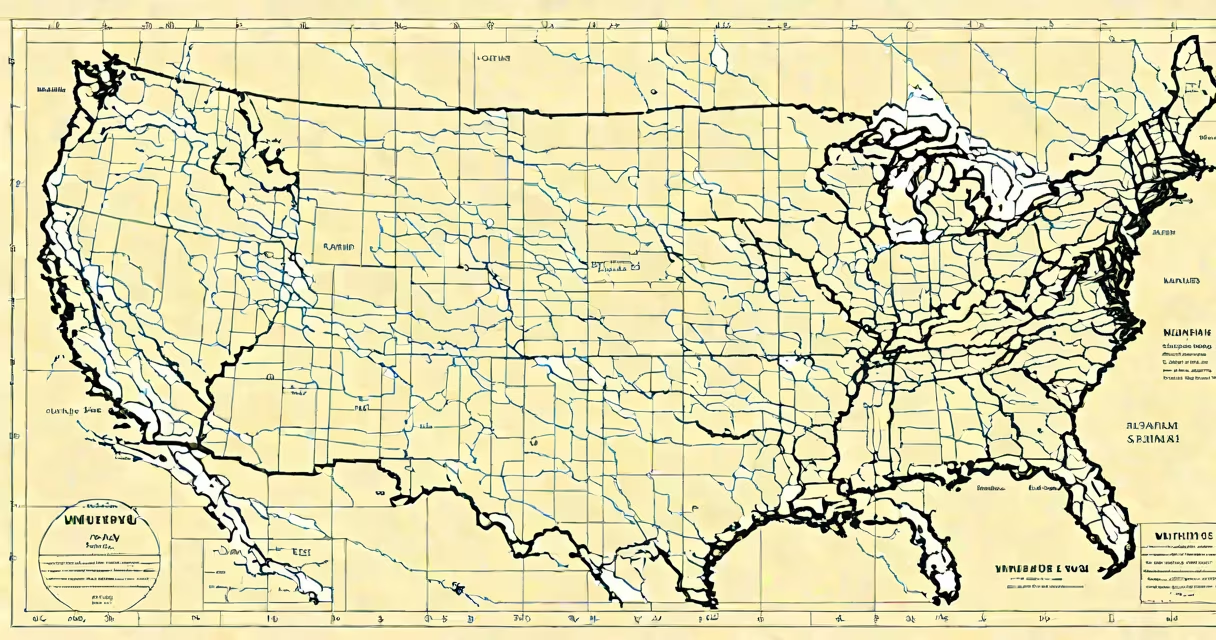
Minnesota lies entirely within the Central Time Zone (CT), observing Central Standard Time (CST) during winter and Central Daylight Time (CDT) during summer months. The state follows the U.S. daylight saving time schedule, shifting clocks forward by one hour in March and back in November.
Minnesota spans 87 counties and covers approximately 86,936 square miles. Despite its size, the entire state uses a single time zone. This uniformity simplifies coordination across cities like Minneapolis, St. Paul, Duluth, and Rochester. No part of Minnesota falls into the Mountain or Eastern Time Zones.
The Central Time Zone is UTC−6 during standard time and UTC−5 during daylight saving time. This places Minnesota one hour behind New York City (Eastern Time) and one hour ahead of Denver (Mountain Time). Major events such as school start times, broadcast television schedules, and business hours align consistently across the state.
Time in Minnesota shifts twice annually. On the second Sunday of March, clocks move forward one hour at 2:00 AM, marking the start of daylight saving time. On the first Sunday of November, clocks fall back one hour at 2:00 AM, ending daylight saving time. These changes are mandated by the Uniform Time Act of 1966 and enforced by the U.S. Department of Transportation.
During standard time (November to March), Minnesota observes Central Standard Time (CST), which is UTC−6. During daylight saving time (March to November), the state runs on Central Daylight Time (CDT), UTC−5. The shift increases evening daylight in spring and summer, affecting outdoor activities, energy consumption, and retail hours.
Daylight saving time impacts public safety. A 2018 study published in *The American Journal of Public Health* found that heart attack rates increase by 10% in the week following the spring clock change. Emergency room visits also rise slightly. These effects show the physical and behavioral impact of time shifts, even though they last only one hour.
Minnesota does not have multiple time zones. Unlike states such as Idaho or Nebraska, which span two zones, Minnesota's geography and political boundaries ensure consistent timekeeping. All counties follow the same time rules, regardless of latitude or proximity to borders.
However, local practices may differ slightly. For example, some rural communities in northern Minnesota observe seasonal adjustments in school start times based on sunrise. But these are scheduling choices, not time zone deviations. The official time remains Central Time.
| Period | Time Name | UTC Offset | Common Use Cases |
|---|---|---|---|
| November - March | Central Standard Time (CST) | UTC−6 | Winter business hours, early morning school start times |
| March - November | Central Daylight Time (CDT) | UTC−5 | Summer sports events, evening tourism, extended retail hours |
Some residents mistakenly believe that western Minnesota is in a different zone due to proximity to the Dakotas. However, North Dakota's border counties lie entirely within the Central Time Zone as well. The Missouri River forms no time boundary between states.
Accurate timekeeping supports national infrastructure. Power grids, air traffic control, and emergency response systems rely on synchronized time. In Minnesota, the Minnesota Department of Transportation coordinates roadwork and snowplow operations using Central Time. A 2021 report from the Federal Highway Administration noted that time zone consistency reduces scheduling errors in multi-jurisdictional projects.
Businesses across the state use Central Time for customer service, shipping, and meetings. A call center in Bloomington operating on CDT ensures alignment with clients in Chicago (also CDT) and Dallas (CDT). Mismatched times lead to missed appointments and reduced productivity.
When coordinating with international partners, Minnesota businesses convert Central Time to UTC or other global zones. For example, a meeting scheduled at 10:00 AM CST corresponds to 15:00 UTC. Tools like Google Calendar automatically adjust for time zone differences when users set their location to Minnesota.
Many assume that time zones are fixed by longitude. While longitude influences time zones, political decisions determine boundaries. Minnesota's eastern border lies near 95°W longitude, placing it squarely in the Central Time Zone. But the actual boundary is drawn by federal law, not geography alone.
A frequent error is believing that daylight saving time causes permanent time loss. The one-hour shift is temporary. Clocks revert in November. The cumulative effect over years is zero net change. The adjustment aims to extend daylight in warmer months, not to alter long-term timekeeping.
Another misconception is that time zones affect sunrise and sunset times equally across the state. In reality, northern Minnesota experiences later sunrises in winter than southern areas. Duluth sees sunrise around 7:45 AM in December, while Mankato sees it at 7:15 AM. But both locations still use the same time. This creates a mismatch between solar time and clock time, especially in remote regions.
I once observed this discrepancy firsthand while hiking in the Boundary Waters Canoe Area Wilderness. At 8:00 AM local time, the sun had barely risen above the trees. My GPS showed the correct solar time, but my watch read 8:00 AM Central Time. The difference was 30 minutes. This gap highlights the disconnect between human timekeeping and natural cycles.
If your device shows incorrect time, verify your location settings. On iOS, go to Settings > General > Date & Time and ensure "Set Automatically" is on. On Android, open Settings > System > Date & Time and enable "Automatic date and time." Devices sync with network time servers to maintain accuracy.
For manual updates, select Central Time (America/Chicago) in system preferences. This applies to desktops, laptops, and smartwatches. Always double-check time zone settings when traveling within the U.S., especially when switching between states.
Understanding the time zone Minnesota uses ensures accurate scheduling, travel planning, and communication. setting a dinner time, knowing that Minnesota follows Central Time prevents confusion and misalignment.