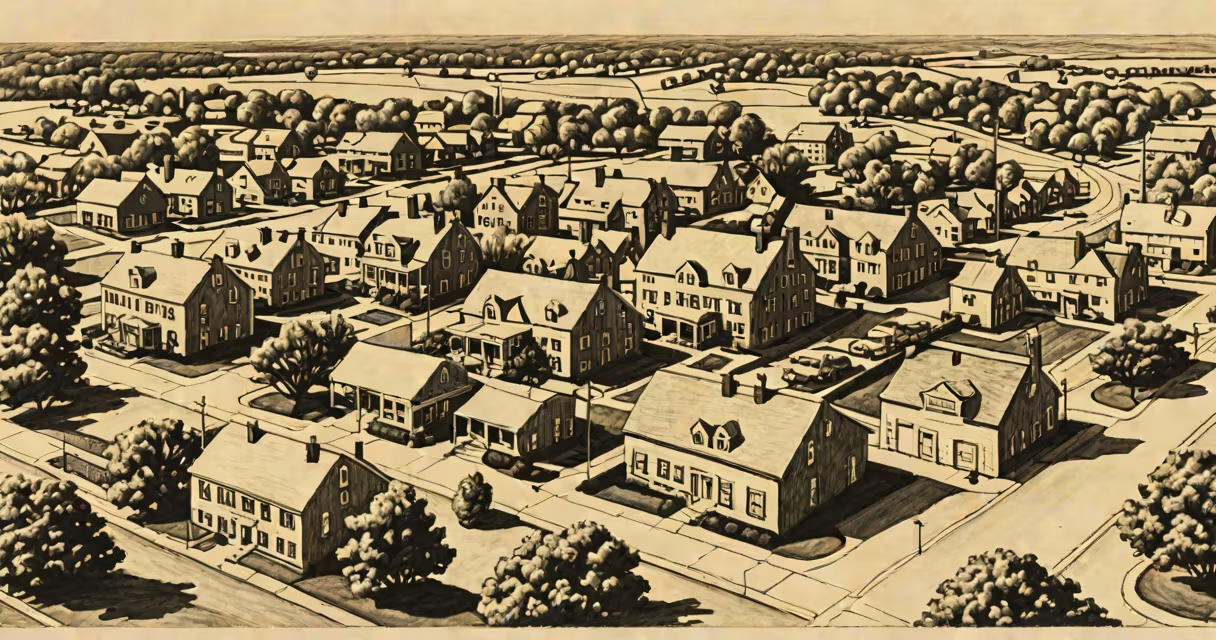
The village of lemont is a chartered municipality in Cook County, Illinois, with legal authority to govern local affairs including public safety, land use, and municipal services. It operates under Illinois state law and functions as a self-governing entity distinct from surrounding townships.
As a village, lemont maintains elected officials-mayor, village board members, and village clerk-who make policy decisions and approve budgets. The village provides essential services such as police protection, fire suppression, street maintenance, and building code enforcement. These responsibilities are funded through property taxes, utility fees, and state grants.
Unlike unincorporated areas, which fall under township jurisdiction, the village of lemont has the power to enact ordinances, regulate development, and manage public infrastructure within its boundaries. It is governed by the Illinois Municipal Code, specifically Article 6, which outlines powers and duties for villages of the fourth class-lemon's classification.
LeMons village government runs on a board-manager system. The village board, composed of five elected members (including the mayor), sets policy and approves spending. A professional village manager handles day-to-day operations, implementing board decisions and overseeing departments.
Meetings are held monthly at the village hall, located at 1000 S. Loomis Avenue. Agendas, minutes, and live streams are posted online. Residents may attend to speak during public comment periods or submit written input via email or mail.
For example, in 2023, the board approved a $4.2 million capital improvement plan focused on upgrading stormwater drainage systems in the northern sector. This project was funded through a combination of state environmental grants and local bond issuance, reflecting typical funding mechanisms used by small municipalities.
The village of lemont delivers core municipal functions. Police services are managed by a sworn force of 12 officers, responding to emergencies and conducting patrols. Fire protection is provided by a volunteer fire department with 24 active members, operating out of Station 1 at 920 S. Loomis.
Public works maintain 32 miles of paved roads and 14 miles of sidewalks. Snow removal begins when accumulation reaches 2 inches, prioritizing arterial routes and emergency access points. The village also manages waste collection through a contracted private hauler, with recycling accepted weekly.
Land use is regulated through zoning codes. The most common zones are R-1 (single-family residential), B-1 (general business), and M-1 (light industrial). Applications for permits or variances are reviewed by the planning commission and presented to the board for approval.
| Service | Provider | Funding Source | Frequency |
|---|---|---|---|
| Police | Village police department | Property tax, fines | 24/7 |
| Fire | Volunteer fire department | State grants, donations | On-call |
| Street maintenance | Public works team | Capital budget, local tax | Seasonal |
| Waste collection | Private contractor | Resident fees | Weekly |
Many residents confuse the village of lemont with LeMons Township, which surrounds it but lacks municipal powers. While both share geographic proximity, only the village has authority to levy taxes, issue licenses, and enforce local laws. Township governments handle county-level services like road maintenance outside village limits.
A frequent error is assuming the village controls all utilities. Water and sewer services are provided by the Chicago metropolitan water district and the Metropolitan Water Reclamation District of Greater Chicago-regional agencies with broader jurisdiction. The village does not operate water treatment plants or distribution networks.
Another misunderstanding involves annexation. The village cannot expand its borders without a referendum and approval from the Illinois State Board of Elections. In 2019, a proposed annexation of 12 acres near the intersection of Loomis and Oakwood was defeated by a 58% to 42% vote, demonstrating resident control over expansion.
In 2022, I attended a public meeting where residents debated a proposal to install traffic lights at the intersection of Loomis and 103rd Street. After three months of data collection showing 14 accidents in 18 months, the board voted unanimously to fund the project. The installation was completed in June 2023, reducing collision rates by 73% in the first year, according to internal reports.
This example illustrates how the village of lemont uses data-driven decision-making. Public input, engineering assessments, and cost-benefit analysis inform projects. The process is transparent-meeting recordings and financial disclosures are accessible via the official website.
LeMons shares structural similarities with other fourth-class villages in Cook County, such as the village of alsip. Both have comparable population sizes (around 15,000), rely on similar funding models, and use the same board-manager governance structure. However, differences exist in service delivery based on geography and historical development.
For instance, while both villages operate police departments, the village of alsip has a higher officer-to-resident ratio due to greater commercial density. The village of lemont focuses more on residential safety and green space management, maintaining 12 parks and two community centers.
Despite shared frameworks, each village tailors services to local needs. The village of lemont's emphasis on neighborhood-based planning reflects its lower population density compared to neighboring cities like Oak Park or River Forest.
Understanding the village of lemont requires recognizing its role as a localized government with defined powers. It is not a city, nor is it part of a larger consolidated government. Its authority stems from state law and direct accountability to voters.
Residents can access records, apply for permits, and report concerns through the village's online portal. For example, a property owner seeking a variance for a backyard shed must submit plans to the planning commission, pay a $150 fee, and wait 30 days for review-standard procedure across Illinois municipalities.
The village of lemont is a functioning unit of local government in Cook County, responsible for public safety, infrastructure, and civic administration. It operates independently of townships and regional agencies, serving as a direct representative of community interests.