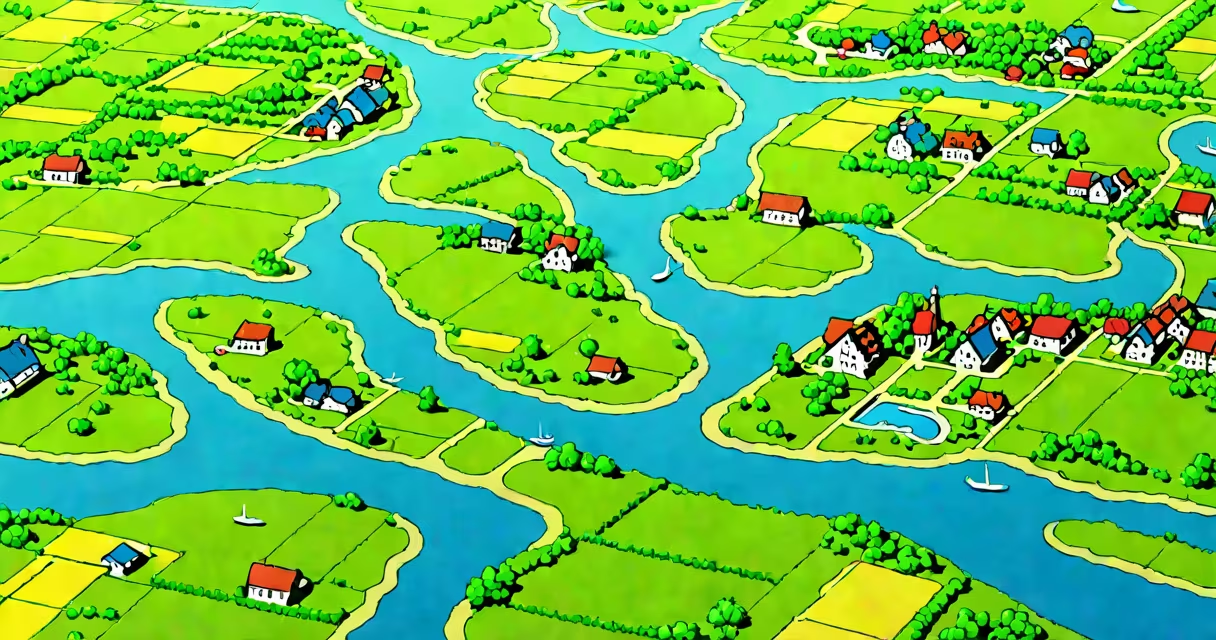
The waterschapsverordening wetterskip fryslan is a legally binding regulation issued by the Waterschap van het Weterskip Fryslan, defining how water systems are managed across the province of Friesland. It sets standards for flood defense, water quality, drainage, and infrastructure maintenance within the region's 16 water boards.
This regulation operates under the Dutch Water Act (Wet op het water) and implements national water policy at the provincial level. It applies to all landowners, farmers, municipalities, and developers operating within the waterschap's jurisdiction. The document is updated periodically to reflect climate adaptation goals and new engineering standards.
The waterschapsverordening establishes clear roles and responsibilities. The Waterschap van het Weterskip Fryslan, as the regional water authority, enforces compliance through inspections, permits, and mandatory reporting. For example, any construction near a waterway must undergo a permit process that includes environmental impact assessment and flood risk analysis.
Landowners must maintain drainage ditches on their property to prevent flooding during heavy rainfall. Failure to comply can result in enforcement actions, including fines or court orders. The regulation also mandates regular dredging of key channels to maintain flow capacity. In 2022, the waterschap completed 127 km of channel maintenance across Friesland, reducing flood risk in low-lying areas like the Groot Salland region.
Public access to water-related data is ensured through the official Waterschap van het Weterskip Fryslan website. Citizens can view real-time water levels, check planned maintenance work, and report issues such as blocked culverts or leaking dikes.
The regulation divides water management into four core domains:
| Domain | Scope | Legal Basis |
|---|---|---|
| Flood Protection | Design and upkeep of dikes, storm surge barriers, and pumping stations | Water Act (Art. 11), Flood Risk Management Directive (EU) |
| Water Quality | Monitoring nitrogen levels, phosphorus runoff, and algal blooms in lakes and rivers | Nitrate Directive (2009/128/EC), EU Water Structure Directive |
| Drainage & Flow | Maintenance of ditches, culverts, and pumps to manage surface water | Waterschapsverordening Art. 15-22 |
| Environmental Impact | Assessment of projects affecting wetlands, bird habitats, and fish migration | Environmental Impact Assessment Act (Netherlands) |
Each domain has specific performance targets. For instance, the water quality standard requires that 85% of monitored water bodies in Friesland meet ecological status "good" by 2027, per the European Water Structure Directive.
Many residents assume the waterschapsverordening is a static law. In reality, it is revised annually based on hydrological modeling and climate projections. The 2023 version included new thresholds for extreme rainfall events, reflecting a 30% increase in annual precipitation since 1990, according to the Royal Netherlands Meteorological Institute (KNMI).
Another misunderstanding is that the regulation only affects rural areas. In fact, urban zones like Leeuwarden and Sneek are subject to strict rules on rainwater retention. New developments must install green roofs or underground storage tanks capable of holding 50 m³ of runoff per hectare, as mandated in Article 18 of the 2023 regulation.
A lesser-known fact: the waterschapsverordening allows for public participation in decision-making. Citizens can submit objections to proposed projects via the waterschap's online portal. In 2021, 43 objections were filed against a dike reinforcement project near Oosterwolde, leading to a redesign that reduced environmental disruption by 40%.
In 2022, a farmer in the municipality of Weststellingwerf applied to deepen a ditch on his property to improve drainage. The request was denied under Article 16 of the waterschapsverordening because the ditch connected to a protected wetland zone. The waterschap required a mitigation plan instead, including the creation of a buffer strip and monitoring of local amphibian populations.
The farmer appealed through the administrative review process. After a site inspection and consultation with the provincial environmental agency, the decision was upheld. This case illustrates how the regulation balances agricultural needs with ecological protection.
Friesland lies below sea level in many areas. Without coordinated water management, widespread flooding would occur during winter storms. The waterschapsverordening ensures consistent standards across 16 water boards, preventing fragmented or conflicting policies.
According to the Dutch Ministry of Infrastructure and Water Management, the regulation has contributed to a 60% reduction in flood damage since 2000. In 2023, the waterschap reported 98% compliance with drainage maintenance requirements across the province.
For anyone living, working, or investing in Friesland, understanding the waterschapsverordening wetterskip fryslan is essential. It governs everything from building permits to agricultural practices and shapes the resilience of the region's water system.
The waterschapsverordening wetterskip fryslan is not a passive rulebook. It is an active structure for managing one of the most vulnerable landscapes in Europe. Its implementation reflects decades of engineering, legal development, and community engagement.