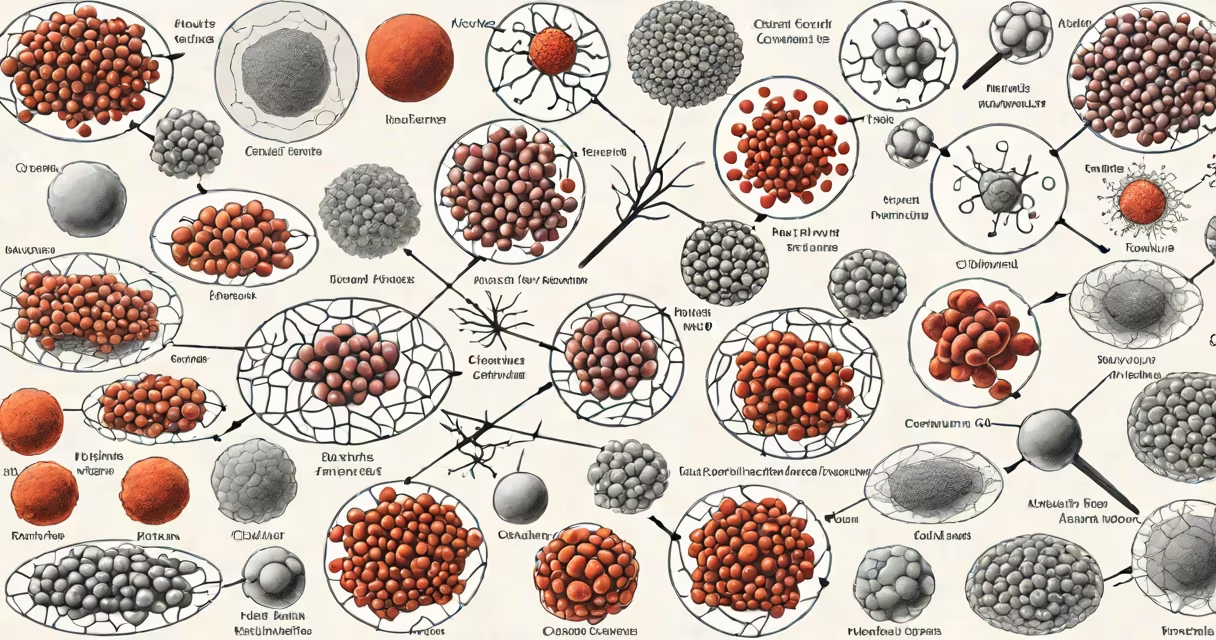
Stem cells are undifferentiated cells capable of developing into specialized cell types. The main categories are embryonic, adult (somatic), and induced pluripotent stem cells, each with distinct origins, capabilities, and applications in research and therapy.
Stem cells maintain their ability to divide and renew themselves indefinitely. They can differentiate into specific cell lineages-muscle, nerve, blood, or bone-based on signals from their environment. This property enables tissue repair and regeneration.
Embryonic stem cells (ESCs) come from the inner cell mass of a blastocyst, typically 5-7 days after fertilization. These cells are pluripotent, meaning they can become any cell type in the body. Their differentiation potential makes them valuable for studying early development and modeling diseases.
Adult stem cells exist in specific tissues after birth. They're multipotent-able to generate a limited set of cell types within their tissue of origin. For example, hematopoietic stem cells in bone marrow produce all blood cell types. Mesenchymal stem cells from bone marrow or fat tissue support tissue repair through paracrine signaling rather than direct replacement.
The following table outlines the core differences among major stem cell types:
| Type | Source | Potency | Key Applications | Limitations |
|---|---|---|---|---|
| Embryonic | Blastocyst-stage embryo | Pluripotent | Disease modeling, developmental biology, potential organoids | Ethical concerns, immune rejection risk |
| Adult (Somatic) | Bone marrow, brain, skin, gut lining | Multipotent or unipotent | Blood disorders (e.g., leukemia), bone repair, some neurodegenerative trials | Limited differentiation capacity, low abundance |
| Induced Pluripotent (iPSCs) | Reprogrammed adult cells (e.g., skin fibroblasts) | Pluripotent | Personalized medicine, drug screening, patient-specific disease models | Risk of incomplete reprogramming, tumorigenicity |
Embryonic stem cells are used primarily in basic research. Scientists at the National Institutes of Health (NIH) have established standardized lines for study, enabling consistent experiments on cell fate and gene regulation. These lines are not used clinically due to ethical restrictions and immune compatibility issues.
Adult stem cells are already in clinical use. Hematopoietic stem cell transplants treat over 80 conditions, including acute leukemias and severe combined immunodeficiency (SCID). A 2021 study published in The New England Journal of Medicine reported a 75% survival rate at five years post-transplant for patients with high-risk acute myeloid leukemia.
Induced pluripotent stem cells offer a solution to donor scarcity and immune rejection. Researchers at Kyoto University generated iPSC-derived retinal cells for treating macular degeneration. In a 2023 trial, six patients showed improved vision after transplantation-without immunosuppressants.
Many assume all stem cells are interchangeable. This is false. Pluripotent cells like ESCs and iPSCs can form any tissue, but they cannot reliably generate entire organs. Adult stem cells are often mislabeled as "totipotent"-they are not. Totipotent cells, like the zygote, can form both the embryo and placenta. No adult stem cell possesses this capability.
A common error is equating stem cell therapy with miracle cures. While promising, most applications remain experimental. The U.S. Food and Drug Administration (FDA) has approved only four stem cell-based therapies since 2012, all involving hematopoietic stem cells for blood cancers and immune disorders.
Another misunderstanding: stem cells from umbilical cord blood are not always "superior." Cord blood contains hematopoietic stem cells, but their numbers are lower than in bone marrow. A 2020 analysis in Blood Advances found that cord blood transplants had higher graft failure rates in adults compared to matched bone marrow donors.
In 2019, a 32-year-old woman with relapsed acute lymphoblastic leukemia received a transplant using hematopoietic stem cells from her brother's bone marrow. Her HLA markers were 8/8 matched. After conditioning chemotherapy, she received 2.1 × 10⁶ CD34+ cells per kg of body weight. By day 21, neutrophil recovery occurred. At 12 months, she remained in remission with no signs of graft-versus-host disease.
This case illustrates how adult stem cells are used clinically-not as a cure-all, but as a targeted treatment with measurable outcomes. The success relied on donor matching, precise dosing, and post-transplant monitoring.
I once observed a lab culture of human iPSCs being maintained in a 37°C incubator with 5% CO₂. The colonies appeared as tightly packed, dome-shaped clusters with clear borders. When passaged using enzymatic digestion, they retained morphology and expression of pluripotency markers (OCT4, NANOG, SOX2) over 20 passages. The consistency surprised me-these cells behaved predictably despite being derived from a skin biopsy taken two years prior.
Understanding the types of stem cells clarifies their roles. Embryonic stem cells provide insight into early development. Adult stem cells enable current treatments. Induced pluripotent stem cells open doors to personalized medicine. Confusing them leads to unrealistic expectations or poor clinical decisions.