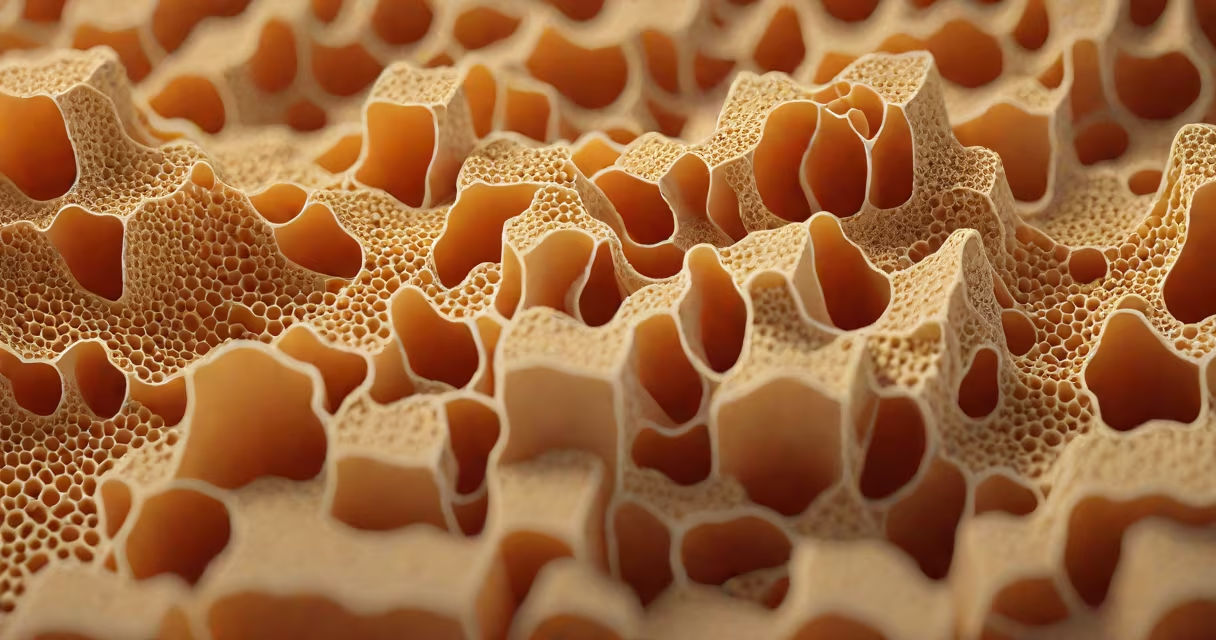
Tissues in your body are organized groups of similar cells that work together to carry out a specific function. They form the building blocks of organs and systems, enabling processes like movement, protection, and communication. Without tissues, individual cells couldn't coordinate to sustain life.
Each tissue type performs distinct roles. Epithelial tissue covers surfaces and lines cavities. Connective tissue supports structures and transports substances. Muscle tissue generates force for motion. Nervous tissue transmits signals for coordination and response. These four categories make up all functional units in the human body.
Cells don't operate alone. When thousands of identical cells align and share resources, they create a tissue. This organization allows for efficiency and specialization. For example, heart muscle cells contract in unison to pump blood-each cell contributes to a synchronized beat.
Cells communicate through chemical signals and physical connections. Gap junctions allow ions to pass between adjacent cardiac muscle cells, ensuring rapid electrical signaling. This coordination prevents irregular contractions and maintains steady circulation.
Without tissue-level integration, even healthy cells would fail to perform essential tasks. A single neuron cannot process thoughts; only a network of neurons in nervous tissue can generate perception, memory, and decision-making.
The four primary tissue types differ in structure, composition, and function. Understanding them reveals how the body maintains balance and responds to changes.
| Type | Structure | Function | Example Location |
|---|---|---|---|
| Epithelial | tightly packed cells with little space between | protection, secretion, absorption | skin surface, lining of intestines |
| Connective | cells scattered in extracellular matrix | support, insulation, transport | bones, fat, blood |
| muscle | elongated fibers rich in contractile proteins | movement, force generation | heart, limbs, digestive tract |
| nervous | neurons with long axons and dendrites | electrical signaling, information processing | brain, spinal cord, nerves |
Epithelial tissue forms barriers. The outer layer of skin (epidermis) consists of stratified squamous epithelium that resists abrasion and infection. Inside the small intestine, columnar epithelium absorbs nutrients through microvilli-tiny projections that increase surface area.
Connective tissue includes bone, cartilage, adipose (fat), and blood. Bone tissue contains calcium phosphate crystals embedded in collagen fibers, giving it strength and rigidity. Blood, a fluid connective tissue, transports oxygen via hemoglobin in red blood cells and removes carbon dioxide.
There are three muscle types: skeletal, cardiac, and smooth. Skeletal muscle enables voluntary movements like walking. Cardiac muscle contracts rhythmically in the heart. Smooth muscle controls involuntary actions such as blood vessel constriction and digestion.
Nervous tissue comprises neurons and glial cells. Neurons transmit nerve impulses using electrical and chemical signals. Glial cells support and insulate neurons. Damage to nervous tissue-such as in spinal cord injuries-can disrupt motor control and sensation due to impaired signal transmission.
Many assume tissues are uniform or interchangeable. In reality, their properties vary widely based on location and purpose. For example, the epithelium in the respiratory tract contains ciliated cells that move mucus upward-a feature absent in intestinal epithelium.
Another misunderstanding is that all tissues regenerate at the same rate. Skin epithelium regenerates every 28 days. Heart muscle cells rarely divide after early childhood. Brain neurons have minimal regenerative capacity. This variation affects recovery from injury and disease progression.
A key distinction often missed: tissues are not the same as organs. Organs consist of multiple tissue types working together. The stomach, for instance, contains epithelial tissue (lining), connective tissue (supporting layers), muscle tissue (contraction), and nervous tissue (regulating secretion). No single tissue type can perform all organ functions.
When you cut your finger, tissues respond in sequence. First, epithelial cells near the wound begin migrating to close the gap. Within hours, platelets activate and form a clot-this involves connective tissue elements like fibrin.
Next, inflammatory cells enter the site. Macrophages, derived from blood monocytes, clear debris. Fibroblasts-connective tissue cells-produce collagen to rebuild the dermis. Over days, new capillaries grow into the area, supported by endothelial cells (a type of epithelium).
Finally, keratinocytes in the epidermis proliferate to restore the barrier. This entire process relies on coordinated tissue activity. Failure at any stage-like poor collagen formation in diabetes-leads to chronic wounds.
I observed this during a clinical rotation: a diabetic patient's foot ulcer failed to heal despite antibiotics. Biopsy revealed insufficient fibroblast activity and abnormal angiogenesis. The underlying issue wasn't infection-it was disrupted connective tissue function.
Understanding tissues helps explain how diseases progress. Cancer begins when cells lose normal regulation. A tumor forms when epithelial cells multiply uncontrollably. Metastasis occurs when cancer cells invade connective tissue and travel through blood vessels.
Autoimmune disorders attack specific tissues. Multiple sclerosis damages myelin sheaths around nerve fibers-this impairs nervous tissue signaling. Rheumatoid arthritis targets connective tissue in joints, leading to inflammation and destruction of cartilage and bone.
Research from the National Institutes of Health confirms that tissue-specific responses influence treatment outcomes. For example, therapies targeting epithelial cell growth show promise in treating burn injuries, while regenerative medicine focuses on stimulating connective tissue repair in degenerative joint disease.
Tissues in your body are not passive materials-they are changing, responsive systems. Each type plays a role in maintaining homeostasis, defending against threats, and enabling complex behaviors. Recognizing their functions offers clarity on how the body stays alive and adapts to challenges.