The Community FoodBank of NJ is a nonprofit organization that distributes emergency food to individuals and families facing food insecurity across New Jersey. It operates a statewide network of partner agencies including food pantries, shelters, and meal programs, serving over 1 million people annually.
Founded in 1986, the FoodBank collects and redistributes surplus food from manufacturers, distributors, and farms. It then delivers these supplies to local agencies that serve vulnerable populations. The organization relies on donations of food, money, and volunteer labor to maintain operations. Its mission centers on reducing hunger and improving access to nutritious meals in underserved communities.
According to Feeding America, nearly 1 in 6 New Jersey residents faced food insecurity in 2023. The Community FoodBank of NJ plays a critical role in addressing this gap. It reported distributing over 50 million pounds of food in the 2022 fiscal year-enough to provide 42 million meals. This volume reflects the scale of demand and the organization's capacity to respond.
When a household cannot afford groceries, they may turn to a partner agency connected to the Community FoodBank of NJ. These agencies receive regular deliveries of non-perishable goods, fresh produce, dairy, and meat. Distribution methods vary: some offer walk-up pantries, others require appointments or referrals.
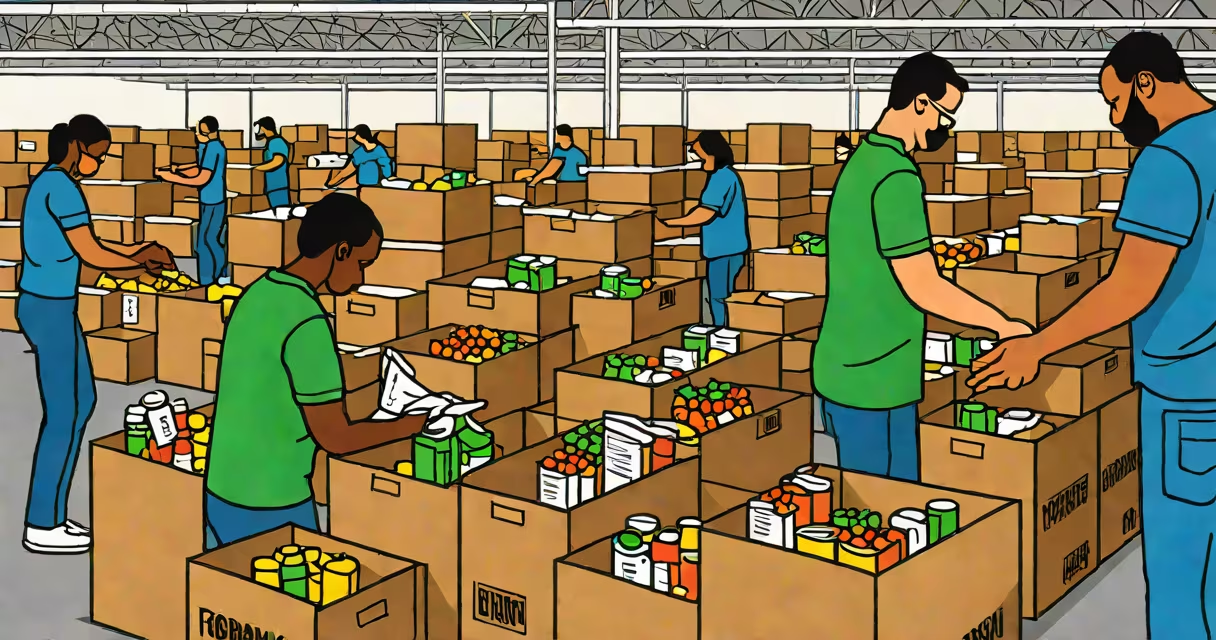
Food arrives at the FoodBank's central warehouse in Trenton, where it is sorted, inspected, and stored. Volunteers pack boxes based on nutritional guidelines and regional needs. For example, a family of four might receive a box containing canned beans, pasta, peanut butter, cereal, and fresh vegetables. Each box meets USDA standards for balanced nutrition.
Agencies report usage data monthly. This feedback loop allows the FoodBank to adjust supply based on seasonal changes, economic shifts, or emergencies. During the 2020 pandemic, demand surged by 40%, prompting the FoodBank to increase weekly distributions by 60%.
The FoodBank serves three primary categories of partners:
| Type | Examples | Monthly Reach |
|---|---|---|
| Food Pantries | Local churches, community centers | 750,000 individuals |
| Shelters & Homeless Services | Transitional housing programs | 120,000 individuals |
| School Meal Programs | After-school feeding sites | 100,000 students |
Each partner receives tailored support. Pantries often get weekly deliveries; shelters may receive bi-weekly bulk shipments. School programs receive frozen meals and snacks designed for children. The FoodBank also offers training modules on food safety, inventory management, and client intake procedures.
A common misconception is that the FoodBank gives out food directly to individuals. It does not. All food goes through vetted local organizations. This model ensures accountability, reduces waste, and maintains dignity for recipients. A direct distribution system would require staffing, storage, and security resources beyond the FoodBank's capacity.
Many assume the Community FoodBank of NJ is a government program. It is not. It is a 501(c)(3) nonprofit funded entirely by private donors, grants, and corporate sponsorships. The U.S. Department of Agriculture provides some funding through the Emergency Food Assistance Program (TEFAP), but this accounts for less than 15% of total food volume.
Another misunderstanding is that all donated food is processed or packaged. In reality, 60% of incoming food is unopened, factory-sealed surplus. The rest includes fresh produce from farmers' markets and leftover baked goods from bakeries. These items are distributed within 48 hours of receipt to prevent spoilage.
One non-obvious fact: the FoodBank uses predictive analytics to forecast demand. By analyzing historical data, weather patterns, school calendars, and unemployment rates, it adjusts delivery schedules. In 2022, this system reduced food waste by 18% compared to previous years.
In April 2023, a single mother in Camden, New Jersey, lost her job due to illness. She had no savings and relied on SNAP benefits, which were delayed by administrative errors. Her son was missing school lunches. She contacted a local food pantry listed on the Community FoodBank of NJ website.
The pantry, operated by a faith-based group, received a weekly delivery from the FoodBank. That week, the mother picked up a box containing 12 cans of soup, 2 bags of rice, 10 apples, 2 loaves of bread, and a jar of peanut butter. The box cost $30 to assemble but was free to her. The pantry staff helped her apply for SNAP reinstatement and referred her to a local health clinic.
She later wrote to the FoodBank: "Without this box, my son wouldn't have eaten for two days." Her story reflects the impact of coordinated, localized aid.
I volunteered at a Community FoodBank of NJ distribution site in Newark during a winter storm. The temperature dropped below freezing, but over 200 families arrived in the morning. Volunteers sorted 12 pallets of donated fruit and vegetables. One man brought his daughter to pick out oranges. He said, "This is the first time she's seen a banana since January." The moment underscored how basic food access remains a privilege.
Donations can be made online or through workplace giving programs. The FoodBank also hosts annual events like "Fill the Truck" drives, where volunteers load vehicles with food for distribution. In 2023, these events collected over 1 million pounds of food.
For organizations seeking to partner, the FoodBank requires a formal application, background checks, and compliance training. The process ensures safe, ethical food distribution. Over 1,200 agencies currently participate.
The Community FoodBank of NJ is not a standalone solution to hunger. But it is a proven infrastructure for immediate relief. Its work demonstrates that systemic change begins with consistent, reliable access to food.