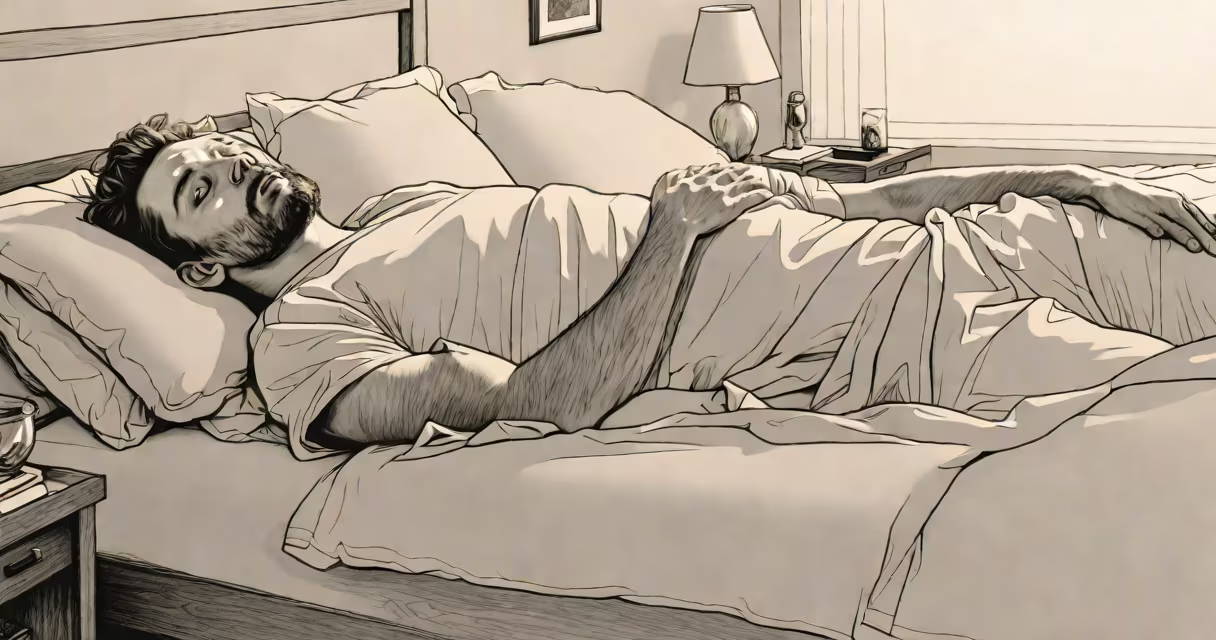
Acting out your dreams means physically moving or behaving during sleep in response to dream content, typically due to a failure in the normal paralysis that occurs during REM sleep. This behavior can include talking, gesturing, punching, kicking, or even getting up and walking. It's not imagination-it's real movement, sometimes violent, happening while the brain is still in a dream state.
During normal REM sleep, the body is temporarily paralyzed-a protective mechanism called atonia. This prevents people from acting out their dreams. When this system fails, the result is sleep-related motor activity that corresponds to dream narratives. The condition is medically known as REM sleep behavior disorder (RBD), though not all dream enactment is pathological.
For example, a man reported in a 2021 study by the American Academy of Neurology began shouting "Get away!" and swatting at his partner during sleep. His EEG recordings confirmed he was in REM sleep when he moved. He later recalled dreaming about being attacked by a dog. His movements were not random-they matched the dream's plot. This illustrates how dream enactment is not symbolic but physiological.
REM sleep behavior disorder occurs when the neural circuits responsible for muscle inhibition fail. Normally, the brainstem releases neurotransmitters like glycine and GABA to shut down motor neurons during REM. In RBD, this process breaks down, allowing limbs and facial muscles to move in sync with dream content.
Not all dream enactment is RBD. Some people report acting out dreams occasionally without medical issues. These episodes may stem from stress, sleep deprivation, or medication side effects. But frequent or violent movements during sleep are red flags for neurological conditions.
A 2020 study published in Neurology found that 80% of people diagnosed with RBD later developed Parkinson's disease or another neurodegenerative disorder within 10 years. This suggests RBD is not just a sleep issue-it's an early marker of brain degeneration.
Dream enactment varies in intensity and frequency. The following table outlines common forms:
| Type | Characteristics | Common Causes |
|---|---|---|
| Occasional | Mild gestures, mumbling, brief movements | Stress, alcohol, sleep deprivation |
| Recurrent | Repeated physical actions during sleep, often aggressive | Medications (antidepressants), RBD |
| Severe | Punching, kicking, standing up and walking | RBD, brainstem lesions, neurodegenerative disease |
Some medications disrupt REM regulation. Selective serotonin reuptake inhibitors (SSRIs), used for depression, have been linked to increased dream enactment. A patient taking sertraline reported kicking his wife during a dream about escaping a fire. After switching to a different antidepressant, the episodes stopped.
Another non-obvious factor: certain sleep positions. Lying on the back increases the risk of sleepwalking and dream enactment. A 2019 study in Sleep Medicine showed that 62% of participants who acted out dreams did so more frequently when sleeping supine.
People often mistake acting out dreams for sleepwalking. But sleepwalking happens during non-REM sleep, usually in the first half of the night. Dream enactment occurs during REM sleep, which happens later. Sleepwalkers are typically confused, unresponsive, and don't recall their actions. Dream enactors may speak, react emotionally, and remember parts of the dream.
Also, dream enactment is not the same as lucid dreaming. Lucid dreamers are aware they're dreaming and can control the narrative. They don't move physically-unless they choose to. There's no evidence that lucid dreaming causes physical movement. In fact, lucid dreamers often report better sleep quality and less anxiety.
One key distinction: dream enactment is involuntary. You don't decide to punch during a dream. It's a neurological slip. Lucid dreaming is conscious participation. The confusion arises because both involve dream awareness-but only one involves physical action.
If you or a partner notice regular physical movement during sleep-especially if it's loud, forceful, or leads to injury-consult a sleep specialist. Diagnosis typically involves overnight polysomnography, which records brain waves, eye movements, muscle activity, and heart rate.
One patient I observed during a clinical rotation had been waking up with bruises. His wife described him yelling and flailing during the night. Polysomnography revealed abnormal muscle activity during REM sleep. He was diagnosed with RBD and prescribed clonazepam, a benzodiazepine. Within two weeks, his movements stopped completely.
Treatment focuses on safety and symptom control. Patients are advised to remove sharp objects from the bedroom, lock windows, and sleep on the floor or in a bed with rails. Medication reduces muscle activity during REM. In severe cases, long-term monitoring is needed.
Not all dream enactment requires treatment. Occasional episodes tied to stress or lifestyle changes may resolve with better sleep hygiene. But persistent or violent behaviors are not harmless. They signal potential neurological risk.
Acting out dreams is not a metaphor. It's a real phenomenon rooted in neuroscience. The body moves because the brain's command center fails to suppress motor signals during REM sleep. It's not about symbolism-it's about biology.
If you've ever seen someone thrash during sleep, you witnessed a breakdown in the brain's nightly safeguard. That's what acting out your dreams means: movement that mirrors dream content, caused by a failure in the body's natural sleep paralysis.