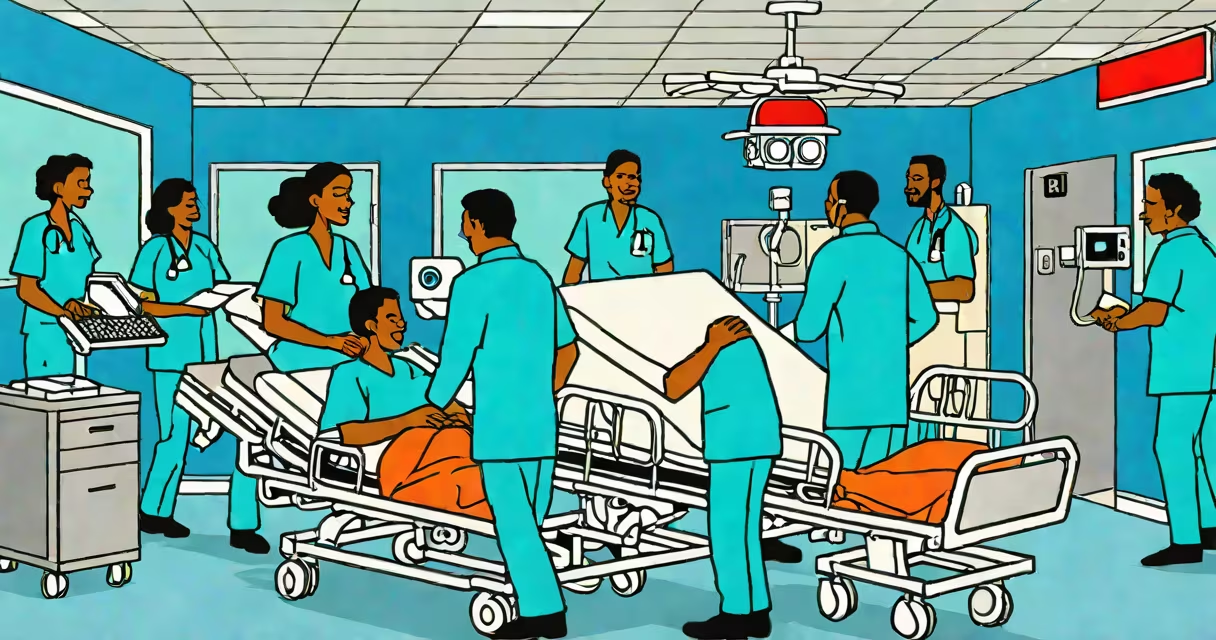
Code blue in the emergency room indicates a cardiac arrest-when a patient's heart stops beating unexpectedly. This is a life-threatening emergency requiring immediate intervention by a trained rapid response team.
When a code blue is called, hospital staff activate a standardized protocol designed to maximize survival chances. The term "code blue" is a universal alert system used in U.S. hospitals, though some facilities may use different color codes based on local policy. The alert is not a description of the condition-it's a signal to mobilize resources.
The American Heart Association (AHA) reports that survival rates for out-of-hospital cardiac arrest average 10% when treated promptly. In-hospital cardiac arrests have slightly better outcomes, around 20%, due to faster access to care. A code blue response must begin within three minutes of recognition to improve survival.
Upon announcement of code blue, a team of physicians, nurses, respiratory therapists, and pharmacists converges on the patient's location. The team leader-usually a physician or senior nurse-assumes command. All members follow a structured sequence: assess, initiate CPR, defibrillate if indicated, administer medications, and secure airway control.
Each role has defined responsibilities. For example, one person performs chest compressions at a rate of 100-120 per minute, another manages the airway with a bag-valve mask or intubation, and a third prepares medications like epinephrine or amiodarone. A designated team member tracks time and documents interventions in real time.
A 2022 study published in Resuscitation found that teams with regular simulation training had a 35% higher rate of return of spontaneous circulation (ROSC)-the restoration of a measurable pulse-compared to those without routine drills. This highlights the importance of preparedness, not just individual skill.
Code blue is not a single action-it's a coordinated system of people, equipment, and procedures. The core elements include:
Every hospital maintains a crash cart-a mobile unit stocked with emergency drugs and devices. These carts are checked daily and restocked weekly. The contents are standardized under guidelines from the National Registry of Emergency Medical Technicians (NREMT).
One non-obvious fact: the term "code blue" originated in the 1960s at Johns Hopkins Hospital. It was chosen because blue was associated with urgency and calm-unlike red, which evokes danger and panic. The color coding system spread rapidly across U.S. hospitals and remains in use today.
Code blue is used exclusively in acute care settings-hospitals, surgical centers, and intensive care units. It is not deployed in outpatient clinics, ambulances, or home health environments. The distinction matters: in the ER, patients are monitored continuously, allowing early detection of cardiac events.
Common triggers include ventricular fibrillation, pulseless ventricular tachycardia, asystole, and bradycardia with poor perfusion. Not all cardiac arrests are sudden-the most common cause is underlying heart disease, such as coronary artery disease or cardiomyopathy.
For example, in 2021, a 68-year-old man admitted to a New York City hospital with chest pain developed ventricular fibrillation during a routine cardiac catheterization. The nurse recognized the arrhythmia on the monitor, called code blue, and initiated CPR. Within five minutes, the team arrived, defibrillated the patient, and restored a stable rhythm. He survived and was discharged after ten days.
Code blue is often mistaken for other emergency codes. For instance:
| Code | Meaning | Correct Response |
|---|---|---|
| Code Red | Fire or hazardous material spill | Evacuate area, contain fire, call fire department |
| Code Black | Active shooter or violent intruder | Lockdown, hide, wait for law enforcement |
| Code Pink | Patient abduction or missing child | Secure facility, notify security and police |
Confusing code blue with code red leads to critical delays. A 2019 survey by the Joint Commission found that 12% of hospital staff incorrectly identified code red as a medical emergency. Misidentification can result in resource misallocation and compromised patient safety.
I once observed a code blue scenario during a clinical rotation. A patient in the ICU went from stable to unresponsive in under two minutes. The charge nurse called code blue immediately. The team arrived within 90 seconds. We performed chest compressions, delivered two shocks, and administered epinephrine. After 18 minutes, the patient regained a pulse. The event underscored how quickly time matters-and how important clear communication is.
Code blue is not a diagnosis. It is not a treatment. It is not a decision point. It is a trigger for action. The term itself doesn't explain why the heart stopped-it only signals that immediate intervention is required.
Some assume code blue means "do everything." That's incorrect. The team follows ethical guidelines and resuscitation protocols. If a patient has a valid Do Not Resuscitate (DNR) order, the code is not activated. Similarly, if the patient has suffered irreversible brain damage or prolonged arrest, the team may stop efforts after a set period-typically 20 minutes.
According to the AHA, patients who survive cardiac arrest require post-resuscitation care, including targeted temperature management (cooling the body to 32-34°C for 24 hours) to reduce neurological injury. This phase begins immediately after ROSC is achieved.
Understanding what code blue means in the ER is essential for healthcare workers, patients, and families. It represents a high-stakes, time-sensitive process grounded in science, training, and protocol. When a code blue is called, it's not chaos-it's precision under pressure.
Knowing what code blue means in the ER ensures clarity during emergencies. It's not a metaphor. It's a system built on decades of research and real-world application. The goal is always the same: restore life, preserve function, and provide dignity in crisis.