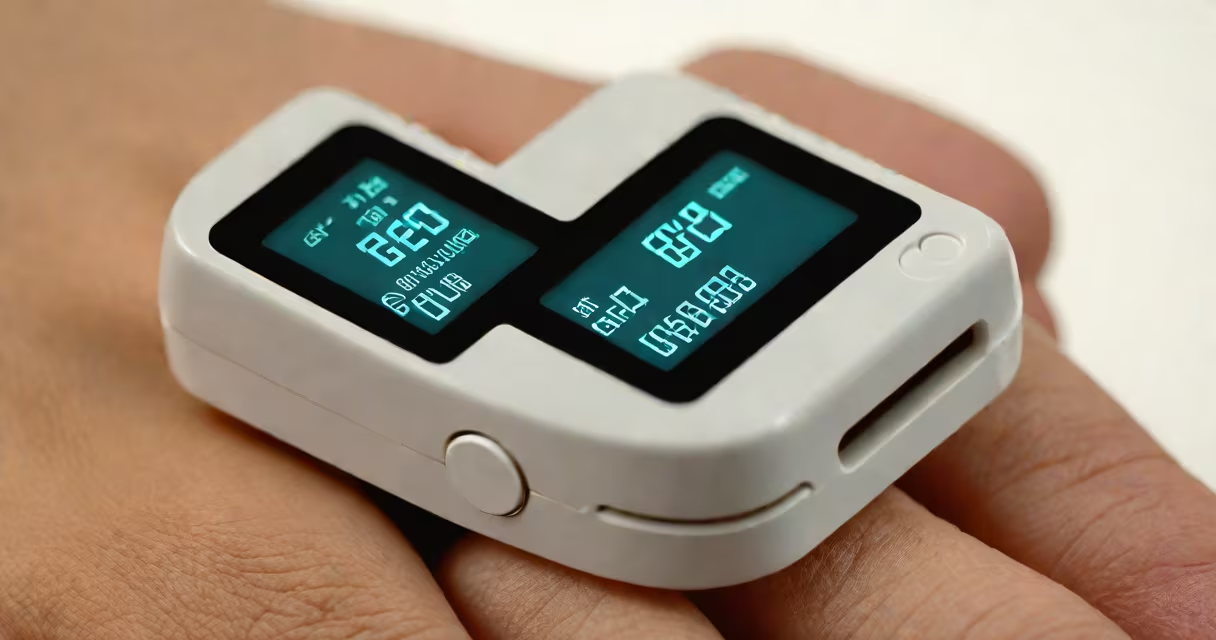
O2 saturation, or oxygen saturation, measures the percentage of hemoglobin in your blood that is bound to oxygen. Normal values range from 95% to 100%. Levels below 90% indicate low blood oxygen, known as hypoxemia, which may require medical intervention.
O2 saturation is measured using a non-invasive device called a pulse oximeter. The device clips onto a fingertip, toe, or earlobe and uses light to estimate how much oxygen is attached to hemoglobin molecules in red blood cells. It works by emitting two wavelengths of light-red and infrared-through the skin. Oxygenated hemoglobin absorbs more infrared light, while deoxygenated hemoglobin absorbs more red light. The device calculates the ratio and converts it into a percentage.
For most people, a reading between 95% and 100% is considered healthy. Values below 90% suggest insufficient oxygen delivery to tissues and may indicate respiratory or cardiovascular issues. The American Lung Association notes that sustained levels below 90% warrant evaluation by a healthcare provider, especially if accompanied by shortness of breath, confusion, or rapid breathing.
Pulse oximeters are widely used in hospitals, clinics, and homes. They provide near-instant results and are essential during surgeries, emergency care, and monitoring patients with chronic lung conditions such as COPD or pulmonary fibrosis. The device relies on the pulsatile flow of blood in capillaries, filtering out static tissue signals to isolate the arterial component.
Accuracy depends on proper placement and stable blood flow. Poor circulation, cold extremities, nail polish (especially dark colors), or movement can interfere with readings. A study published in Critical Care Medicine found that finger oximeters can underestimate oxygen saturation by up to 5% in patients with poor perfusion, particularly in older adults or those with peripheral vascular disease.
For precise measurements, arterial blood gas (ABG) testing remains the gold standard. This involves drawing blood from an artery, usually the radial artery in the wrist. ABG provides exact partial pressure of oxygen (PaO₂), carbon dioxide (PaCO₂), and pH. Pulse oximetry is faster and safer but cannot detect acid-base imbalances or carbon dioxide retention-key factors in respiratory failure.
There are two primary contexts in which O2 saturation is reported: peripheral capillary oxygen saturation (SpO₂) and arterial oxygen saturation (SaO₂).
| Type | Measurement Method | Typical Range | Use Case |
|---|---|---|---|
| SpO₂ | Pulse oximeter (non-invasive) | 95%-100% | Home monitoring, acute care, surgery |
| SaO₂ | Arterial blood gas (invasive) | 95%-100% | Critical care, ICU, diagnostic confirmation |
SpO₂ is the number most people see on a home monitor. SaO₂ is used when clinical decisions depend on precision-such as adjusting ventilator settings or managing sepsis. SpO₂ readings correlate well with SaO₂ in stable patients but can lag during sudden changes in oxygenation.
Many assume that a normal SpO₂ reading means adequate oxygenation. That's not always true. Patients with severe anemia may have normal SpO₂ but still suffer from tissue hypoxia because their blood lacks enough hemoglobin to carry oxygen, even if it's fully saturated.
Another error occurs in high-altitude environments. At elevations above 2,500 meters (8,200 feet), ambient oxygen levels drop. Healthy individuals may show SpO₂ values around 88%-92% due to lower atmospheric pressure. This is not pathological-it reflects physiological adaptation. However, misinterpreting this as hypoxemia can lead to unnecessary supplemental oxygen use.
A key distinction: SpO₂ measures oxygen saturation, not oxygen content. Oxygen content depends on both saturation and hemoglobin concentration. A patient with 98% SpO₂ but a hemoglobin level of 6 g/dL (severe anemia) delivers far less oxygen to tissues than someone with 95% saturation and normal hemoglobin.
In early 2022, a 68-year-old man with a history of heart failure developed a cough and fatigue. His home pulse oximeter read 91% on room air. He had no shortness of breath. He called his doctor, who advised him to go to the emergency department.
At the hospital, a fingerstick test confirmed SpO₂ of 92%, and an arterial blood gas showed PaO₂ of 62 mmHg-indicating mild hypoxemia. His hemoglobin was 11.8 g/dL, within normal range. He was diagnosed with pneumonia and treated with antibiotics. After 48 hours, his SpO₂ rose to 96% on room air.
This case illustrates that even subtle drops in O2 saturation can signal underlying illness. Home monitoring caught a decline before symptoms worsened, enabling timely treatment.
Consult a healthcare provider if SpO₂ consistently falls below 90% at rest. For people with chronic lung or heart disease, a drop below 92% may prompt concern. The National Heart, Lung, and Blood Institute recommends checking oxygen levels during activity or sleep if you have a known condition.
During the COVID-19 pandemic, pulse oximetry became a common tool for detecting silent hypoxia-low oxygen levels without noticeable symptoms. Some patients reported feeling fine while their SpO₂ dropped to 85%. This led to hospitalization and oxygen therapy in several cases.
For most people, occasional fluctuations between 94% and 98% are normal. But persistent readings below 92% require evaluation. If you're using a home device, ensure it's calibrated and placed correctly. Avoid relying solely on SpO₂ if you have anemia, carbon monoxide exposure, or abnormal hemoglobin variants like methemoglobinemia.
Understanding O2 saturation requires knowing what "S" stands for in medical shorthand. In "SpO₂," the "S" represents "saturation." The "P" stands for "peripheral," indicating the measurement is taken at the extremity-not from an artery. The "O₂" is oxygen. So SpO₂ means "peripheral capillary oxygen saturation."
For clarity, "SaO₂" means "arterial oxygen saturation," measured directly from arterial blood. The difference matters in critical care. A patient with a SpO₂ of 95% may have a SaO₂ of 93%-a small gap that can affect treatment decisions.
When interpreting a reading, ask: What is the context? Is the person resting or moving? Are they wearing dark nail polish? Do they have a history of lung disease? These factors influence accuracy. Always consider the whole picture.
O2 saturation is a important sign that reflects how efficiently your blood transports oxygen. A reading of 95% or higher is generally safe. Below 90% signals potential distress. Use pulse oximetry as a screening tool, not a standalone diagnosis. Always consult a clinician if you're concerned about your levels.