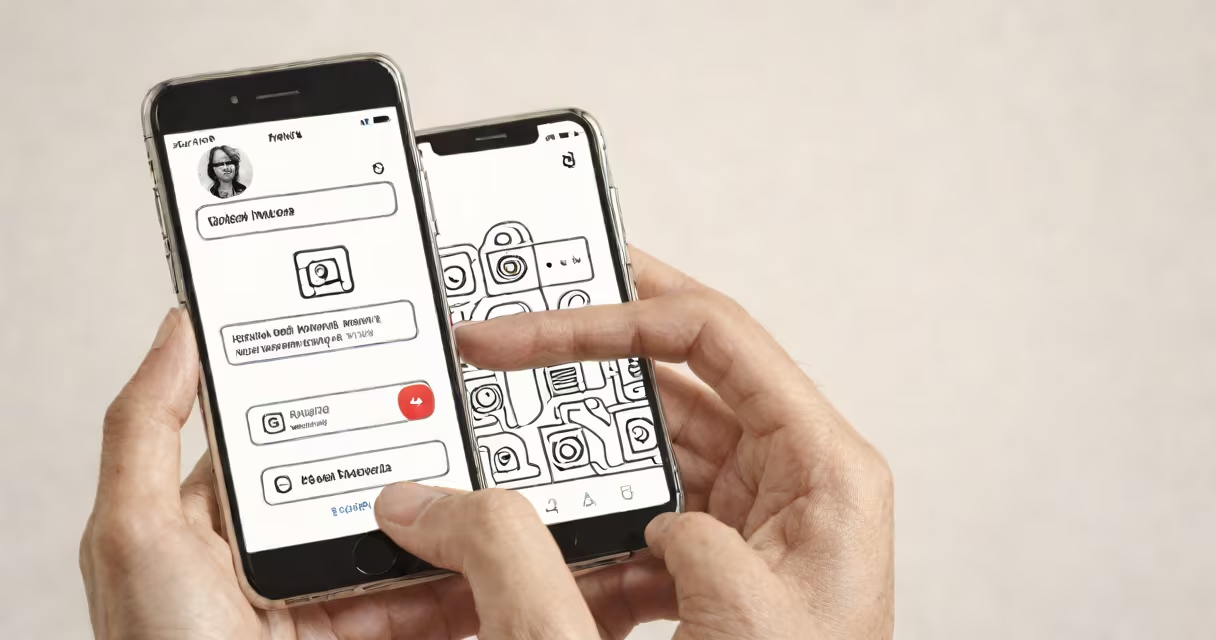
A social media handle is your unique public username on platforms like Instagram, Twitter (now X), TikTok, or LinkedIn. It's the name others use to find, tag, or mention you online. This identifier appears in the profile URL and is required to access your account.
Handles serve as your digital signature. On Twitter, for example, @elonmusk is the handle used to reference Elon Musk's official account. The same rule applies across platforms: your handle is the public-facing label tied to your profile, content, and interactions.
Each platform enforces strict uniqueness. No two accounts can share the same handle. Once claimed, a handle becomes permanently linked to that account unless changed through platform settings. This ensures users can reliably identify and connect with specific individuals or brands.
When you create a profile on a social network, you choose a handle during registration. The system checks availability in real time. If the name is taken, you must select another. Some platforms allow numeric or special character additions (e.g., @johndoe123), but most require letters and numbers only.
Handles appear in multiple contexts: in search results, when tagged in posts (@username), in direct messages, and in URLs. For example, visiting https://instagram.com/nytimes takes you directly to The New York Times' Instagram profile because "nytimes" is their handle.
Platform-specific rules govern length and format. Instagram allows up to 30 characters, including underscores and periods. Twitter limits handles to 15 characters and disallows spaces. These constraints ensure handles remain short, memorable, and easy to type.
Handles fall into three primary categories based on purpose:
| Type | Use Case | Example | Platform |
|---|---|---|---|
| Personal | Individuals identifying themselves | @sarahjones | Instagram, TikTok |
| Brand/Company | Businesses promoting products or services | @nike | TikTok, X |
| Public Figure | Politicians, celebrities, influencers | @barackobama | X, YouTube |
Brands often prioritize consistency across platforms. Nike uses @nike everywhere-this uniformity builds recognition and trust. A study by Sprout Social found that 68% of consumers are more likely to engage with a brand that maintains a consistent handle across channels.
Personal handles may reflect real names, nicknames, or creative pseudonyms. Some users adopt handles that obscure identity for privacy, such as @shadow_007 or @silentobserver. Others use handles to express personality-@catlover42 or @wanderlust_jane.
Many people mistake handles for email addresses or passwords. A handle is not a login credential. You don't use it to sign in. Instead, you use your email or phone number and password to authenticate. The handle is purely a public identifier.
Another misconception is that handles are interchangeable with usernames. While both refer to a user's name, "username" is a broader term. On some platforms, like Facebook, the term "username" is used for the profile URL, but Facebook doesn't use handles in the same way as Twitter or Instagram. On X, the term "handle" specifically refers to the @name portion.
A key distinction: handles are not private. They're visible to anyone who views your profile. This transparency supports discoverability but also exposes users to impersonation. According to Meta's 2023 Trust & Safety Report, over 4 million fake accounts were removed in Q1 alone due to handle duplication or identity theft.
In 2021, a small coffee roaster in Portland named "Bean & Brew Co." launched on Instagram. They chose the handle @beanandbrewco. The name matched their physical shop signage and was used consistently across all marketing materials.
Within six months, @beanandbrewco gained 12,000 followers. Customers began tagging them in photos from local cafes. The handle became synonymous with quality beans and community events. When they ran a giveaway, entries had to include @beanandbrewco in the caption. This boosted engagement by 37% compared to previous campaigns.
The handle wasn't just a label-it became part of their brand story. As noted by the Harvard Business Review, "A well-chosen handle acts as a digital storefront, signaling identity and intent before a single post is seen."
I once helped a freelance photographer launch her personal brand. She wanted a handle that reflected her work-minimalist portraits with natural lighting. After testing 14 options, we settled on @lumos_studio. We checked availability across Instagram, TikTok, and YouTube.
It was available on all three. The name was short, memorable, and evoked light and artistry. Within four months, she received a collaboration offer from a fashion magazine using only her handle in the outreach message. The clarity of the identifier made the connection instant and credible.
This experience confirmed a principle: a good handle isn't just unique-it's meaningful. It should align with your audience, content, and goals.
Understanding what a social media handle means is essential for anyone building a digital presence. It's not just a name-it's your public identity, your entry point into conversations, and a tool for visibility. Choose carefully. Keep it consistent. Make it yours.