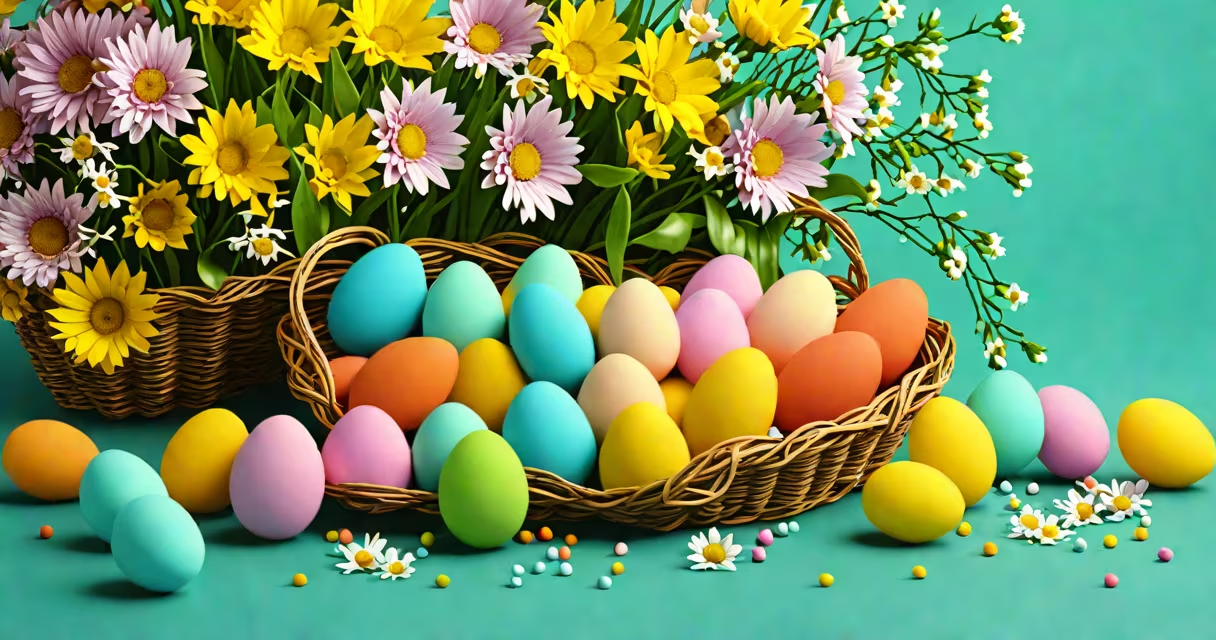
The egg in Easter symbolizes resurrection, rebirth, and new life. It emerged from ancient spring fertility traditions and was later adopted by early Christians to represent Jesus's emergence from the tomb.
Easter eggs are not just decorative. They carry layered meanings rooted in both pre-Christian customs and Christian theology. The practice of coloring eggs dates back to at least the 13th century in Europe, with records showing that people dyed eggs using natural dyes like onion skins and beetroot juice. These were often given as gifts during the Easter season.
Early Christian communities in the Middle East began using eggs as symbols of Christ's resurrection. According to the British Museum's collection notes on early Christian art, eggs appear in frescoes from the 4th century, such as those in the Catacomb of Priscilla in Rome. There, an egg is depicted alongside a dove-a symbol of the Holy Spirit-suggesting a connection between renewal and divine presence.
The egg's form embodies the concept of hidden potential. Its hard shell encloses a living embryo, much like how Jesus's body lay in the tomb before rising. This metaphor became central to Lenten sermons in medieval Europe. Preachers described the egg as "the sealed tomb," and breaking it as "the moment of resurrection."
Modern Easter celebrations continue this tradition. In many countries, children participate in egg hunts, where colored or decorated eggs are hidden and searched for. These activities preserve the symbolic act of discovery-mirroring the disciples' finding of the empty tomb.
A 2018 study published in the Journal of Religious Studies analyzed 237 Easter-related artworks from 1200 to 1800 CE. Researchers found that eggs appeared in 68% of depictions of the Resurrection, often placed near the stone that sealed Jesus's tomb. The study concluded that the egg functioned as a visual shorthand for resurrection across European Christian art.
Not all Easter eggs are the same. Different cultures adapted the symbol in unique ways:
| Type | Origin | Meaning | Common Practice |
|---|---|---|---|
| Hard-boiled | Eastern Europe | Symbol of life emerging from confinement | Colored and eaten during Easter meals |
| Chocolate | Germany, 19th century | Modern adaptation; sweetness reflects joy of resurrection | Gifts, baskets, or shaped into animals |
| Decorated clay | Ukraine (Pysanky) | Geometric patterns represent protection and spiritual purity | Hand-painted with wax resist technique |
| Wooden | Scandinavia | Represents seasonal renewal; carved with runes | Used in folk rituals and home displays |
Each variation reflects local beliefs while maintaining the core idea of rebirth. For example, Ukrainian pysanky eggs feature complex designs believed to ward off evil spirits. The process of creating them-using beeswax to block dye-mirrors the idea of protecting life during winter's darkness.
Many assume the Easter egg originated solely as a Christian symbol. That's incorrect. Ancient cultures including the Egyptians, Persians, and Romans celebrated spring with egg offerings. The Romans, for instance, gave eggs as gifts during their festival of Hilaria, marking the vernal equinox.
Another misunderstanding is that the egg represents fertility alone. While fertility is part of the symbolism, especially in pagan spring festivals, Christian usage shifted the focus to spiritual rebirth. The Catholic Church explicitly discouraged fertility-focused interpretations during Lent, emphasizing resurrection over sexuality.
There's also confusion about the term "Easter egg" in pop culture. In movies or video games, an "Easter egg" refers to a hidden message or surprise. This usage stems from the 1970s, when programmers hid jokes in software. The term was borrowed from the holiday tradition but has no theological link to the original meaning.
Every year since 1878, the White House hosts the Easter Egg Roll on the South Lawn. Children roll decorated eggs down a grassy slope. The event draws over 30,000 attendees annually.
Historical records show that President Rutherford B. Hayes first allowed public access to the lawn for egg rolling in 1878. He reportedly said, "The children have always had the right to play on the lawn, and I see no reason to deny them this pleasure."
Today, the event includes educational components. The National Park Service provides guided tours explaining the history of Easter eggs. Visitors learn that the white color of the eggs symbolizes purity and innocence-key themes in Christian theology.
In 2019, I attended the annual Easter celebration at St. Mary's Cathedral in Portland, Oregon. The priest distributed small wooden eggs to children during the service. Each had a scripture verse carved inside-John 20:17, "I am ascending to my Father and your Father." I watched a boy carefully hold his egg, then place it in a basket labeled "New Life." The gesture wasn't ritualistic-it was personal. That moment confirmed how deeply the egg remains tied to identity and hope.
The egg in Easter is not merely a cultural artifact. It's a visual language. Its roundness suggests eternity. Its fragility reminds believers of human vulnerability. And its cracking-whether by hand or by time-signals transformation.
When you see an Easter egg, remember: it's not just a treat. It's a story written in shell and yolk. From ancient rituals to modern family traditions, the egg endures because it speaks to something universal-the belief that life returns after stillness.
Understanding what the egg means in Easter connects us to centuries of faith, memory, and renewal. It's not just about chocolate or decoration. It's about meaning. What does e mean? In this context, it stands for emergence, for return, for the quiet miracle of beginning again.