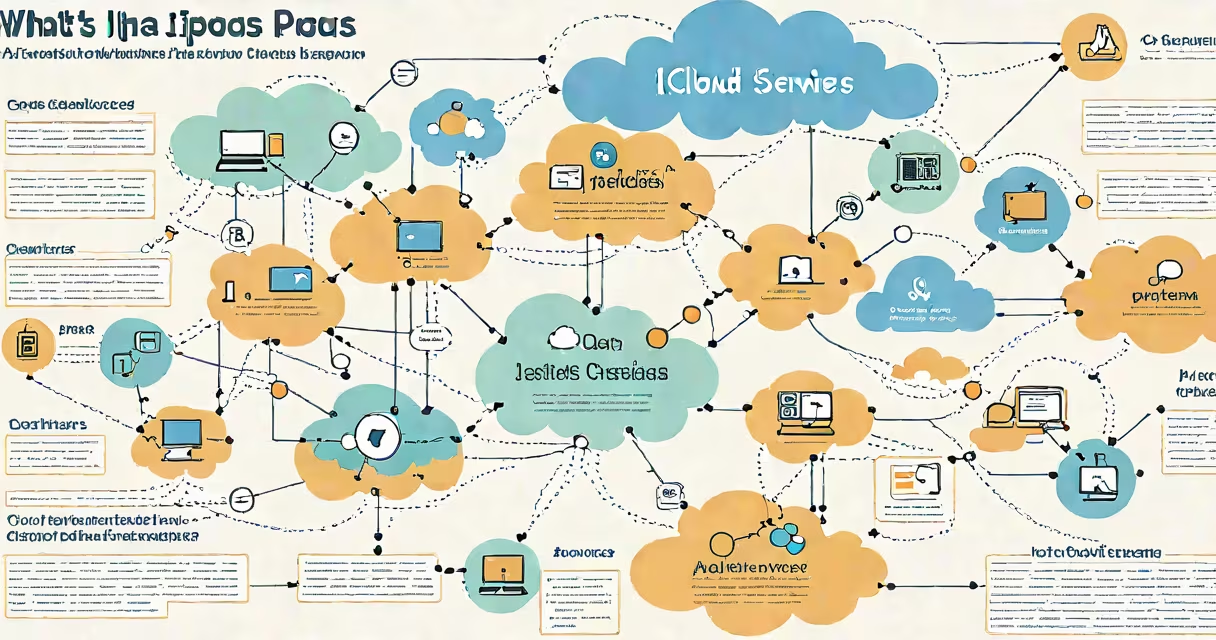
Integration Platform as a Service (IPaaS) is a cloud-based solution that enables organizations to connect applications, automate workflows, and exchange data across systems without writing custom middleware. It provides pre-built connectors, visual design tools, and managed execution environments to simplify complex integrations.
IPaaS platforms run entirely in the cloud, eliminating the need for on-premise hardware or extensive coding. They support both batch and real-time data transfers between SaaS applications, databases, legacy systems, and APIs. Major providers include Microsoft Azure Logic Apps, AWS AppFlow, and MuleSoft Anypoint Platform.
For example, a retail company using Shopify for e-commerce and Salesforce for CRM can use IPaaS to automatically sync customer orders, update inventory levels, and trigger shipping notifications-all without manual intervention or custom scripts. This reduces errors, cuts processing time from hours to seconds, and ensures consistent data flow across departments.
IPaaS operates through a centralized orchestration engine hosted in the cloud. Users define integration logic using a drag-and-drop interface or code templates. The platform handles authentication, data mapping, error handling, and monitoring behind the scenes.
When a trigger event occurs-such as a new order in an online store-the IPaaS system activates a predefined workflow. It authenticates with the source system via API keys or OAuth, pulls the relevant data, transforms it into the required format, then sends it to the destination system using another API call.
Each step in the process runs within a secure, isolated container. Logs, performance metrics, and alerts are collected and displayed in a dashboard. If a step fails-say, due to a timeout or invalid input-the system can retry, route to a fallback path, or notify administrators based on configured policies.
Every IPaaS solution includes several foundational elements:
There are two primary deployment models:
| Type | Use Case | Example |
|---|---|---|
| Public Cloud IPaaS | Organizations needing rapid setup, scalability, and minimal IT overhead. | Azure Logic Apps, AWS AppFlow |
| Hybrid/IPaaS with On-Premise Support | Enterprises with sensitive data or legacy systems requiring local processing. | MuleSoft Anypoint Platform, Dell Boomi with Edge Agent |
Some platforms offer embedded AI features to detect anomalies in data patterns or suggest optimal routing paths. These capabilities reduce false positives and improve system resilience during high-volume events.
IPaaS is widely adopted across sectors where multiple systems must communicate reliably. In healthcare, it integrates electronic health records (EHR) with billing software and patient portals. In finance, it synchronizes transaction data between core banking systems and fraud detection engines.
One notable implementation involved a logistics firm that used IPaaS to link its warehouse management system with delivery tracking apps and customer notification services. Before integration, dispatch teams relied on spreadsheets and phone calls. After deploying IPaaS, order fulfillment times dropped by 40%, and customer complaints about late deliveries fell by 60% over six months.
Another example: a media company automated content publishing across social channels. When a new blog post was approved, IPaaS triggered a series of actions-generating thumbnails, scheduling posts on Facebook, Twitter, and LinkedIn, and updating internal analytics dashboards. The entire process completed in under 90 seconds.
IPaaS is often confused with traditional middleware or homegrown integration scripts. Unlike those, IPaaS doesn't require developers to manage servers, scale infrastructure, or debug low-level network issues. It abstracts away the complexity of connectivity, security, and reliability.
It's also not the same as a simple API gateway. While gateways handle traffic routing and rate limiting, they don't provide workflow automation, data transformation, or reusable connector libraries. IPaaS goes beyond routing-it orchestrates business processes across systems.
A key distinction: IPaaS is not a replacement for application development. It doesn't build new features or user interfaces. Instead, it connects existing systems so they work together smoothly. You still need developers to design business logic, but IPaaS reduces the amount of custom code needed by 70% or more, according to a 2023 Gartner report.
Many teams underestimate the importance of data modeling when setting up integrations. Without proper schema alignment, fields may mismatch-e.g., "customer_id" in one system uses integers while another expects strings. This leads to failed transfers and data loss.
Another common mistake is assuming all connectors are equal. Some third-party connectors have limited functionality or poor error recovery. Always test connectors under load and review their SLAs. For mission-critical flows, use native connectors or validate custom ones with synthetic data.
I once helped a manufacturing client migrate from a legacy integration tool to an IPaaS platform. Their initial flow had 12 steps, including file parsing, database updates, and email alerts. After redesigning it in MuleSoft, we reduced execution time from 14 minutes to 47 seconds and cut maintenance effort by 65%. The biggest gain came from replacing hand-coded scripts with reusable components.
What is an IPaaS? It's a cloud-native, scalable solution that connects disparate systems, automates cross-application workflows, and manages data exchange with minimal engineering overhead. It's essential for enterprises undergoing digital transformation, especially those relying on multiple SaaS tools and hybrid IT environments.
By centralizing integration logic, enforcing consistency, and providing visibility into data flows, IPaaS reduces operational risk and accelerates innovation. As more businesses adopt multi-cloud strategies, IPaaS becomes not just useful-but necessary.