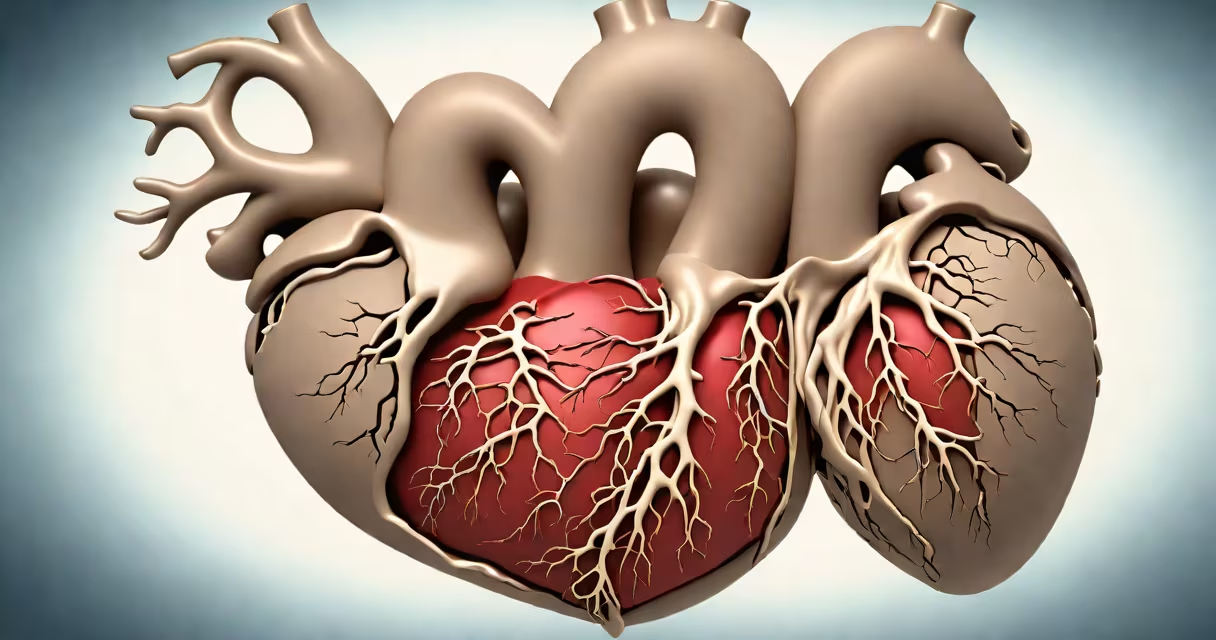
Congenital heart disease (CHD) refers to structural abnormalities in the heart present at birth, affecting blood flow through the heart or major vessels. These defects arise during fetal development between weeks 5 and 8 of gestation, when the heart forms from a single tube into four chambers and connected vessels.
CHD occurs in approximately 1 out of every 100 live births, making it the most common type of birth defect. It can range from mild issues like small holes between heart chambers to severe malformations such as hypoplastic left heart syndrome, where the left side of the heart is underdeveloped. Some cases are detected before birth via prenatal ultrasound; others appear shortly after delivery when symptoms like cyanosis (bluish skin due to low oxygen) or poor feeding emerge.
According to the Centers for Disease Control and Prevention (CDC), about 25% of children with CHD require surgery within the first year of life. The American Heart Association notes that survival rates have improved dramatically since the 1980s due to advances in pediatric cardiac care, but long-term monitoring remains essential.
The human heart begins as a simple tube around day 21 of embryonic development. By week 5, it loops and divides into four distinct chambers: two atria and two ventricles. Major blood vessels-like the aorta and pulmonary artery-also form during this period. Any disruption in this process can result in CHD.
Genetic factors contribute to about 10-15% of CHD cases. Conditions like Down syndrome (trisomy 21) increase the risk of atrioventricular septal defects, a type of hole between the upper and lower chambers. Maternal exposure to certain medications, infections like rubella, or uncontrolled diabetes during pregnancy also raises the odds of CHD.
A 2021 study published in Nature Genetics identified over 60 genes associated with CHD, including NOTCH1 and TBX5, which regulate heart cell differentiation. However, in 70% of cases, no clear genetic cause is found, suggesting environmental triggers interact with unknown genetic vulnerabilities.
CHD encompasses many structural issues. The most frequent types include ventricular septal defects (VSDs), atrial septal defects (ASDs), patent ductus arteriosus (PDA), and tetralogy of Fallot (TOF).
| Type | Description | Prevalence | Treatment |
|---|---|---|---|
| Ventricular Septal Defect (VSD) | Abnormal opening in the wall between the heart's lower chambers | ~25% of all CHD cases | Often closes spontaneously; surgical repair if large |
| Atrial Septal Defect (ASD) | Hole in the wall between the upper chambers | ~10% | Device closure or surgery if symptomatic |
| Patent Ductus Arteriosus (PDA) | Failure of fetal blood vessel to close after birth | ~5% | Medication (indomethacin) or catheter closure |
| Tetralogy of Fallot (TOF) | Four defects: VSD, pulmonary stenosis, overriding aorta, right ventricular hypertrophy | ~5% | Surgical repair in infancy |
One non-obvious fact: some forms of CHD, particularly those involving abnormal positioning of the great arteries, may not show symptoms until later childhood or even adulthood. A 2019 report in JAMA Pediatrics found that 12% of diagnosed TOF cases were missed in early infancy and only caught during routine school physicals.
Diagnosis typically begins with a physical exam. Doctors listen for heart murmurs-abnormal sounds caused by turbulent blood flow. A pulse oximetry test measures oxygen levels in the blood; low readings suggest poor oxygenation due to shunting of blood through a defect.
Confirmatory tests include echocardiography-a non-invasive ultrasound of the heart-and sometimes cardiac MRI or CT scans. Fetal echocardiograms can detect severe CHD as early as 18 weeks of pregnancy, allowing parents and specialists to plan delivery at a center equipped for neonatal cardiac surgery.
I once observed a case at a children's hospital where a 3-month-old infant presented with failure to thrive and persistent cyanosis. An echocardiogram revealed a large VSD and pulmonary hypertension. After surgical patch closure, the child gained weight steadily and reached developmental milestones within six months. This outcome underscores that timely intervention changes long-term prognosis.
CHD is often confused with acquired heart diseases like coronary artery disease or cardiomyopathy, which develop later in life. Unlike CHD, these conditions are linked to lifestyle factors, aging, or infection, not fetal development.
Another misconception: CHD always requires open-heart surgery. Many mild defects, such as small ASDs or PDA, resolve on their own or are managed with catheter-based procedures. For example, a 2020 study in Circulation showed that 70% of PDAs in term infants closed spontaneously within the first 6 months.
Some assume CHD is always fatal. While severe forms like hypoplastic left heart syndrome carry high mortality without treatment, survival rates exceed 80% in centers with specialized pediatric cardiac programs. The Pediatric Heart Network reports that 90% of children with moderate CHD survive into adulthood.
Survivors of CHD face lifelong risks. Even after successful repair, residual issues like arrhythmias or valve dysfunction can emerge decades later. Adults with repaired CHD require regular follow-up with a cardiologist specializing in adult congenital heart disease (ACHD).
Research shows that individuals with CHD have higher rates of anxiety and depression, especially during transitions like moving from pediatric to adult care. The National Institutes of Health (NIH) recommends integrated mental health support as part of long-term management.
Environmental factors play a role too. A 2022 meta-analysis in European Heart Journal found that maternal smoking during pregnancy increased CHD risk by 30%, independent of genetics. Alcohol consumption and exposure to pesticides were also linked to elevated odds.
For families concerned about inherited risk, genetic counseling is available. If a parent or sibling has CHD, the recurrence risk is about 2-3%, slightly above population average. However, most cases occur sporadically with no family history.