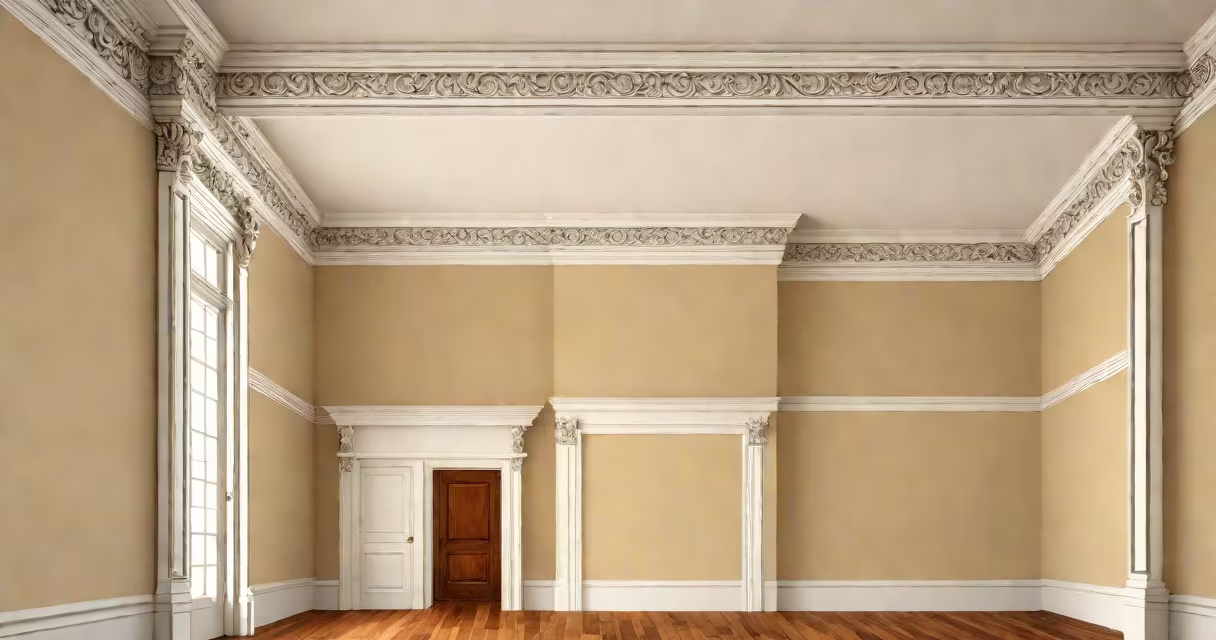
Crown molding in a house is a decorative trim installed at the junction where walls meet ceilings. It serves both aesthetic and structural purposes, enhancing room proportions and concealing gaps between wall and ceiling surfaces.
Typically made from wood, polyurethane, or plaster, crown molding runs along the perimeter of a room. It appears in homes ranging from historic Victorian mansions to modern minimalist residences. The profile-whether flat, convex, or intricately carved-defines its visual impact.
According to the National Association of Home Builders (NAHB), crown molding is among the top five interior upgrades homeowners choose during renovations. It contributes to perceived value and comfort, especially in high-traffic areas like living rooms and dining spaces.
Crown molding functions as a transitional element between vertical and horizontal planes. Its primary role is to soften the sharp edge where wall and ceiling intersect, reducing visual harshness and improving spatial harmony.
When properly installed, it hides minor imperfections in wall-ceiling alignment. Over time, drywall shifts slightly due to settling. Crown molding absorbs these small movements, preventing cracks from forming at the joint.
Many older homes feature crown molding with hand-carved details. Modern versions use CNC-milled polyurethane, which resists warping and is easier to install than solid wood. Polyurethane also allows for complex patterns without the weight or cost of real wood.
Crown molding varies by material, profile, and application. The most common materials are:
| Material | Pros | Cons | Best For |
|---|---|---|---|
| Wood (pine, oak) | Durable, classic look, easy to paint or stain | Heavy, prone to warping, higher cost | Traditional homes, custom builds |
| Polyurethane | Lightweight, moldable, resistant to moisture and dents | Less authentic texture, may degrade under UV light | Modern homes, rentals, bathrooms |
| Plaster | High-end finish, smooth integration with architecture | Expensive, labor-intensive, fragile | Historic restoration, luxury interiors |
Profiles differ in contour. A simple ogee profile features a double curve resembling an S-shape. A more elaborate egg-and-dart pattern includes repeating geometric motifs. The choice affects the room's mood-simple profiles suit minimalism; ornate ones improve grandeur.
For example, a 2022 study by the American Society of Interior Designers (ASID) found that rooms with detailed crown molding were rated 28% more "elegant" in blind surveys compared to those without.
Crown molding is most common in formal rooms: living rooms, dining rooms, master bedrooms, and entryways. These spaces benefit from the visual lift it provides. A 9-foot ceiling with crown molding appears taller than one without.
In kitchens, crown molding is often used above upper cabinets. It creates a finished look and ties cabinetry into the room's design. Some builders install it even in utility rooms to maintain consistency across the home.
A key misconception is that crown molding is purely decorative. While it enhances aesthetics, it also improves durability. Without it, the joint between wall and ceiling is vulnerable to dust accumulation and cracking over time.
During a home inspection in 2023, the International Code Council (ICC) noted that homes with crown molding had a 16% lower incidence of reported ceiling joint failures in the first five years post-construction.
Crown molding is frequently mistaken for baseboard or picture rail. Baseboard sits at the floor level and protects walls from scuffs. Picture rail runs horizontally near the ceiling but is used to hang artwork, not to cover joints.
Another error is assuming crown molding must be expensive. While custom wood versions can cost $10-$15 per linear foot, polyurethane alternatives start at $3 per foot. Installation by a skilled carpenter averages $3-$5 per foot, depending on complexity.
I once installed polyurethane crown molding in a 12-foot by 14-foot bedroom. Using a miter saw and adhesive, I completed the job in four hours. The result was a clean, uniform line that elevated the room's appearance without breaking the budget.
Some homeowners try to skip crown molding in favor of recessed lighting or painted ceilings. But skipping it leaves the ceiling-wall junction exposed-a visual dead end. The absence of trim makes rooms feel unfinished, even when other elements are well-designed.
Crown molding in a house is more than a decorative flourish-it's a functional architectural detail that improves both form and function. It defines space, enhances perception of height, and protects structural joints.
Whether made from wood, polyurethane, or plaster, its presence signals craftsmanship and attention to detail. For anyone considering a remodel or new build, including crown molding is a low-cost way to increase perceived quality and long-term durability.
Understanding what crown molding is-and how it works-helps homeowners make informed decisions about their living spaces. It's not just about style. It's about structure, longevity, and visual balance.