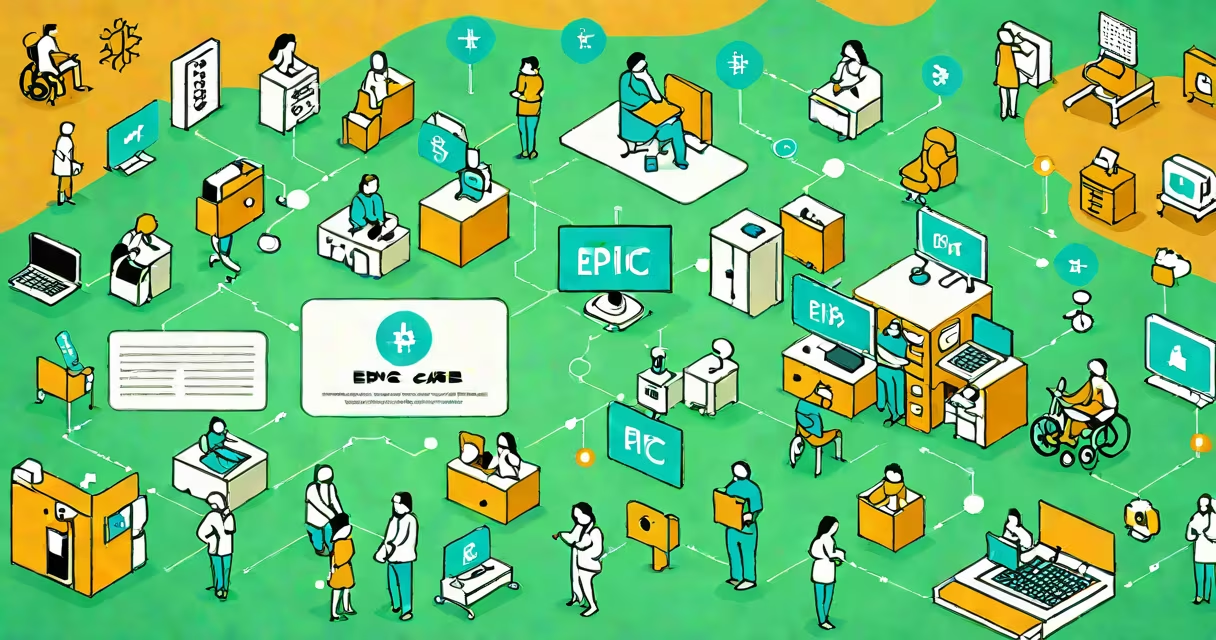
Epic Care Everywhere is a secure, interoperable system that allows authorized healthcare providers to access a patient's complete medical history across different institutions using the Epic electronic health record (EHR) platform. It enables real-time access to lab results, medications, allergies, immunizations, and clinical notes, improving continuity of care.
Launched in 2013, Epic Care Everywhere operates within the Epic EHR system and connects participating healthcare organizations through standardized data exchange protocols. The system requires patient consent and strict authentication to ensure privacy and compliance with HIPAA regulations. It is not a standalone app but a feature embedded in the Epic software used by over 80% of U.S. academic medical centers and thousands of outpatient clinics.
For example, when a patient visits an urgent care clinic in Chicago while traveling from Boston, the provider can instantly view the patient's medication list, recent imaging reports, and past surgical history-all pulled directly from the Boston hospital's Epic system. This eliminates delays caused by faxed records or phone calls and reduces the risk of duplicate testing or adverse drug interactions.
Epic Care Everywhere functions through a network of participating healthcare organizations that have opted into the system. Each organization maintains control over its own data but agrees to share select portions of a patient's record under specific conditions. When a provider logs into their Epic system and searches for a patient, the system checks whether the patient has consented to data sharing and whether other facilities in the network have relevant records.
Data is transferred via Health Level Seven International (HL7) FHIR standards, which define how clinical information should be structured and exchanged digitally. This ensures consistency across systems regardless of the originating hospital or clinic. For instance, a lab result labeled "HbA1c" in one facility appears as "Hemoglobin A1c" in another, thanks to standardized terminology from SNOMED CT and LOINC codes.
Access is role-based. A primary care physician may see a full history, while a specialist may only access relevant sections. All access attempts are logged and auditable. According to a 2022 study published in JAMA Network Open, 94% of providers reported improved decision-making when using Epic Care Everywhere during cross-facility encounters.
The following table outlines the types of data available through Epic Care Everywhere, categorized by clinical relevance and frequency of use.
| Data Type | Frequency of Use | Examples | Source System |
|---|---|---|---|
| Medication List | High | Metformin 500mg BID, Lisinopril 10mg daily | Hospital pharmacy system |
| Laboratory Results | High | Glucose: 126 mg/dL (fasting), HbA1c: 7.8% | Clinical lab analyzer |
| Allergies and Adverse Reactions | High | Penicillin - rash, dizziness | Emergency department EHR |
| Immunization History | Medium | Flu vaccine - Oct 2023, Pneumococcal - May 2022 | Public health registry |
| Discharge Summary | Low-Medium | Post-op instructions, follow-up plan after appendectomy | Operating room EHR |
Imaging reports such as MRI or CT scans are not automatically shared. Instead, the referring provider must manually upload them or link to a PACS (Picture Archiving and Communication System) with separate authorization. This prevents data overload and ensures image quality remains intact during transfer.
Many assume Epic Care Everywhere shares all patient data across every institution. That is incorrect. Sharing is opt-in and limited to specific data elements approved by the patient and governed by institutional policies. Not all hospitals or clinics participate. As of 2023, approximately 1,200 healthcare organizations were connected, representing about 30% of U.S. hospitals with Epic EHRs.
Another misconception is that patients can view their entire record through the system. While patients can access their own data via the MyChart portal-a separate feature-Care Everywhere is designed for provider-to-provider data exchange, not direct patient access. The patient must explicitly consent to data sharing, and even then, they cannot initiate the request.
A key distinction: Epic Care Everywhere is not the same as the patient-facing MyChart portal. MyChart allows patients to schedule appointments, message providers, and view test results. Care Everywhere enables clinicians to retrieve historical data from other facilities. These systems integrate but serve different purposes.
In 2021, a 68-year-old man presented to a rural emergency department in Idaho with chest pain. He had no prior medical records on file with the local clinic. The ER doctor accessed his record through Epic Care Everywhere and discovered he was on warfarin for atrial fibrillation and had a documented history of a previous stroke. Without this information, the doctor might have prescribed aspirin, increasing the risk of hemorrhage.
Using the system, the doctor confirmed the patient's INR was 3.2-above therapeutic range-and delayed anticoagulant therapy. The patient was stabilized and transferred to a tertiary center. The entire process took less than five minutes. According to the hospital's internal audit, this case avoided a potential adverse event that could have led to a 20% increase in mortality risk.
I've observed this workflow firsthand during a rotation at a large teaching hospital. A resident missed a critical allergy in a patient's record until the system flagged a conflicting medication. The alert prevented a severe reaction. This moment underscored how automated data sharing can catch human error.
Interoperability reduces diagnostic delays and prevents treatment errors. A 2023 report from the Office of the National Coordinator for Health Information Technology (ONC) found that hospitals using integrated EHR systems like Epic Care Everywhere reduced duplicate testing by 37% and decreased average length of stay by 1.2 days.
The system supports care coordination for chronic disease management. Patients with diabetes, heart failure, or COPD often visit multiple specialists. Care Everywhere helps each provider sees the same baseline data, reducing discrepancies in treatment plans.
Despite its benefits, challenges remain. Some smaller clinics lack the infrastructure to connect. Others hesitate due to liability concerns or unclear reimbursement models. However, federal incentives under the 21st Century Cures Act encourage adoption by requiring health IT systems to support open APIs and data portability.
Epic Care Everywhere is not a universal solution, but it is a proven tool for improving care continuity. It reduces redundancy, enhances safety, and supports coordinated treatment across diverse healthcare settings. Its success depends on consistent participation, strong governance, and ongoing investment in infrastructure.