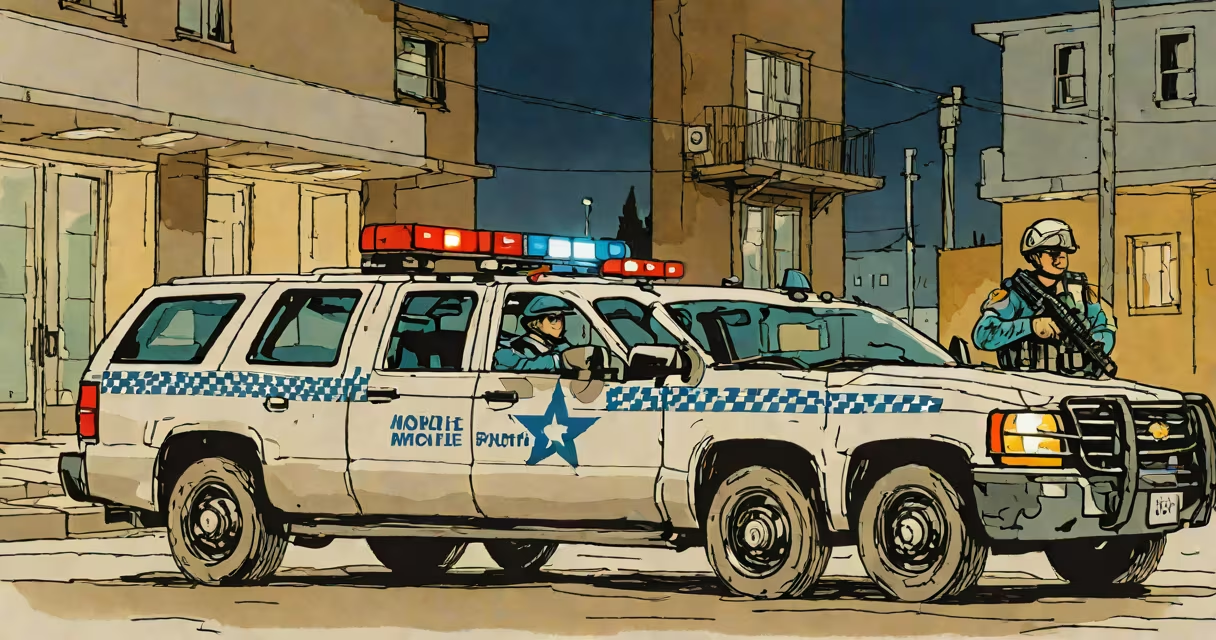
Mobile patrol is a security service where trained personnel conduct scheduled, vehicle-based rounds across designated areas to prevent crime, monitor activity, and respond rapidly to incidents. It combines visibility, mobility, and real-time awareness to strengthen site protection.
Unlike static guards posted at fixed entry points, mobile patrols cover larger zones efficiently. They move through parking lots, campuses, industrial parks, and residential communities, observing conditions and reporting anomalies. Their presence acts as a deterrent to unauthorized access, vandalism, and theft.
According to the National Association of Security Companies (NASC), mobile patrol reduces property crime by up to 38% in monitored zones compared to unmonitored sites. The service is especially effective in environments where foot patrols are impractical due to size or terrain.
Each mobile patrol unit operates under a defined route and schedule. Officers follow a predetermined path, often using GPS-enabled devices to log stops, observations, and timestamps. This creates a verifiable record of coverage, which is critical for liability and compliance purposes.
Patrols typically last between 30 minutes and two hours, depending on area size and risk level. Officers check lighting, locked doors, signage, and equipment status. Any irregularity-such as broken gates, suspicious individuals, or unattended packages-is reported immediately via radio or mobile app to a central command center.
For example, a shopping mall in Dallas uses a rotating mobile patrol system with four vehicles. Each patrol covers the entire complex every 90 minutes during business hours. In one week, officers detected three attempted shoplifting incidents and reported two damaged security cameras-preventing potential losses and ensuring prompt repairs.
Mobile patrol systems vary based on staffing, equipment, and operational goals. The most common types include:
| Type | Staffing | Equipment | Use Case |
|---|---|---|---|
| Basic Mobile Patrol | Uniformed guard, no advanced training | Vehicle, flashlight, clipboard | Low-risk areas like small office complexes |
| Enhanced Mobile Patrol | Security license, first aid certified | Vehicle, radio, handheld camera, GPS tracker | Industrial sites, warehouses, retail centers |
| High-Visibility Mobile Patrol | Marked vehicle, visible badge, tactical gear | Vehicle, body cam, emergency response kit | High-crime neighborhoods, event venues, construction zones |
Some agencies integrate mobile patrol with remote video surveillance. When a motion sensor triggers, the patrol team is alerted and dispatched within five minutes. A 2022 study by the International Association of Chiefs of Police (IACP) found that combining mobile patrol with live video reduced average response time to incidents by 62%.
A key distinction often missed: mobile patrol is not the same as police patrol. While both involve movement and observation, mobile patrol is private-sector security work. Officers lack arrest authority unless specifically contracted for special duties. They report crimes to law enforcement but do not investigate them.
Many assume mobile patrol is redundant if a site has CCTV. But video alone cannot detect subtle threats-like a person attempting to tamper with a lock or a child wandering near a pool. Mobile patrol fills that gap with human judgment and physical intervention capability.
Another myth: mobile patrol is only for large properties. In reality, even single-family homes in gated communities benefit from scheduled mobile checks. A homeowner association in Phoenix reported a 55% drop in break-ins after introducing biweekly mobile patrols, despite having existing alarms and cameras.
One non-obvious fact: mobile patrol units are often equipped with emergency medical supplies. During a routine round at a university campus, a patrol officer found a student collapsed near a dormitory. Using a defibrillator and CPR training, the officer stabilized the individual until EMS arrived-saving the student's life. This underscores that mobile patrol is not just about deterrence-it's about immediate action.
Mobile patrol is standard in commercial, industrial, and public infrastructure settings. Common applications include:
These environments face varying risks. A warehouse may need patrols focused on inventory theft and fire hazards. A school requires attention to student safety, visitor access, and emergency preparedness. The patrol plan adjusts accordingly.
During a major music festival in Colorado, mobile patrol teams were deployed in electric golf carts. Each team included a medic-certified officer and a communication specialist. Over three days, they responded to 14 medical emergencies, 7 lost children, and 3 altercations-all resolved before law enforcement arrived. The event had zero fatalities and a 97% attendee satisfaction rate regarding safety.
While mobile patrol is often associated with private security firms, some municipalities contract third-party providers for after-hours patrols. For instance, the city of San Diego outsources nighttime mobile patrols to a licensed security agency for downtown districts with high foot traffic and transient populations.
Consider a mobile patrol officer assigned to a 12-acre mixed-use development in Atlanta. The route includes six checkpoints: front gate, rear loading dock, rooftop HVAC unit, underground parking garage, community garden, and a fitness center entrance.
At 8:15 a.m., the officer arrives at the front gate. They verify the access control system is functional, check for debris blocking the exit, and confirm the visitor sign-in log is updated. Using a tablet, they scan a QR code at the checkpoint and upload a photo of the gate's condition.
At 8:45 a.m., they reach the parking garage. They notice a car with its engine running and windows down. After confirming no occupants inside, they document the vehicle's license plate and notify the building manager. The manager later confirms the owner forgot to turn off the car after dropping off a package.
By 9:30 a.m., the officer completes the loop and submits a digital report. The system flags the unattended vehicle as a potential safety concern. The report is reviewed by the site supervisor, who follows up with the resident.
This example shows how mobile patrol integrates routine checks, documentation, and responsive communication-not just walking around.
When evaluating mobile patrol options, consider not just the frequency of visits but the quality of reporting and integration with other systems. A well-designed program turns passive observation into active protection.
Mobile patrol remains a proven method for enhancing safety across diverse environments. Its effectiveness lies in consistent presence, trained personnel, and structured processes-not just the act of driving through a site.