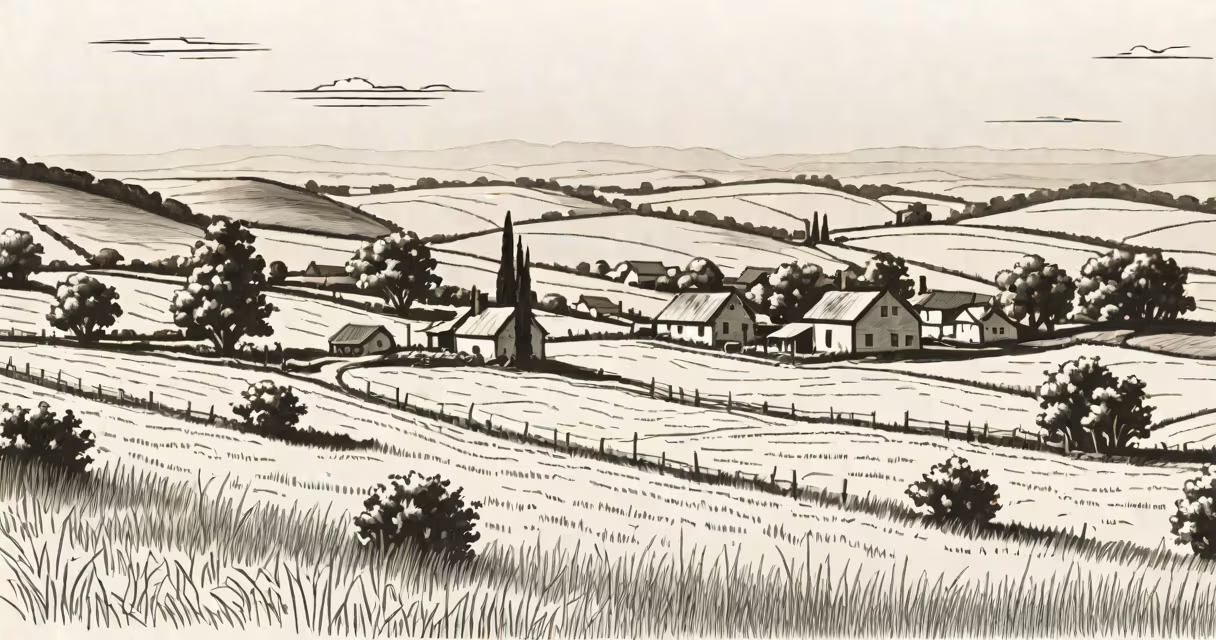
Rural living describes life in low-population, non-urban areas-typically farmland, forests, or remote villages-where residents rely less on city infrastructure and more on personal resources, local networks, and direct engagement with the environment. It's not just about geography; it's a distinct way of organizing daily routines around land, seasons, and community.
The U.S. Census Bureau defines rural areas as those with fewer than 2,500 people, or places outside metropolitan statistical areas. The USDA classifies rural counties as those with population densities below 600 people per square mile. These thresholds matter because they determine access to services, broadband, healthcare, and transportation-key factors shaping what rural living actually feels like.
People choose rural living for reasons ranging from cost savings to environmental values. A 2022 report from the National Association of Realtors found that median home prices in rural U.S. counties were 38% lower than in urban areas. But affordability comes with trade-offs: 40% of rural Americans lack access to high-speed internet, according to Federal Communications Commission data.
Life in rural settings operates on different rhythms. Daily tasks often involve physical labor-tending gardens, maintaining property, repairing tools. Water may come from wells or rain catchment systems. Heating relies on wood stoves, propane, or solar panels. Electricity isn't always grid-connected; off-grid homes use batteries and inverters.
Communication is slower. Mail delivery can take days. Emergency response times average 15 minutes longer than in cities. Social interaction happens through local events, church groups, or neighborhood associations rather than apps or online forums. Neighbors often share tools, seeds, or childcare-practical cooperation replaces convenience.
I lived in a 12-acre homestead in northern Idaho for two years. My water came from a drilled well. I heated with a wood stove and cooked on a propane range. Internet was satellite-based-15 Mbps download, 300 ms latency. I grew 80% of my vegetables and raised chickens. It wasn't idyllic. Winter nights lasted 14 hours. A broken septic system took three days to fix. But I knew my neighbors by name and watched the same stars every night.
Rural living isn't a single model. It varies by region, economy, and personal goals. Here are common forms:
| Type | Key Features | Example Location | Common Challenges |
|---|---|---|---|
| Farmstead Living | Owns land, grows food, raises livestock. Often self-sufficient. | Central Valley, California | Weather volatility, market access, equipment costs. |
| Off-Grid Homesteading | No utility connections. Uses renewable energy, compost toilets. | Western Montana | High initial investment, isolation, skill demands. |
| Remote Work & Digital Nomadism | Lives in rural area while working remotely. Seeks quiet and space. | Asheville, North Carolina | Unreliable internet, limited local job options. |
| Retirement in Small Towns | Low-cost housing, slow pace. Often retirees moving from cities. | Walla Walla, Washington | Healthcare access, social isolation, fewer amenities. |
These aren't mutually exclusive. Many people blend elements-like a retired couple who grow their own food but still use grid electricity. The key difference lies in intention: rural living isn't just location-it's a set of choices about autonomy, sustainability, and relationship to place.
Rural living is used by people seeking lower living costs, greater privacy, and deeper connection to natural cycles. It's popular among those disillusioned with urban burnout. A 2023 Pew Research Center survey found that 44% of adults aged 18-34 who moved out of cities did so to live in rural areas-up from 28% in 2019.
Some rural communities thrive on tourism. In Vermont, farm-to-table dining and maple syrup festivals bring in $120 million annually. In Oregon, eco-lodges near national forests generate jobs and tax revenue. These economies depend on rural charm-but also on careful planning. Over-tourism can degrade landscapes and displace long-term residents.
Environmentalists see rural living as a path toward resilience. The Union of Concerned Scientists notes that small-scale farms using regenerative practices can sequester carbon at rates comparable to tropical forests. A study published in Nature Sustainability (2021) found that rural households with solar panels and composting reduced household emissions by 41% compared to suburban counterparts.
Many assume rural living means "back to basics" or "living off the land." That's misleading. Most rural residents use modern tools and services. Only 12% of U.S. rural households are completely off-grid, according to the U.S. Department of Energy. The rest rely on hybrid systems-grid power with solar backup, or cell service with satellite fallback.
Another myth: rural life is inherently peaceful. In reality, isolation increases mental health risks. A 2020 CDC report showed suicide rates in rural counties were 40% higher than in urban areas. Access to therapists is limited-on average, one licensed counselor per 3,000 residents in rural Appalachia.
Finally, people confuse rural living with poverty. While income disparities exist-median household income in rural areas is 12% lower than urban-this doesn't define the experience. Many rural families earn above the national average through agriculture, forestry, or remote work. The key is context: a farmer in Iowa earning $90,000 a year lives differently than a factory worker in West Virginia making $38,000, even if both are in rural zones.
Understanding what is rural living requires looking beyond scenery and nostalgia. It's a practical arrangement shaped by land, technology, policy, and personal choice. For some, it means growing food and building shelters. For others, it means working from a cabin while streaming video calls.
Rural living isn't a retreat from modernity-it's a reconfiguration of it. It demands awareness, preparation, and adaptability. When done thoughtfully, it can offer stability, simplicity, and a stronger sense of place.