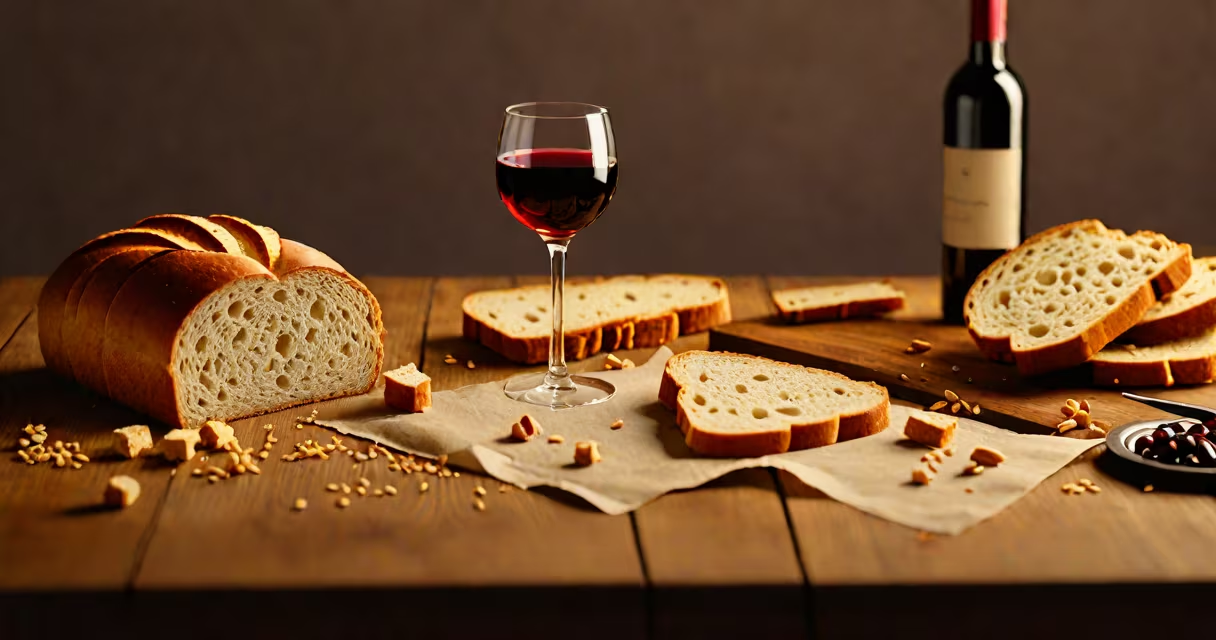
Communion, also known as the Eucharist, is a Christian sacrament commemorating Jesus Christ's last meal with his disciples before his crucifixion. It involves the sharing of consecrated bread and wine, symbolizing Christ's body and blood. This ritual serves as both a memorial and a spiritual act of unity among believers.
Christians observe communion during worship services, often monthly or quarterly, though practices vary by denomination. The act is not symbolic only-it is understood by many traditions as a real spiritual encounter with Christ. The bread represents His broken body; the wine, His shed blood. These elements are consumed in remembrance of His sacrifice and as a sign of ongoing covenant with God.
The practice originated at the Last Supper, recorded in Matthew 26:26-29, Mark 14:22-25, Luke 22:14-20, and 1 Corinthians 11:23-26. Paul explicitly states that "whoever eats the bread or drinks the cup of the Lord in an unworthy manner will be guilty of sinning against the body and blood of the Lord" (1 Cor. 11:27). This underscores the seriousness of participation and the need for self-examination prior to receiving.
During a communion service, a priest, pastor, or designated leader blesses the bread and wine using specific liturgical language. In Catholic, Orthodox, and some Anglican traditions, the bread and wine are believed to undergo transubstantiation or consubstantiation-changes in substance, not appearance-so that they become the actual body and blood of Christ. Protestant views differ: many see the elements as symbolic, though still spiritually meaningful.
Participants typically receive the bread either by taking it from a tray or eating it from a plate. Wine is served in small cups or sipped from a shared chalice. Some congregations use grape juice instead of wine due to cultural or health reasons. The act is silent or accompanied by hymns, prayers, or scripture readings.
In my own experience, attending a low-church Presbyterian service in rural Tennessee, the pastor distributed communion in individual paper cups of juice and small squares of gluten-free bread. The silence was profound. No music. No announcements. Just the quiet intake of the elements and the weight of presence. That moment felt less like ritual and more like meeting-face-to-face with something older than memory.
Denominational beliefs about communion vary. The following table outlines core differences:
| Denomination | View on Presence | Frequency | Receiving Method |
|---|---|---|---|
| Catholic | Transubstantiation (real presence) | Weekly | On tongue, from chalice or paten |
| Eastern Orthodox | Real presence through divine mystery | Weekly (often daily) | From spoon into mouth |
| Lutheran | Consubstantiation (Christ bodily present) | Weekly or monthly | On tongue or in hand |
| Presbyterian/Reformed | Spiritual presence only | Monthly or quarterly | Individual plates |
| Baptist | Symbolic remembrance | Quarterly or annually | Self-administered |
These differences reflect theological interpretations of Scripture. For example, Catholics cite John 6:53-56, where Jesus says, "Unless you eat the flesh of the Son of Man and drink his blood, you have no life in you." Protestants interpret this passage metaphorically, emphasizing faith and remembrance over physical transformation.
A common error is equating communion with "spiritual communion"-a private prayerful act of devotion when physical communion is unavailable. While spiritual communion is valid and encouraged, especially during times of illness or travel, it is not a substitute for the sacramental act when possible. The Church teaches that physical reception strengthens communal identity and marks a believer's full inclusion in the Body of Christ.
Another misunderstanding is that communion is only for Christians who have "lived perfectly." The Bible warns against unworthy participation, but it does not exclude those struggling with sin. Paul writes, "Let a person examine themselves, then, and so eat of the bread and drink of the cup" (1 Cor. 11:28). Self-examination is required-not perfection. The sacrament is for sinners, not saints.
At St. Mary's Episcopal Church in Portland, Oregon, communion is celebrated every Sunday at 10:30 a.m. The service begins with a procession of clergy carrying the chalice and paten. The priest chants the Words of Institution: "This is my body, given for you. Do this in remembrance of me." The congregation responds, "Amen."
After the blessing, members file forward in single file. They receive the bread on a silver plate and the wine from a gold chalice. The average attendance is 180 people. On one recent Sunday, 147 people participated. The remaining 33 were either absent or chose not to receive-some due to personal conviction, others because of dietary restrictions. The church maintains a separate table for gluten-free bread and non-alcoholic juice.
Following communion, the choir sings "O Come, All Ye Faithful," and the priest delivers a brief homily linking the Eucharist to current events-this week, the theme was peace in conflict zones. The message was clear: the act of sharing bread and wine is not isolated from the world's suffering. It is a call to embody Christ's love in action.
The significance of communion lies in its dual nature: it remembers the past and shapes the present. It is both a memorial and a mission. As theologian Karl Barth wrote, "The Eucharist is not a celebration of the past, but a proclamation of the future." It is not nostalgia-it is anticipation.
Understanding the significance of communion requires seeing it not as a relic, but as a living practice. It binds believers across time and space. It transforms ordinary bread and wine into symbols of grace, sacrifice, and belonging. Whether received weekly or annually, in silence or song, communion remains central to Christian identity.