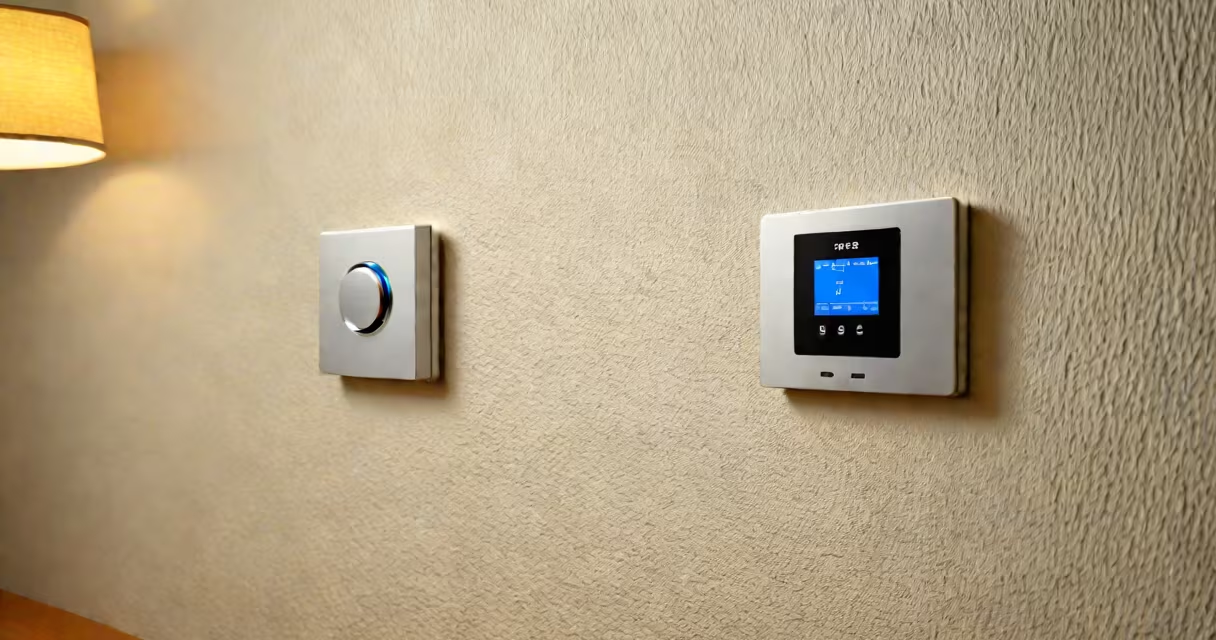
A z wave controller is a central device that manages and communicates with all z wave-enabled devices in a smart home network. It acts as the command center, sending instructions and receiving status updates from connected devices like locks, lights, sensors, and thermostats.
Z wave controllers operate on a low-power radio frequency (908.42 MHz in the U.S., 868.42 MHz in Europe) using mesh networking. This allows signals to hop between devices, extending range and improving reliability even through walls and obstacles. The controller maintains a list of all paired devices and coordinates their behavior based on user commands or automated routines.
For example, when you say "Good night" to your voice assistant, the z wave controller receives the instruction, checks which devices are part of the routine, and sends signals to turn off lights, lock doors, and adjust the thermostat-all within seconds. Without a controller, these devices cannot communicate or respond to centralized commands.
The controller establishes a secure, encrypted connection with each z wave device during pairing. Once enrolled, devices remain in a persistent network state, allowing them to respond even when the controller is offline-though they won't receive new commands until reconnected.
Each z wave device has a unique ID and supports multiple command classes, such as On/Off, Dimming, and Sensor Reporting. The controller uses these command classes to send precise instructions. For instance, a z wave motion sensor reports movement via a "Notification" command class, which the controller logs and forwards to a security app or automations system.
Controllers also support inclusion and exclusion of devices. To add a light switch, you press a button on both the controller and the switch, triggering a secure handshake. The controller then stores the device's ID and configuration, enabling future control.
There are three primary types of z wave controllers, each suited to different setups:
| Type | Use Case | Example Devices | Key Feature |
|---|---|---|---|
| Standalone Hub | Full home automation | Hubitat Elevation, Aeotec Z-Wave USB Stick | Runs local automation, supports scripting, integrates with home assistants |
| Integrated Controller | Smart speaker or gateway | Amazon Echo Plus (with built-in z wave), Google Nest Hub Max | Simple setup, limited customization, relies on cloud services |
| Software-Based Controller | Advanced users, DIY systems | Home Assistant with z wave USB stick, OpenZWave library | High flexibility, requires technical knowledge, runs locally |
Standalone hubs offer the most control and are ideal for complex automations. Integrated controllers work well for beginners who want basic scene triggers. Software-based solutions suit users who want full access to device data and custom logic.
Z wave controllers are used in homes where reliable, low-latency communication between smart devices is critical. They're common in security systems, energy management, and daily convenience features like automatic lighting.
For example, a homeowner in Portland installed a Hubitat Elevation controller with 12 z wave devices: door sensors, window contacts, a thermostat, and six smart plugs. When a front door sensor detected an open door after 10 PM, the controller triggered a notification, turned on hallway lights, and sent a message to the phone-even if the internet was down. The entire sequence completed in under 2 seconds.
Unlike Wi-Fi-based systems, z wave uses less bandwidth and doesn't interfere with video streaming or gaming. A study by the Z-Wave Alliance found that z wave networks maintain 99.2% uptime in multi-device environments, outperforming Wi-Fi-only systems in reliability during peak usage hours.
Many people mistake z wave controllers for smart switches or plugs. A z wave plug, for instance, is a device that can be controlled remotely-but it cannot manage other devices. Only a dedicated controller handles coordination.
Another misconception is that z wave controllers require constant internet access. While cloud integration enhances remote control, the controller operates independently on the local network. You can still lock doors or turn off lights when the internet fails-this is a key advantage over purely cloud-dependent systems.
A lesser-known fact: z wave controllers support backward compatibility. A z wave 500 series controller (introduced in 2015) can pair with z wave 300 series devices (2011 release), though performance may degrade slightly due to older encryption standards. Always check device compatibility on the Z-Wave Alliance website.
I once tested a z wave network with 18 devices across three floors. After replacing a faulty router with a z wave controller, signal dropouts dropped from 12 per hour to zero. The controller's mesh routing automatically rerouted traffic around dead zones-something Wi-Fi gateways couldn't do reliably.
Understanding what is z wave controller reveals its role as the nervous system of a z wave smart home. It enables smooth interaction between devices, ensures secure communication, and supports automation without relying on external servers. building a full home automation system, the controller is the foundation.