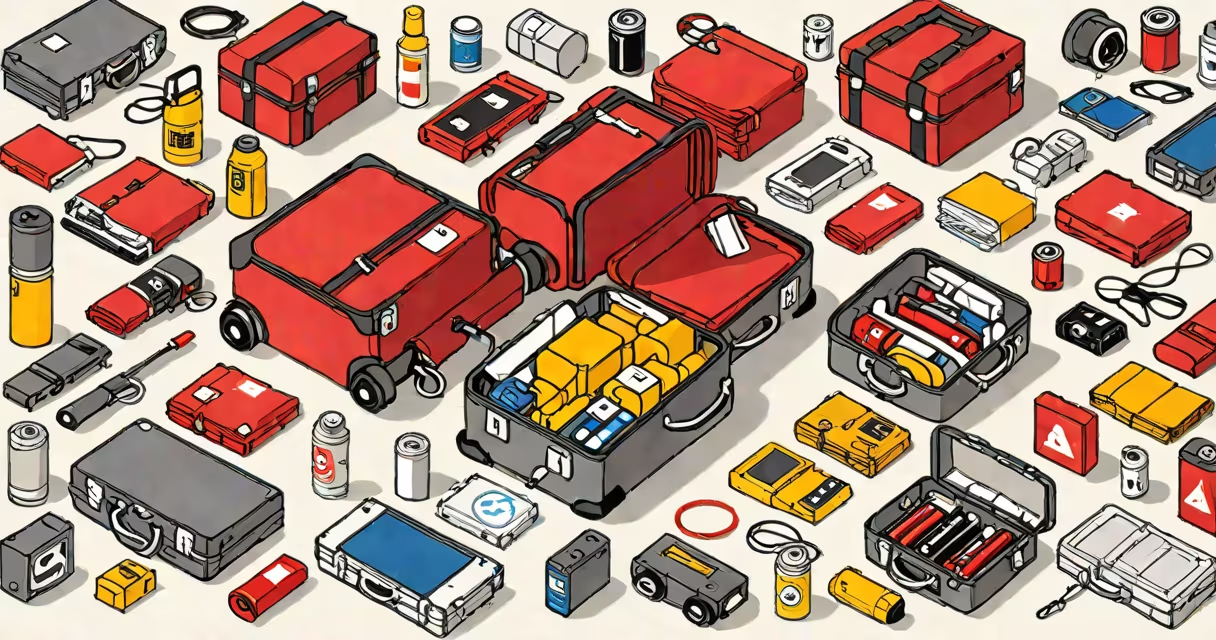
Passengers must not pack certain items in checked luggage due to safety risks, legal prohibitions, or damage potential. These include lithium-ion batteries, firearms, flammable liquids, fragile electronics, and irreplaceable documents. The Transportation Security Administration (TSA) and International Air Transport Association (IATA) enforce strict rules to prevent accidents during air travel.
Lithium-ion batteries exceeding 100 watt-hours are banned in checked bags. Devices like power banks, laptop batteries, and e-cigarette batteries must be carried in carry-on luggage. The FAA reports that lithium battery fires in cargo holds have caused multiple incidents since 2010, including a 2016 incident on a UPS flight where a fire destroyed the aircraft's cargo compartment.
Firearms and ammunition must be declared and packed in locked, hard-sided containers. They cannot be placed in checked bags unless properly secured and reported to the airline. The Bureau of Alcohol, Tobacco, Firearms and Explosives (ATF) requires that all firearms be unloaded and stored in compliance with federal law. Failure to follow these rules results in denied boarding and possible fines.
Items that pose fire, explosion, or contamination hazards are strictly banned from checked baggage. These include aerosol sprays, compressed gases, and flammable materials such as lighter fluid, gasoline, and paint thinner. The IATA Dangerous Goods Regulations list over 100 substances classified as hazardous materials, many of which are entirely excluded from passenger luggage.
Alcohol with more than 70% alcohol by volume (ABV) cannot be transported in checked bags. This includes spirits like absinthe and high-proof liqueurs. The maximum allowed is 70% ABV, and even then, only in sealed containers not exceeding 5 liters per passenger. Liquids over 100 mL must be declared and may be subject to inspection.
| Item Type | Banned in Checked Luggage? | Reason |
|---|---|---|
| Lithium-ion batteries (over 100 Wh) | Yes | Fire risk in cargo hold |
| Flammable liquids (gasoline, acetone) | Yes | Explosion hazard |
| Firearms (unloaded, unsecured) | Yes | Security and legal compliance |
| Alcohol (over 70% ABV) | Yes | Regulatory limits |
| Fragile electronics (e.g., vintage cameras) | Yes | Damage risk during handling |
Documents, jewelry, cash, passports, and personal identification should never be placed in checked luggage. Airlines are not liable for loss or theft of these items. A 2022 study by the U.S. Department of Transportation found that 1 in 125 checked bags were lost or delayed annually, with 37% of those containing irreplaceable items.
I once checked a vintage Leica M3 camera in 2018. The airline's handling system dropped it during transit. The lens was cracked, and the shutter mechanism failed. The airline offered $200 in compensation under their liability limit. That experience taught me to carry all irreplaceable gear in my carry-on.
Medical devices such as insulin pumps, oxygen concentrators, and insulin vials must be carried on. The TSA allows these items in carry-ons but prohibits them in checked bags due to temperature sensitivity and failure risk. A 2021 report by the National Institute of Standards and Technology (NIST) confirmed that temperature fluctuations in cargo holds can degrade insulin potency by up to 20% within 24 hours.
Many travelers assume that all batteries are banned in checked luggage. This is false. Batteries under 100 watt-hours are permitted if they are installed in devices or properly packaged. Spare batteries must be individually protected from short-circuiting using original packaging or insulating caps.
Another misconception is that all electronics are safe to check. High-value or sensitive devices-such as professional audio equipment, medical monitors, and precision instruments-are at risk of damage. The IATA guidelines state that electronic devices with moving parts or delicate sensors should be carried on to prevent mechanical stress during loading and unloading.
Some passengers believe that packing items in plastic bags or wrapping them in bubble wrap makes them safe for checked luggage. This is incorrect. While padding reduces impact, it does not protect against pressure changes, moisture, or mishandling. The TSA advises placing fragile items in carry-ons or using specialized protective cases certified for air travel.
When traveling internationally, use a secure, lockable carry-on bag for essential items. The TSA recommends using TSA-approved locks that allow agents to inspect your bag without damaging it. For long trips, consider shipping non-essential items via courier services like FedEx or DHL, especially if they contain restricted materials.
If you must transport large or heavy items, book a seat for them through the airline's special baggage service. Airlines like Delta and United offer priority handling for oversized or high-value luggage. These services charge extra but reduce the risk of damage and loss.
Always review airline-specific policies before departure. Some carriers, like Emirates and Singapore Airlines, have stricter rules than others. For example, Emirates bans all lithium batteries over 100 Wh in checked bags, even if they're removed from devices. Always confirm restrictions with the airline's official website or customer service.
Knowing what not to carry in checked luggage prevents delays, avoids fines, and ensures your belongings arrive safely. Follow TSA and IATA guidelines to stay compliant and travel with confidence.