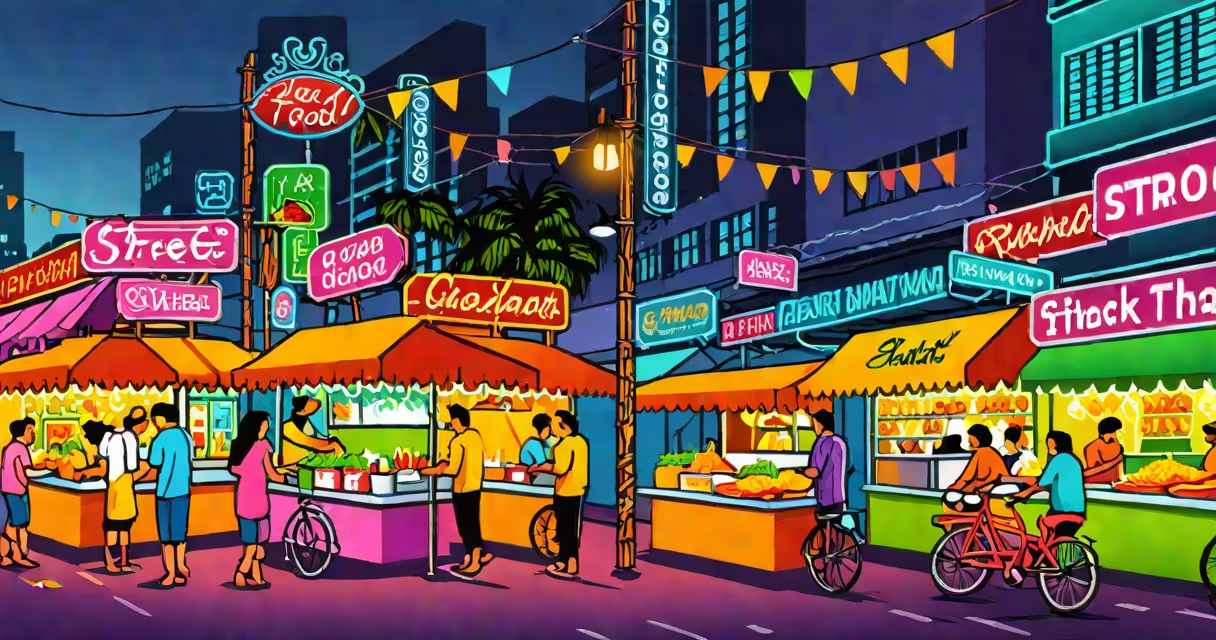
Street food is most accessible and flavorful when eaten during peak local meal times-typically early morning, late afternoon, or evening-depending on regional eating habits and climate. Timing affects both quality and authenticity, with peak hours often aligning with vendor availability and ingredient freshness.
Street food culture thrives on rhythm. In many regions, vendors set up only during specific windows when foot traffic peaks or ingredients are freshly prepared. Missing these windows means missing the best versions of dishes. For example, in Bangkok, grilled pork skewers are sold at their juiciest between 5:00 PM and 8:00 PM, when the heat of the day has passed and the market buzz begins.
Understanding when to eat street food requires knowing local routines. In Japan, yatai stalls in Osaka serve takoyaki just before 7:00 PM, when office workers gather after work. In Morocco, fresh msemen pastries appear at roadside stands only from sunrise until noon, when the dough is still warm from the oven. These patterns aren't random-they're shaped by labor cycles, weather, and tradition.
Vendors rely on predictable customer flows. In cities like Jakarta, street food carts open at 4:00 AM to serve commuters before dawn. The food is cooked quickly, often using portable grills and woks, and consumed within minutes. This timing ensures minimal cooling and maximum freshness.
Temperature plays a role too. In hot climates such as Mumbai, vendors avoid cooking during midday when temperatures exceed 40°C (104°F). Instead, they operate from 6:00 PM onward, when the air cools and people return from work. This shift prevents spoilage and keeps food safe.
Food safety standards from the World Health Organization emphasize that perishable items like meat skewers or seafood rolls should be served within two hours of cooking. Vendors who stay open past this window risk bacterial growth. That's why many sell out by 10:00 PM-there's no incentive to stay open beyond peak demand and safety limits.
Different cultures have distinct rhythms for street food consumption. The table below outlines common street foods, their ideal eating times, and the reasons behind them.
| Region | Common Dish | Best Time to Eat | Why This Time |
|---|---|---|---|
| Bangkok, Thailand | Pad Thai | 5:00 PM - 8:00 PM | Stalls close after dark due to electricity costs and lower foot traffic. Dishes are made fresh hourly. |
| Mexico City, Mexico | Tacos al Pastor | 7:00 PM - 11:00 PM | Spit-roasted pork is rotated every 15 minutes. Best flavor occurs when the meat is still moist and fatty. |
| Osaka, Japan | Takoyaki | 6:00 PM - 9:00 PM | Yatai stalls open after work hours. Batter cooks in 30 seconds-too long and it hardens. |
| Cairo, Egypt | Falafel | 10:00 AM - 1:00 PM | Most vendors start at sunrise. Falafel is fried in batches; waiting longer causes oil saturation. |
| Lima, Peru | Ceviche | 12:00 PM - 3:00 PM | Seafood is caught daily. Vendors prepare ceviche only once per day to ensure freshness. |
Not all street food follows strict time windows. Some, like New York's halal cart falafel, operate 24/7 because they use pre-cooked components. But even then, the most popular stalls see peak sales between 11:00 AM and 2:00 PM, when office workers pass through subway stations.
Timing influences flavor, safety, and cultural context. In Seoul, kimchi jeon (kimchi pancakes) are best eaten at night, when the batter is still warm and the restaurant is bustling. A study published in the Journal of Food Science found that frying temperature drops by 15% after 30 minutes of continuous use-meaning pancakes lose crispness if made too early.
Some cities enforce curfews on street vendors. In Paris, outdoor food stalls must close by 10:00 PM. In Istanbul, vendors near mosques stop selling during prayer times. These rules reflect religious and civic norms, not just logistics.
A lesser-known fact: in parts of Southeast Asia, street food is often prepared earlier in the day but sold later. In Hanoi, banh mi sandwiches are assembled at 7:00 AM but not sold until 10:00 AM, when the bread has time to absorb moisture and prevent sogginess. This delay isn't inefficiency-it's technique.
Many assume that street food is always best at night. This is false. In colder climates like Reykjavik, Iceland, vendors serving fermented shark and lamb stew open only at noon, when the sun rises above the horizon and temperatures rise slightly. Eating at night risks cold food and reduced appetite.
Another myth: "The later the better." In reality, some dishes degrade quickly. In Lagos, Nigeria, suya (spiced grilled meat) loses its smoky aroma after 90 minutes due to fat oxidation. Vendors who wait too long to serve risk losing customers to nearby stalls with fresher batches.
I once visited a street food festival in Chiang Mai during monsoon season. Vendors had to move indoors due to rain. The food was still good-but the atmosphere changed. The original charm of open-air stalls, where smoke curled into humid air and music played from nearby speakers, was gone. Timing isn't just about food; it's about environment.
Look for signs of activity. Crowds form around stalls that are actively cooking. If a vendor is flipping skewers rapidly and the grill is hot, it's likely fresh. If the food sits on a tray for over 20 minutes, it may be reheated or stale.
Ask locals. In Manila, I asked a student where to find the best kwek-kwek (deep-fried quail eggs). She pointed to a cart near a university gate, saying, "Only when the owner is still sweating from the fire." That stall closed at 7:00 PM-just as the students left class.
Use apps like Google Maps or Yelp to check real-time ratings. A stall with 4.8 stars and 20 new reviews in the last hour is likely operating at peak freshness. One with 4.2 stars and no recent entries may be outdated.
Knowing when to eat street food around the world isn't just about hunger-it's about matching your visit to the rhythm of place, time, and tradition. The best meals happen not when you want them, but when the vendor is ready, the ingredients are fresh, and the light is right.