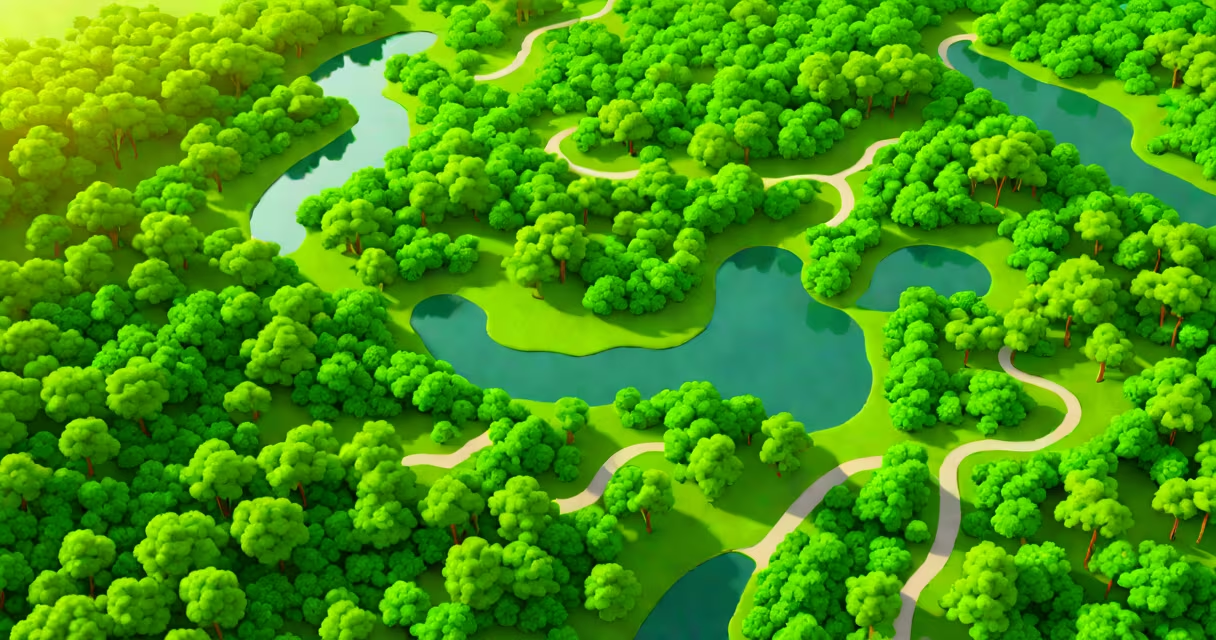
Natural resources and conservation refer to the responsible use and protection of Earth's finite materials-like water, forests, minerals, and fossil fuels-and the ecosystems that support them, ensuring they remain available for future generations.
Conservation focuses on maintaining ecological balance by preventing overuse, pollution, and habitat destruction. It applies to both renewable resources-such as timber and solar energy-that regenerate over time, and non-renewable ones-like oil and coal-that do not.
The goal is not to stop using resources, but to use them wisely. For example, logging companies that practice selective cutting preserve tree populations while still harvesting wood. This balances economic need with environmental responsibility.
Conservation operates through science-based management. Authorities assess how much of a resource exists, how fast it regenerates, and how human activity affects its sustainability. When demand exceeds supply, regulations limit extraction or require restoration.
For instance, the U.S. Fish and Wildlife Service enforces the Endangered Species Act, which protects habitats critical to species survival. When a species like the gray wolf was nearly extinct, federal protections helped restore populations across the Northern Rockies.
Conservation also includes restoration projects. After the 1980 eruption of Mount St. Helens, scientists monitored the recovery of plant and animal life. Over 30 years, native species returned, demonstrating how ecosystems can rebound with minimal interference.
Natural resources fall into two broad categories: renewable and non-renewable. Renewable resources can be replenished within a human lifetime. Non-renewable resources take millions of years to form and cannot be replaced once used.
| Type | Examples | Conservation Focus |
|---|---|---|
| River water | Flowing freshwater systems | Preventing over-pumping and contamination from agriculture runoff |
| Timber | Hardwood forests | Replanting trees and avoiding clear-cutting |
| Oil | Fossil fuel reserves | Reducing extraction and investing in alternatives |
| Solar energy | Direct sunlight | Expanding solar panel infrastructure without damaging land |
Renewable resources aren't immune to depletion. Overfishing in the North Atlantic led to the collapse of cod stocks by the 1990s. Canada responded with strict quotas and closed fishing zones, allowing populations to recover slowly over two decades.
Non-renewable resources pose greater long-term risks. The U.S. Geological Survey estimates that global oil reserves may last 50 years at current consumption rates. Conservation here means reducing reliance through efficiency and transitioning to low-carbon alternatives.
Without conservation, resource scarcity leads to conflict, economic instability, and biodiversity loss. The 2012 drought in the U.S. Midwest reduced corn yields by 25%, raising food prices globally. This event underscored how climate impacts on natural resources affect food security.
Protecting ecosystems also safeguards human health. Wetlands filter pollutants from water. A 2019 study by the World Bank found that every dollar invested in wetland restoration returns $3 in flood protection and clean water benefits.
One overlooked fact: Conservation isn't always about stopping development. In California, urban planners use green infrastructure-like bioswales and permeable pavement-to manage stormwater. These systems mimic natural drainage, reduce flooding, and recharge groundwater-all while supporting city growth.
People often mistake conservation for preservation. Preservation means keeping nature untouched, usually in national parks. Conservation allows for sustainable use. A forest managed for timber harvest can still maintain biodiversity if done responsibly.
Another confusion: thinking conservation is only about animals. While protecting endangered species matters, conservation also addresses air quality, soil health, and water cycles. The Great Barrier Reef's decline isn't just about coral-it's tied to nutrient runoff from farms and rising ocean temperatures.
Also, conservation doesn't mean returning to pre-industrial lifestyles. Modern conservation uses data and technology. Satellite monitoring tracks deforestation in the Amazon in near real time. The Global Forest Watch platform alerts governments and NGOs when illegal logging occurs.
I once visited a community garden in Detroit that transformed abandoned lots into productive plots. They used compost from local food waste and rainwater harvesting. The site didn't rely on external inputs, yet produced enough vegetables to feed dozens. That's conservation in action-using local resources sustainably.
Natural resources and conservation are not abstract ideals-they're practical strategies to maintain planetary health and human well-being. They depend on accurate data, policy enforcement, and public engagement.
When we conserve, we don't sacrifice progress-we redirect it. Efficient farming, renewable energy, and protected watersheds all stem from the same principle: use less, waste less, protect more.
Understanding what is natural resources and conservation begins with recognizing that every choice-from the water we drink to the energy we consume-impacts the planet's ability to sustain life.