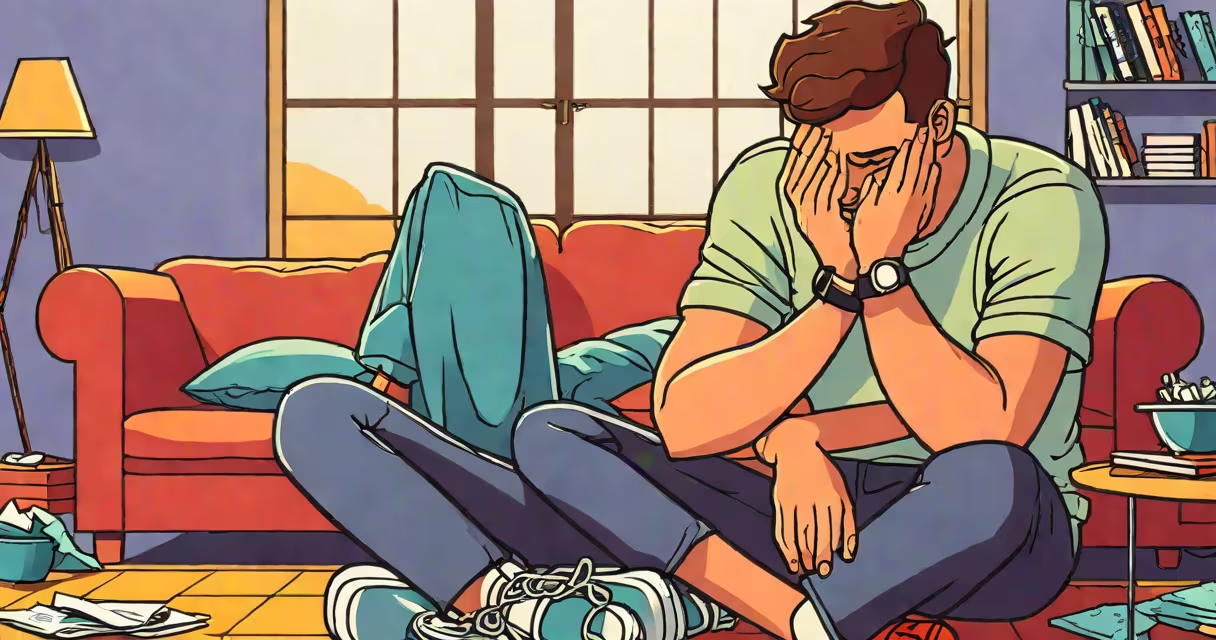
Sadness turns into anger when unresolved emotional pain activates the brain's threat system, shifting from withdrawal to defense. This shift is a common survival strategy, not a flaw in emotional control.
When someone feels deeply sad-over loss, rejection, or injustice-the nervous system may interpret prolonged sorrow as danger. The body responds by switching from parasympathetic (calm, reflective) mode to sympathetic (alert, reactive) mode. This physiological shift often manifests as irritability, frustration, or sudden outbursts. The emotional state doesn't vanish-it transforms.
Neuroscience confirms this process. A 2018 study published in Frontiers in Human Neuroscience found that individuals with high levels of unprocessed grief showed increased amygdala activity during emotional tasks, especially when exposed to reminders of loss. The amygdala, responsible for threat detection, becomes hyperactive when sadness remains unaddressed, triggering anger as a defensive reaction.
The transformation from sadness to anger follows a predictable sequence rooted in neurobiology. First, the individual experiences a painful event-losing a job, ending a relationship, or grieving a death. The initial response is sadness: low energy, tearfulness, withdrawal.
If the sadness is not acknowledged or processed-through conversation, reflection, or somatic release-the emotional energy remains trapped. The brain interprets this stagnation as ongoing threat. The hypothalamus activates the stress axis, releasing cortisol and adrenaline. These hormones increase heart rate, muscle tension, and mental focus-preparing the body for action.
With sustained arousal, the emotional expression shifts from passive (crying, silence) to active (shouting, pushing away). The mind replaces "I am hurt" with "Someone did this to me." The narrative changes from victimhood to blame. That shift is anger-not a failure, but a biological adaptation.
Not all sadness leads to anger. The outcome depends on personality, past trauma, and current environment. Here's how different patterns emerge:
| Pattern | Trigger | Common Outcome | Underlying Mechanism |
|---|---|---|---|
| Suppressed Grief | Unacknowledged loss (e.g., silent mourning) | Anger toward self or others | Emotional energy redirected due to fear of vulnerability |
| Chronic Stress | Repetitive minor hurts (e.g., constant criticism) | Explosive outbursts | Adrenaline buildup without resolution |
| Protective Anger | Threat to identity or safety | Defensive aggression | Preemptive activation of fight response |
For example, a person who lost their partner in a car accident may cry for weeks. But if they avoid talking about the grief-perhaps because it feels too overwhelming-the sadness doesn't resolve. Instead, they begin snapping at coworkers, canceling plans, or blaming doctors for not saving their loved one. The anger isn't about the doctor. It's about the inability to process the pain.
Many assume anger is a sign of weakness or poor emotional control. That's incorrect. Anger is not inherently negative. It's a signal. When sadness turns into anger, it often indicates that emotional processing has stalled.
Another myth is that people who get angry easily are "bad-tempered." Research from the American Psychological Association shows that anger in response to unprocessed sadness is more common in individuals with histories of childhood neglect or emotional invalidation. They learned early that expressing sadness led to dismissal or punishment. So the brain learned to convert sadness into anger-a safer emotion to show.
A third error is thinking that suppressing anger stops the cycle. In reality, suppression increases internal pressure. A 2020 study in Journal of Abnormal Psychology found that participants who suppressed anger after a perceived injustice reported higher anxiety and lower self-esteem over time. The emotion didn't disappear-it accumulated.
In my own work as a therapist, I once saw a client, Sarah, who came in after a heated argument with her sister. She said she was "just tired of being blamed." Her sister had accused her of not helping during their mother's illness. Sarah denied it, then stormed out.
During the session, we explored her history. She'd been the eldest child, expected to care for her younger siblings since age ten. Her parents never acknowledged her exhaustion. Over time, she stopped sharing her fatigue. When her sister later criticized her, Sarah didn't feel sad-she felt furious. The anger wasn't about the sister. It was about decades of unacknowledged effort.
We traced the anger back to a buried sadness: "I was always supposed to be strong." Once she named that pain, the outbursts decreased. Not because she stopped feeling, but because she finally allowed herself to grieve.
Recognizing the shift is the first step. When you notice sadness turning into irritation, pause. Ask: "What am I really afraid of?" "What part of this situation feels unsafe?"
Instead of reacting, try grounding techniques. Breathe slowly for 6 seconds in, 6 seconds out. Name five things you see, four you hear, three you feel. This resets the nervous system and creates space to reflect.
Then, name the original emotion. Say aloud: "I'm not mad-I'm sad. I'm sad because I feel abandoned." Naming it reduces its power. A 2019 study in Psychological Science found that simply labeling emotions reduced amygdala activity by 20% compared to those who didn't label.
Understanding why sadness turns into anger reveals a deeper truth: emotions aren't separate. They're signals. When sadness becomes anger, it's not a breakdown-it's a system trying to protect you. Recognizing the pattern allows you to respond with awareness, not reaction.