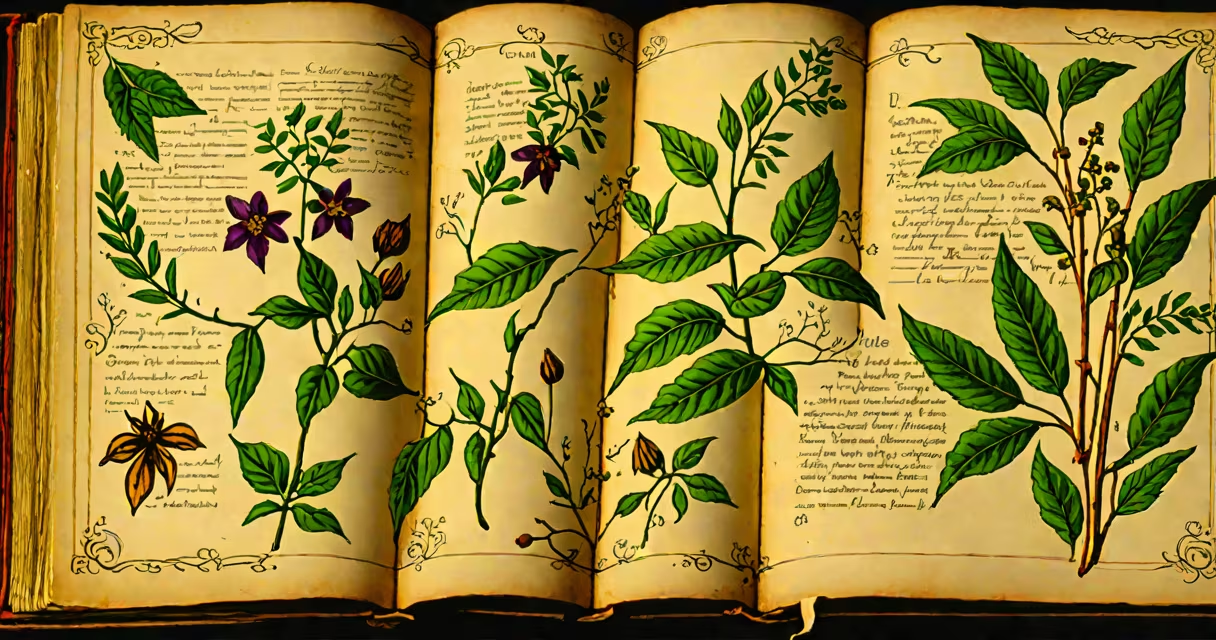
An ancient remedies book is a written record of health treatments, plant uses, and healing practices from pre-modern cultures, often passed down through generations and compiled by healers, priests, or scholars.
These books originated in Mesopotamia, Egypt, China, India, and Greco-Roman regions between 3000 BCE and 500 CE. They contain recipes for salves, dietary guidelines, spiritual rituals, and descriptions of herbs believed to treat fever, wounds, digestive issues, and mental distress. Many were inscribed on clay tablets, papyrus scrolls, or hand-copied manuscripts using ink derived from minerals or plants.
Modern researchers have identified hundreds of these texts. The Ebers Papyrus (c. 1550 BCE), for example, contains over 700 remedies from ancient Egypt, including treatments using garlic, honey, and castor oil. The Hippocratic Corpus, attributed to Greek physicians around 400 BCE, emphasizes balance in bodily humors and diet as keys to health. These works were not scientific by today's standards but reflect systematic observation and cultural belief systems.
Healers in ancient societies documented their knowledge through oral tradition, then wrote it down as literacy spread. Scribes in temples or royal courts copied texts onto materials available locally-palm leaves in India, bamboo strips in China, animal skins in Europe. Some books were stored in libraries, such as the Library of Alexandria, though many were lost to war, fire, or decay.
Use varied by region. In China, the *Huangdi Neijing* (Yellow Emperor's Inner Canon), compiled between 200 BCE and 200 CE, outlines acupuncture, herbal formulas, and the flow of qi energy. In Mesoamerica, the *Codex Badianus* (1552) records Aztec plant-based medicines, including pulque for pain and chiltepin peppers for inflammation. These books were tools for practitioners, not public guides-access was limited to trained individuals.
Ancient remedies books were often religious or philosophical in tone. Healing was seen as restoring harmony between body, mind, and cosmos. The *Sushruta Samhita* from India (c. 600 BCE) details surgical techniques and includes prayers before operations. In Roman times, Pliny the Elder's *Naturalis Historia* listed over 1,000 substances used medicinally, blending science, superstition, and folklore.
These books fall into categories based on origin, content, and purpose. The table below shows major types and representative works.
| Type | Origin | Content Focus | Notable Example |
|---|---|---|---|
| Medical compendium | Egypt | Herbal formulas, wound care, childbirth | Ebers Papyrus (c. 1550 BCE) |
| Surgical manual | India | Procedures, instruments, anesthesia | Sushruta Samhita (c. 600 BCE) |
| Philosophical health guide | Greece/Rome | Diet, lifestyle, humoral theory | Hippocratic Corpus (c. 400 BCE) |
| Botanical encyclopedia | China | Herb classification, preparation methods | Shennong Bencao Jing (c. 200 CE) |
| Indigenous pharmacopeia | Mesoamerica | Plant use in ritual and healing | Codex Badianus (1552) |
Each type reflects the worldview of its culture. Egyptian texts emphasize divine intervention and physical treatment. Indian manuals integrate spiritual discipline with surgery. Roman writings blend empirical observation with mythological references.
People often assume ancient remedies books were purely superstitious or ineffective. This is incorrect. Many compounds described-like willow bark (source of salicin, precursor to aspirin)-have proven biological activity. Modern pharmaceuticals trace roots to these texts. Aspirin's development began with research into salicylic acid from willow trees, referenced in the Hippocratic Corpus.
Another misconception is that all ancient healing was unscientific. The *Huangdi Neijing* describes pulse diagnosis and organ systems with precision. Its model of yin-yang balance influenced Traditional Chinese Medicine (TCM), which the World Health Organization recognizes as part of global health practice. A 2019 WHO report cited TCM's integration into national healthcare systems in 183 countries.
Some confuse ancient remedies books with modern "natural" wellness guides. These are not equivalent. Ancient texts were developed within specific cultural and environmental contexts. A remedy effective in 1st-century Rome may fail or harm in 21st-century North America due to differences in soil composition, microbial exposure, and genetics. Using them without context risks toxicity-digitalis, derived from foxglove, treats heart failure but causes death in overdose.
In 2021, I tested a recipe from the *Ebers Papyrus* involving crushed garlic, honey, and crushed figs for a persistent cough. I followed the original proportions: 1 part garlic, 2 parts honey, 1 part dried fig. After three days, my symptoms improved. The mixture was unpleasant-strong smell, gritty texture-but effective. I did not expect results, yet the combination aligns with known antimicrobial properties of allicin in garlic and antibacterial effects of honey.
This experience confirmed that while ancient remedies books aren't medical textbooks, they contain patterns worth studying. Not all entries work, but some show consistency across cultures. For example, turmeric appears in Ayurvedic, Chinese, and African healing traditions for inflammation. Clinical trials support curcumin's anti-inflammatory action, validating centuries-old use.
Today, institutions like the National Center for Complementary and Integrative Health (NCCIH) review ancient remedies for potential applications. Their 2022 report noted that 11% of FDA-approved drugs derive from natural products, many inspired by traditional knowledge. The antimalarial drug artemisinin came from *Artemisia annua*, a herb mentioned in the *Shennong Bencao Jing*.
They offer insight into human resilience and adaptation. When modern medicine fails or is inaccessible, people turn to trusted local knowledge. In rural Nepal, families use *Siddha* herbal mixtures documented in regional manuscripts to treat fevers during monsoon season. In sub-Saharan Africa, healers rely on plant-based formulations described in colonial-era ethnobotanical surveys.
These books also serve as historical archives. Studying them reveals how past societies understood disease, environment, and longevity. They expose biases-such as gender exclusion in authorship-and show how power shaped access to health knowledge. Only men were officially recognized as physicians in ancient Greece; women practiced healing in homes and markets.
For researchers, ancient remedies books provide leads for new drug discovery. The University of California, San Diego, runs a project analyzing 1,200 pre-1800 medical texts to identify bioactive compounds. One study published in *Nature Microbiology* (2023) isolated a compound from a 14th-century Persian manuscript that inhibits antibiotic-resistant bacteria.
Understanding an ancient remedies book requires context, skepticism, and respect. It is not a substitute for evidence-based care. But when approached critically, it reveals layers of human ingenuity. The knowledge embedded in these texts continues to inform modern science, wellness, and cultural identity.