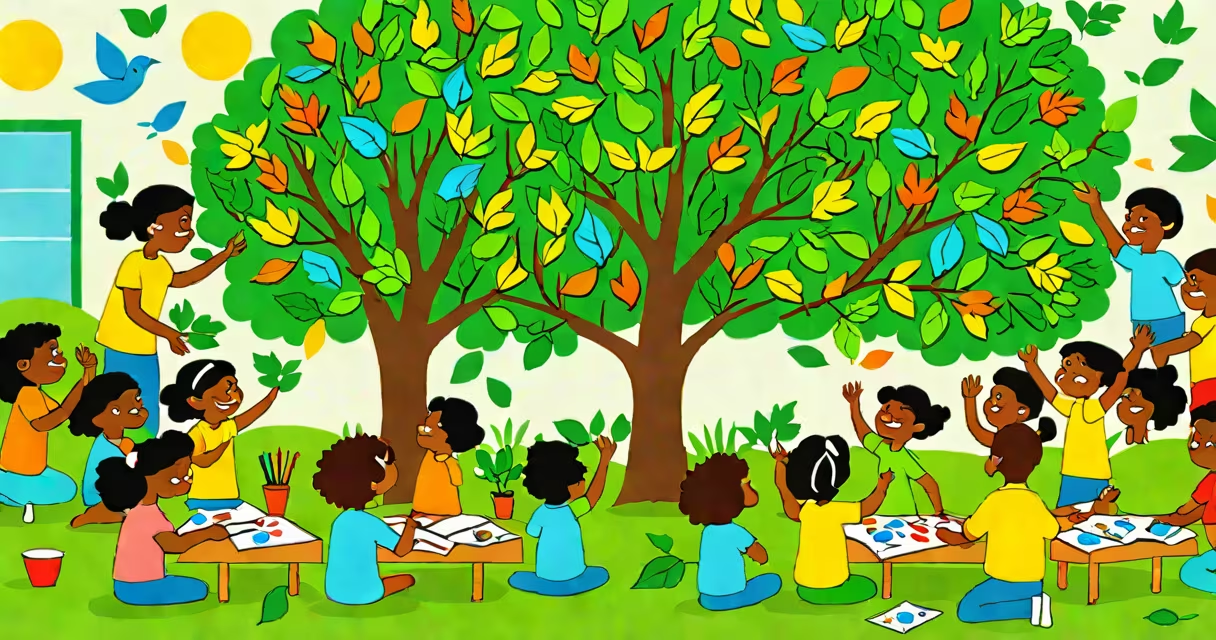
Art and craft for Earth Day uses recycled, natural, or repurposed materials to create creative projects that celebrate environmental stewardship. These activities teach sustainability through tactile learning and are widely used in schools, homes, and community events.
Projects under this category focus on transforming waste into meaningful art. Common materials include cardboard tubes, plastic bottles, old newspapers, fabric scraps, and collected leaves or twigs. The goal is not just to make something visually appealing but to reinforce ecological values through creation.
According to the U.S. Environmental Protection Agency (EPA), recycling one ton of paper saves 17 trees and 7,000 gallons of water. Art and craft for Earth Day leverages this principle by turning discarded items into functional or decorative pieces, reducing landfill waste while building awareness.
These projects follow a simple workflow: gather reusable materials, design a concept based on nature or conservation themes, assemble the piece using safe adhesives and tools, and display or use the result. The process emphasizes reuse, minimal waste, and creative problem-solving.
A typical example is a "plastic bottle garden." Students collect clean plastic bottles, cut them into planters, fill them with soil, and grow herbs or flowers inside. This project combines recycling, botany, and care for living things-all within a single activity.
Another common format is a collaborative mural. Groups of children or community members contribute individual elements-like painted leaves, glued seeds, or drawn animals-to build a large-scale artwork depicting Earth's ecosystems. These murals often hang in school halls or public spaces to inspire ongoing reflection.
Different project types serve distinct educational goals. Below is a breakdown of common categories:
| Type | Materials | Learning Focus | Example |
|---|---|---|---|
| Recycled Sculptures | Cardboard, bottle caps, wire | Waste reduction, spatial thinking | 3D animal figures from flattened cans |
| Nature-Inspired Art | Leaves, pinecones, stones | Biodiversity, observation skills | Leaf rubbings forming a forest scene |
| Reusable Containers | Plastic jars, egg cartons | Resource efficiency, practical design | Seed starters made from yogurt cups |
| Upcycled Wearables | Fabric scraps, buttons, old belts | Creative reuse, personal expression | Necklaces from bottle cap beads |
One project that stands out is the "Earth in a Bottle" model. Using a clear jar, students layer soil, sand, pebbles, and small plants to simulate a miniature system. They observe how moisture cycles and plant life sustains itself. This project aligns with Next Generation Science Standards (NGSS) for grades 3-5, which emphasize understanding interdependence in ecosystems.
Art and craft for Earth Day is most frequently used in elementary classrooms, youth groups, and local environmental fairs. Schools adopt it because it meets curriculum standards in science, art, and social responsibility without requiring expensive supplies.
For example, a 2022 study published in the Journal of Environmental Education found that students who participated in hands-on Earth Day crafts demonstrated 30% higher retention of environmental concepts compared to those who only watched videos or read texts. The physical act of creating reinforces memory and emotional connection.
Community centers use these projects to engage families during Earth Day events. A city-wide initiative in Portland, Oregon, invited residents to submit recycled art pieces for a public exhibition. Over 120 entries were displayed at a park, including a 6-foot-long whale made entirely from discarded fishing nets.
Many assume art and craft for Earth Day is only for young children. While it's popular in early education, older students and adults benefit too. High school students have created large-scale installations from reclaimed electronics to protest e-waste.
Another mistake is equating "eco-friendly" with "natural-only." Not all sustainable art uses only leaves or clay. Projects using recycled plastic or metal can be more environmentally sound than those using virgin materials. The key metric is lifecycle impact-not origin.
A lesser-known fact: the original Earth Day in 1970 was celebrated with a national teach-in on environmental issues. While art wasn't central then, educators later adopted creative formats to reach younger audiences. Today, art and craft for Earth Day is recognized by the National Education Association as a valid method for teaching climate literacy.
In 2023, a fourth-grade class in Austin, Texas, completed a year-long project called the Recycling Tree. Each student brought in a different recyclable item-aluminum cans, glass jars, plastic bags-and attached it to a large cardboard tree structure. The trunk was made from 12 reused cardboard boxes.
They labeled each item with facts: "This soda can saved 1,000 gallons of water when recycled." "This plastic bag takes 450 years to decompose." The final display was installed in the school library and became a reference point for science lessons throughout the year.
When asked about the experience, one student said, "I didn't think my juice box could be part of a tree. Now I look at trash differently." That shift in perception is the core purpose of art and craft for Earth Day.