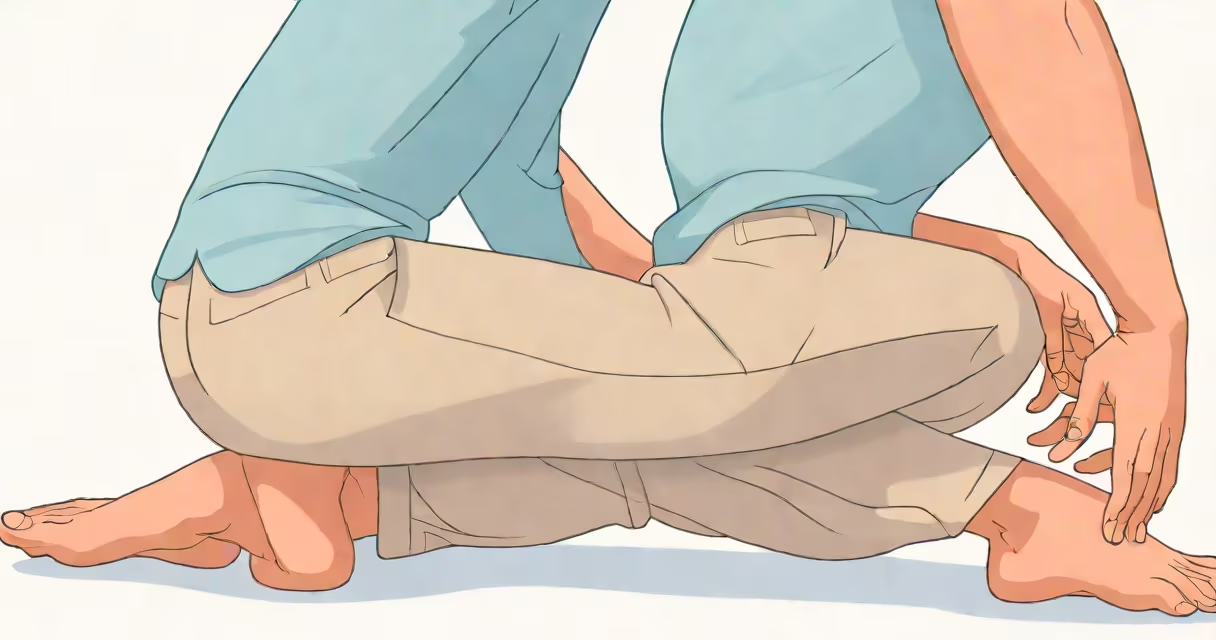
Back of leg and buttock pain refers to discomfort originating in the lower back or gluteal region that radiates down the back of the thigh, often due to nerve irritation or muscle strain. It commonly results from sciatica, piriformis syndrome, or hamstring injury, and may limit walking, standing, or sitting for extended periods.
This pain typically begins in the lower spine or hip area and travels along the path of the sciatic nerve-the longest nerve in the body. The nerve exits the lower back through the pelvis, passes under the piriformis muscle, and extends down the back of each leg. When compressed or inflamed, it causes sharp, burning, or tingling sensations that can extend past the knee.
Common triggers include prolonged sitting, sudden twisting motions, heavy lifting, or repetitive strain. A 2021 study published in The Journal of Orthopaedic & Sports Physical Therapy found that 85% of patients reporting back of leg and buttock pain had identifiable nerve root involvement or muscular dysfunction upon imaging and physical exam.
The sciatic nerve forms from five spinal nerve roots (L4-S3) in the lower back. When these nerves become irritated-due to herniated discs, spinal stenosis, or muscle tightness-the resulting pain follows the nerve's anatomical route. The nerve splits behind the knee into the common fibular and tibial nerves, which control movement and sensation in the foot and lower leg.
Piriformis syndrome occurs when the piriformis muscle, located deep in the buttocks, spasms or becomes tight, compressing the sciatic nerve. This condition affects about 1 in 200 people annually, according to the American Academy of Neurology. Unlike disc-related sciatica, piriformis-related pain often worsens during prolonged sitting or climbing stairs.
Hamstring strains involve tearing of the long muscles at the back of the thigh. These injuries typically result from sudden sprinting or jumping. A 2020 review in British Journal of Sports Medicine reported that hamstring strains account for 15-20% of all sports-related lower limb injuries among athletes.
Not all back of leg and buttock pain comes from the same source. Distinguishing between them improves treatment accuracy.
| Type | Origin | Key symptom pattern | Diagnostic clue |
|---|---|---|---|
| Sciatica (lumbar radiculopathy) | Nerve root compression in lower spine | Pain starts in lower back, shoots down buttock and back of thigh, may reach calf or foot | Worse with bending forward; may cause numbness or weakness in foot |
| Piriformis syndrome | Compression of sciatic nerve by piriformis muscle | Pain in buttock that worsens with sitting or climbing stairs; less likely to affect foot | Pain improves when lying on side; positive "Pace test" during physical exam |
| Hamstring strain | Tear in hamstring tendon or muscle belly | Sudden sharp pain at back of thigh during activity; swelling or bruising may appear within hours | Pain worsens with straight-leg raising; tenderness localized to muscle group |
One non-obvious distinction: sciatica caused by disc herniation often presents with sensory changes (numbness, tingling) in specific dermatomes-areas of skin innervated by individual spinal nerves. For example, L5 nerve root involvement typically causes numbness on the outer side of the foot and ankle. A 2019 study in Spine confirmed that 68% of patients with true sciatica showed dermatomal patterns on neurological exams.
A 34-year-old office worker reported persistent back of leg and buttock pain that began after a long flight. Pain was sharp on the left side, worsened when sitting, and radiated from the lower back down the back of the thigh to the calf. He described a "pins and needles" sensation in the outer foot.
Physical exam revealed decreased sensation on the lateral foot and reduced strength in ankle dorsiflexion. MRI confirmed a left-sided L5-S1 disc herniation compressing the exiting nerve root. Diagnosis: sciatica due to lumbar radiculopathy.
In contrast, another patient-a 42-year-old runner-reported sudden onset of deep buttock pain after a sprint. She could walk but not run. On examination, she had localized tenderness at the ischial tuberosity and pain with resisted hip extension. Ultrasound confirmed a partial tear in the semimembranosus tendon. Diagnosis: hamstring strain.
Many assume back of leg and buttock pain always stems from a "slipped disc." While disc herniations are common, they're not the only cause. Piriformis syndrome is frequently misdiagnosed as sciatica because both involve sciatic nerve compression. However, piriformis-related pain rarely causes foot weakness or numbness.
Another frequent error: confusing back of leg and buttock pain with referred pain from hip joint issues. Osteoarthritis of the hip can mimic sciatica, especially in older adults. Hip pain typically worsens with weight-bearing and improves with rest, while sciatica often gets worse with prolonged sitting or bending.
I once treated a 58-year-old man who had been told he had "chronic sciatica" for two years. After a thorough evaluation, we discovered his pain originated from a degenerative hip joint. Once he underwent targeted physical therapy and later hip arthroscopy, his symptoms resolved completely. This case highlights how misdiagnosis delays recovery.
Back of leg and buttock pain warrants evaluation if it persists beyond two weeks, worsens over time, or includes red flags: loss of bladder or bowel control, progressive weakness in the legs, or numbness spreading below the knee. These signs indicate possible cauda equina syndrome-an emergency requiring immediate surgical intervention.
For non-emergency cases, start with conservative care: rest, ice, gentle stretching, and over-the-counter NSAIDs. Physical therapy targeting core stability, hip mobility, and nerve gliding exercises shows success in 70-80% of cases, per a 2022 Cochrane review.
If symptoms persist despite six weeks of self-care, consult a specialist. Imaging such as MRI or CT may be needed to identify structural causes. Nerve conduction studies can differentiate between nerve root compression and peripheral nerve entrapment.
Accurate diagnosis leads to faster recovery. Back of leg and buttock pain is not a single condition-it's a symptom complex with distinct underlying causes. Identifying the correct source ensures effective treatment and avoids prolonged suffering.