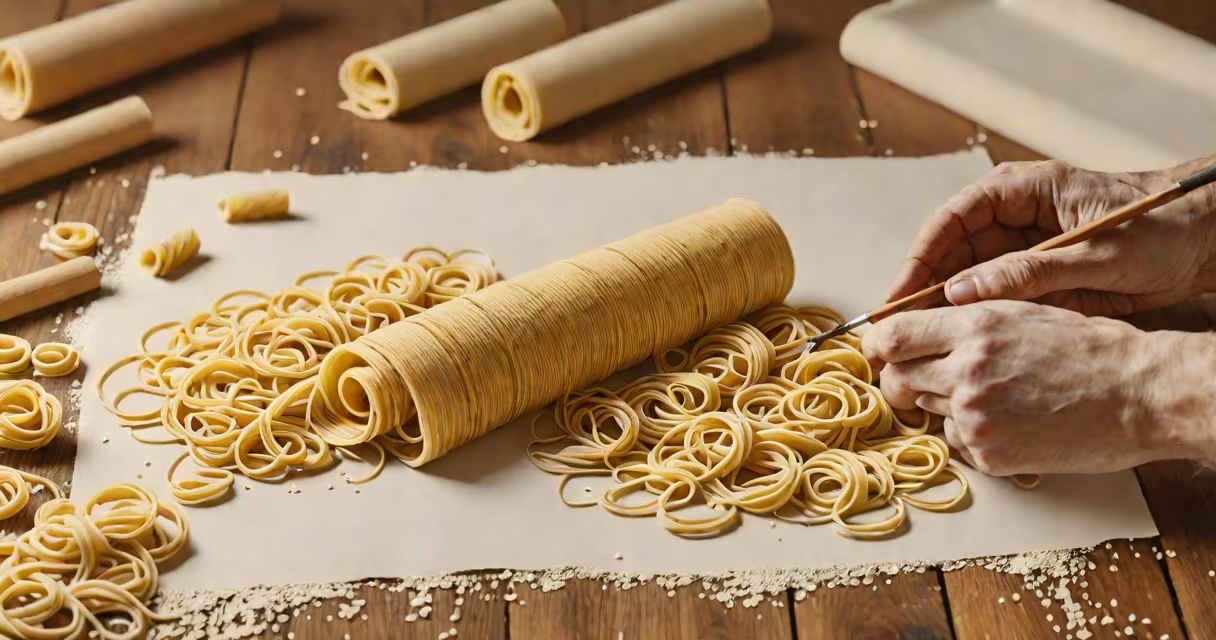
How to make pasta easily means creating fresh noodles from just four ingredients-flour, eggs, salt, and water-with minimal effort and no equipment beyond a bowl and knife. The process takes under 15 minutes start to finish, yields tender, flavorful pasta, and requires no prior cooking skill.
Begin with 2 cups (250g) of all-purpose flour, 3 large eggs, ½ teaspoon of fine sea salt, and 2 tablespoons of cold water. Combine the dry ingredients in a bowl, then make a well in the center. Crack the eggs into the well and mix them with a fork, gradually incorporating flour until a shaggy dough forms. Add water drop by drop if the dough feels dry. Knead the dough on a floured surface for 5 minutes until smooth and elastic. Let it rest, covered, for 10 minutes.
Roll the dough into a thin sheet using a rolling pin-about ⅛ inch thick. Cut it into strips: ¼ inch wide for fettuccine, ⅛ inch for spaghetti. Dust the cut strands with flour to prevent sticking. Cook in boiling salted water for 2 to 3 minutes until al dente. Drain and toss with sauce immediately.
Traditional pasta recipes often assume access to a pasta machine or stand mixer. This method skips those requirements entirely. A rolling pin and knife are sufficient. The key is consistent pressure during rolling and even thickness. Uneven thickness leads to uneven cooking-some parts overcook while others remain tough.
Using cold water prevents the eggs from cooking prematurely. Cold water also helps the dough hold together better during handling. A 10-minute rest allows gluten to relax, making the dough easier to roll thin without tearing.
Many home cooks fail because they try to stretch the dough too far or skip resting. Skipping rest causes the dough to snap back when rolled. The result is torn noodles and frustration. Resting ensures pliability and even texture.
With the same basic dough, you can create multiple shapes. The method adapts to different styles based on how you cut and fold the dough.
| Pasta Type | Shape & Cutting Method | Cook Time | Best Sauce Pairing |
|---|---|---|---|
| Fettuccine | ¼-inch strips, cut with knife | 2-3 min | Alfredo, pesto |
| Spaghetti | ⅛-inch strips, cut with knife | 2-3 min | Marinara, carbonara |
| Ravioli | 1-inch squares folded over filling, sealed edges | 3-4 min | Brown butter, sage |
| Farfalle | Butterfly-shaped, cut with scissors | 2-3 min | Light cream sauces, vegetables |
For ravioli, fill each square with a mixture of ricotta, spinach, and lemon zest. Seal edges with a fork. Boil gently to avoid bursting. Farfalle work well with summer vegetables and light dressings. Their shape holds sauce well without absorbing too much.
Over-flouring the dough leads to dry, crumbly pasta. Use only enough flour to keep the dough from sticking. Too much flour makes the final product tough and dense. The ideal dough should feel smooth and slightly tacky, not sticky.
Some people think you need egg yolks only or extra yolks for richness. That's false. Whole eggs provide the right balance of fat and protein. Using only yolks results in fragile dough that tears easily. Three whole eggs per 2 cups of flour is standard and reliable.
A non-obvious fix: if your dough cracks when rolling, it's too dry. Add 1 teaspoon of water at a time. If it sticks to the rolling pin, sprinkle more flour-but lightly. Over-flouring ruins texture. The goal is a clean roll, not a dusty one.
I made this recipe for dinner during a power outage. No oven, no appliances. Just a cutting board, a knife, and a pot. I used 2 cups of flour, 3 eggs, salt, and 2 tbsp cold water. After kneading, I rested the dough for 10 minutes. Rolled it out to ⅛ inch. Cut it into ¼-inch strips. Boiled in salted water for 2.5 minutes. Tossed with leftover tomato sauce and Parmesan. It tasted better than store-bought dried pasta.
That night, my guest asked if I'd bought it from a shop. I said no-made it myself. They didn't believe me until I showed the kitchen counter.
How to make pasta easily is not the same as "quick pasta" made from instant mixes or pre-made doughs. Those products contain additives and preservatives. They don't offer the same mouthfeel or flavor development. Fresh pasta from scratch has a delicate, springy texture that frozen or boxed versions lack.
It's also not about fancy techniques. No need to use a pasta roller or vacuum seal. No need to wait hours for fermentation. This method uses no yeast, no rising time, no drying. It's immediate. It's tactile. It's accessible.
Some confuse this with no-knead bread. But pasta dough is meant to be smooth and pliable, not airy or spongy. Kneading builds elasticity. Bread dough relies on gas retention. Pasta dough relies on gluten alignment. Different goals, different textures.
Use room-temperature eggs. Cold eggs can cause the dough to seize and become difficult to handle. Bring eggs to room temperature by leaving them out for 30 minutes before mixing.
Always salt the boiling water-1 tablespoon per quart. This seasons the pasta from within. Without salt, the final dish tastes flat, even with rich sauce.
Don't overcook. Fresh pasta cooks faster than dried. Two to three minutes is sufficient. Overcooking turns it gummy and soft. Test by biting a piece-it should have resistance, not mush.
For storage, freeze uncooked pasta on a tray for 1 hour, then transfer to a freezer bag. Cook from frozen-add 1 minute to cook time. It keeps for up to 3 months.
When you learn how to make pasta easily, you're not just saving money. You're gaining control over flavor, texture, and ingredients. You're building a skill that lasts through power outages, pantry shortages, and last-minute dinner plans. It's not complicated. It's not intimidating. It's just flour, eggs, salt, and time.