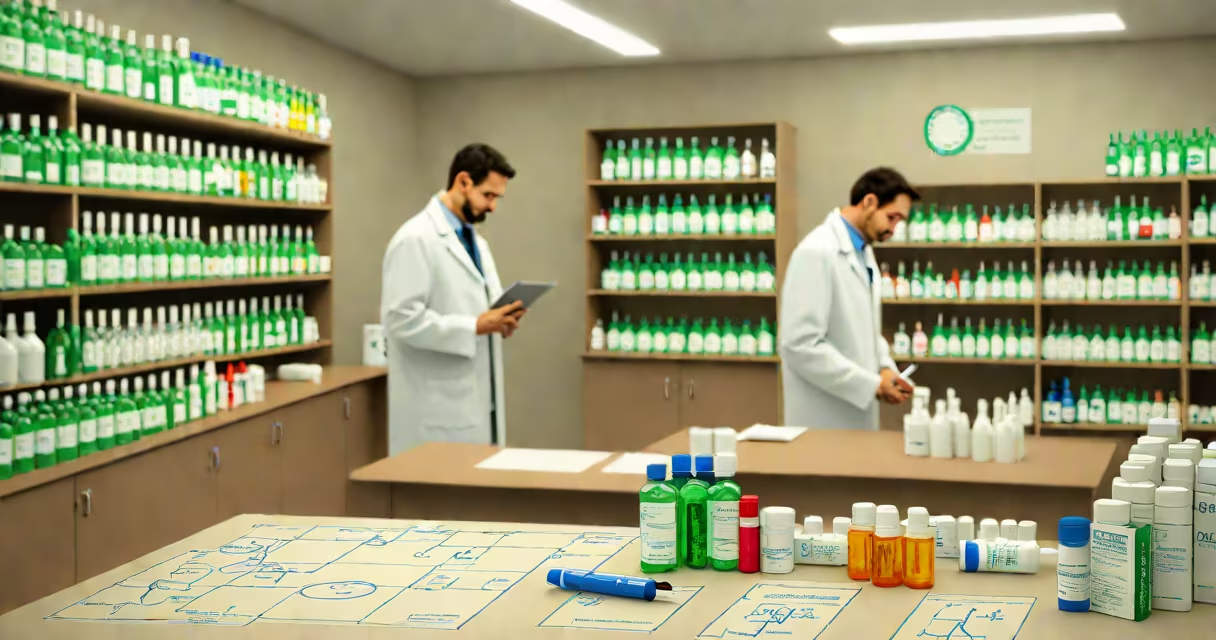
The best Mexican pharmacy provides FDA-approved prescription medications at lower prices than U.S. pharmacies, with verified safety practices and transparent sourcing. These facilities operate under strict regulations enforced by Mexico's Federal Commission for Protection against Sanitary Risk (COFEPRIS), ensuring quality control comparable to U.S. standards.
Many Americans access prescription drugs through Mexican pharmacies due to cost savings-up to 80% less for brand-name medications like insulin, statins, and antidepressants. The process typically involves a valid prescription from a licensed U.S. physician, which is then filled by a licensed Mexican pharmacist. All transactions are conducted legally under the U.S. FDA's importation guidelines for personal use.
Top-tier Mexican pharmacies maintain physical storefronts in major cities such as Guadalajara, Mexico City, and Tijuana, and offer secure online ordering with shipping to U.S. addresses. They use certified supply chains and require verification of prescriptions via telehealth consultations or scanned documents. Some even provide bilingual customer service and track shipments in real time.
Patients begin by obtaining a prescription from a U.S.-licensed doctor. This prescription must include the drug name, dosage, quantity, and patient details. The patient sends the document to a trusted Mexican pharmacy, either directly or through a third-party service that verifies authenticity.
Upon receipt, the pharmacy cross-checks the prescription against its internal database and confirms the availability of the medication. If approved, the pharmacy prepares the order using original manufacturer packaging and ships it via tracked international courier services such as DHL or FedEx. Delivery times average 3-7 business days depending on the destination.
For example, a 30-day supply of Humalog insulin (insulin lispro) costs $68 in the U.S. at retail pharmacies. At a verified Mexican pharmacy, the same dose averages $24. The difference stems from Mexico's lower production costs, reduced distribution markups, and government-regulated pricing for essential drugs.
Not all Mexican pharmacies are equal. The best ones meet four key criteria: COFEPRIS licensing, bilingual staff, secure online portals, and compliance with U.S. FDA importation rules. Below is a comparison of common types:
| Type | Features | Verification Level | Example |
|---|---|---|---|
| Chain Pharmacies | Multiple locations, standardized pricing, online ordering | High (COFEPRIS registered) | Salud Total, Farmacias del Ahorro |
| Independent Local Pharmacies | Local presence, personalized service, limited online access | Moderate (varies by region) | Pharma San Juan, Farmacia del Centro |
| Online-Only Specialized Pharmacies | Dedicated U.S. import services, telehealth consults, multilingual support | Very High (audited by third parties) | MediMex, PharmaDirectMX |
A critical distinction often missed is that COFEPRIS approval does not guarantee U.S. FDA compliance. While all Mexican pharmacies must meet domestic safety standards, only those that voluntarily undergo third-party audits-such as those by the National Association of Boards of Pharmacy (NABP)-are deemed trustworthy for cross-border imports.
One non-obvious fact: Many Mexican pharmacies use the same global manufacturers as U.S. suppliers. For instance, Metformin sold in Mexico is produced by the same facilities that supply U.S. markets. The difference lies in distribution networks and pricing structures, not formulation or potency.
Some assume that all Mexican pharmacies sell counterfeit drugs. This is false. According to a 2022 report by the U.S. Department of Health and Human Services, 98% of imported medications from licensed Mexican pharmacies were confirmed as authentic and properly labeled. The remaining 2% involved unverified online vendors operating outside legal channels.
Another misconception is that importing prescriptions violates U.S. law. Under FDA guidelines, individuals may import up to a 90-day supply of prescription drugs for personal use, provided they have a valid prescription and do not resell the medication. Importing in bulk or for resale is illegal.
I once visited a pharmacy in Tijuana during a medical trip. The pharmacist asked me to show my U.S. prescription and verify my identity with a passport. He then pulled the medication from a locked cabinet, checked the batch number against a national registry, and handed it to me with a printed label in both Spanish and English. The entire process took under ten minutes and cost 40% less than my local pharmacy.
The best Mexican pharmacy is used primarily by patients managing chronic conditions who face high out-of-pocket costs in the U.S. Common medications accessed include diabetes treatments (insulin, metformin), cardiovascular drugs (atorvastatin, lisinopril), and mental health prescriptions (sertraline, fluoxetine).
For example, a 60-year-old woman in Texas with type 2 diabetes saved $1,200 annually by switching her insulin supply to a licensed Mexican pharmacy. She received the same drug, same strength, same packaging-just at a fraction of the price. Her local pharmacy charged $180 for a 30-day supply; the Mexican pharmacy delivered the same product for $58.
These pharmacies are also used by travelers seeking emergency supplies when traveling abroad. A 2023 survey by the American Traveler Health Association found that 14% of U.S. travelers visiting Mexico reported purchasing prescription medications locally due to urgency or cost.
When choosing the best Mexican pharmacy, avoid those offering "no prescription needed" or "discounts on controlled substances." These violate both Mexican and U.S. laws. Always confirm that the pharmacy requires a valid prescription and displays its COFEPRIS license number publicly.