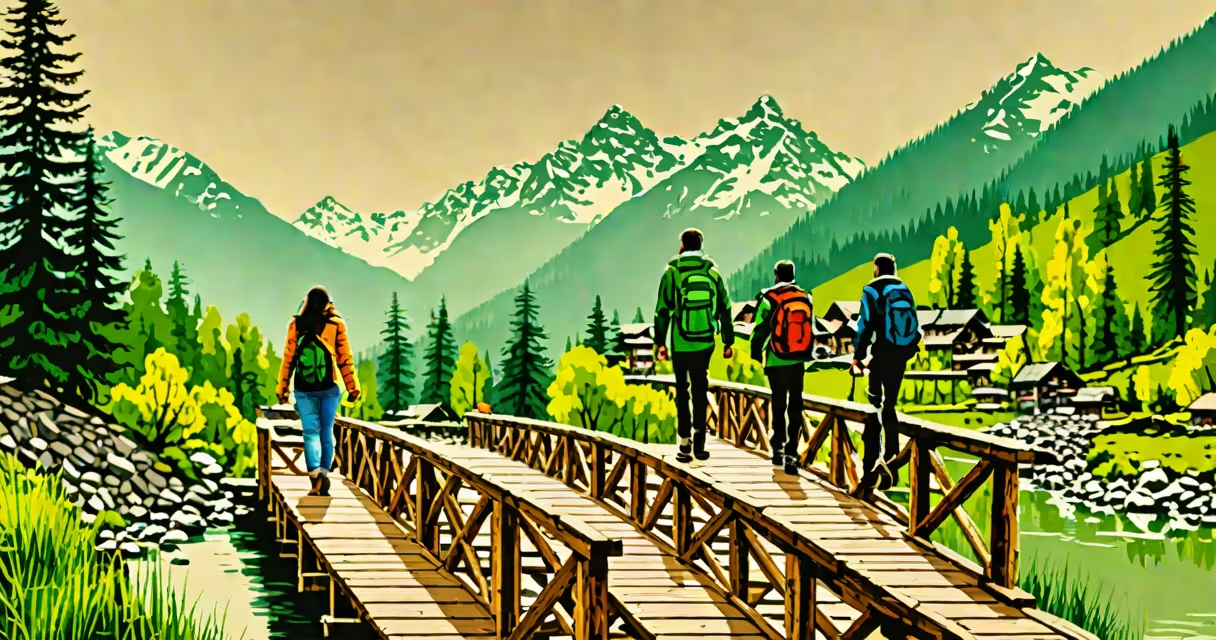
The best time to visit Manali is between April and June and again from September to November, when temperatures hover between 10°C and 25°C, snow levels permit trail access, and skies remain clear for mountain views.
Manali lies in the Himalayan foothills of Himachal Pradesh, India, at an elevation of about 2,050 meters. Its climate shifts dramatically across four distinct seasons. Winter brings heavy snowfall, blocking roads and limiting access to major attractions. Summer sees warm days and cool nights, ideal for trekking and sightseeing. Monsoon arrives from July to August, turning paths muddy and increasing landslide risk. Autumn offers stable weather and fewer crowds.
Travelers often assume Manali is a year-round destination. This is incorrect. The region's accessibility and safety depend heavily on seasonal conditions. Roads such as the Kullu-Manali Highway close during winter due to snow accumulation. The Rohtang Pass, a key gateway to high-altitude trails, remains closed from November to May. These closures limit mobility and increase travel costs.
April through June marks the peak tourist window. Daytime temperatures average 20°C to 25°C, perfect for hiking, river rafting, and visiting the Hadimba Temple and Mall Road. Snowmelt feeds rivers, making whitewater activities safe and exhilarating. This period attracts 60% of annual visitors, according to the Himachal Tourism Department.
September to November delivers similar comfort with lower visitor density. Daytime highs stay around 22°C, and mornings turn crisp. The sky clears after monsoon rains, revealing panoramic views of the Dhauladhar Range. This is the optimal window for photography and long-distance treks like the Beas Kund Trail.
July and August bring monsoon rains. Daily precipitation averages 150 mm, saturating trails and increasing landslide incidents. The National Highways Authority of India reports 12 road closures annually during this period. Travelers risk delays, canceled tours, and limited accommodation availability.
Different travelers prioritize different aspects of the trip. A family seeking mild weather and easy access to attractions should choose April to June. A solo backpacker aiming for solitude and challenging terrain may prefer October. A photographer focused on alpine landscapes benefits most from September to November.
| Travel Type | Best Window | Key Advantage | Risk Factor |
|---|---|---|---|
| Families & seniors | April-June | Stable weather, accessible roads | Higher prices, larger crowds |
| Adventure seekers | September-November | Clear skies, dry trails | Shorter daylight hours |
| Photographers | October | Golden light, snow-dusted peaks | Chilly mornings below 0°C |
| Winter sports enthusiasts | December-February | Snow-covered slopes, ski rentals available | Pass closures, transport disruption |
Many visitors confuse "best time" with "least crowded." While December and January see fewer tourists, they also face extreme cold and blocked access. The Indian Meteorological Department records average January temperatures at -5°C to 5°C. Without proper gear, exposure risks are high. Staying in Manali during winter requires advance planning and emergency preparedness.
One widespread error is assuming Manali is always snowy. Only 20% of the year sees snow cover. Most of the time, the town experiences warm days and cool nights. Another misconception is that summer is too hot. Temperatures rarely exceed 30°C, even in July. The humidity stays low due to altitude, making heat feel manageable.
A non-obvious fact: the best time to visit Manali for cultural events is mid-August. The Manali Festival features traditional music, dance, and local crafts. It coincides with the Hindu festival of Raksha Bandhan and draws regional artists. Attendance spikes during this week, but accommodations fill quickly. Booking in advance is essential.
I once visited Manali in early September. The air was crisp, the sky cloudless. I walked the 5-kilometer stretch from Manali to Sula Vineyard, where grapevines lined terraced hills. At sunset, the sun hit the peaks behind me, casting red shadows across the valley floor. That moment-still vivid-was only possible because the monsoon had ended and snow hadn't returned.
For those seeking the best place to visit in the Himalayas, Manali ranks among the top choices. Its mix of adventure, culture, and natural beauty makes it a standout. But timing matters. Choose your window based on activity, not just temperature.
Understanding the best time to visit Manali ensures you avoid closures, enjoy stable weather, and maximize your experience. Plan around the seasons, not against them.