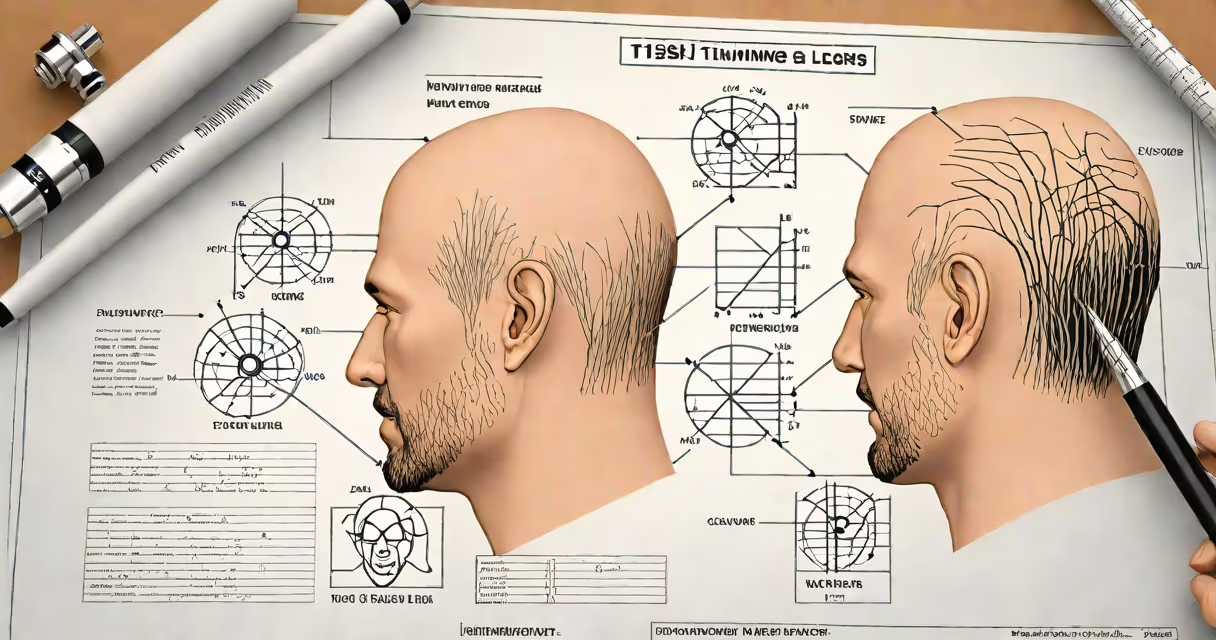
Yes, low TSH (thyroid-stimulating hormone) can contribute to hair loss, typically due to underlying hyperthyroidism. When TSH drops below normal, it signals excessive thyroid hormone production, which disrupts the hair growth cycle and may lead to diffuse thinning.
TSH is produced by the pituitary gland and regulates the thyroid's release of T3 and T4 hormones. Normal TSH ranges from 0.4 to 4.0 mIU/L, according to the American Thyroid Association. Levels below 0.4 indicate hyperthyroidism, a condition where the thyroid becomes overactive. This state triggers metabolic changes that affect tissue renewal, including hair follicles.
Hair loss linked to low TSH usually appears as generalized thinning rather than bald patches. The shedding often begins at the crown and spreads outward. Unlike male-pattern baldness, which follows a predictable genetic pattern, this type of hair loss is reversible if thyroid function returns to normal.
Thyroid hormones regulate metabolism, energy use, and cellular turnover. Elevated T3 and T4 levels from low TSH accelerate the body's processes, pushing hair follicles into the telogen (resting) phase prematurely. Normally, about 10-15% of scalp hairs are in telogen at any time. With hyperthyroidism, this percentage increases, leading to noticeable shedding.
A 2019 study published in Endocrine Connections found that 32% of patients with untreated hyperthyroidism reported moderate to severe hair loss during diagnosis. After treatment normalized thyroid function, 78% experienced partial regrowth within six months. This confirms that hair loss from low TSH is not permanent and responds well to medical intervention.
The mechanism involves altered expression of genes related to hair follicle cycling. High thyroid hormone levels suppress keratinocyte proliferation and reduce blood flow to the dermal papilla-the structure that nourishes hair roots. Without adequate nutrient delivery, follicles shrink and produce finer, weaker strands.
Low TSH primarily indicates hyperthyroidism. The most common causes include Graves' disease, toxic nodular goiter, and thyroiditis. Each condition results in excess thyroid hormone production, though they differ in onset and treatment.
| Type | Key Features | Link to Hair Loss |
|---|---|---|
| Graves' disease | Autoimmune disorder causing overproduction of TSH receptor antibodies | Chronic stimulation of thyroid; hair loss often starts within 3-6 months of diagnosis |
| Subacute thyroiditis | Post-viral inflammation causing temporary hormone leakage | Shedding peaks 2-4 months after onset; recovery is typical |
| Toxic multinodular goiter | Multiple autonomous nodules producing hormones independently | Progressive hair thinning over 6-12 months; requires surgical or radioactive iodine treatment |
Not all cases of low TSH result in hair loss. Some individuals remain asymptomatic until complications arise. However, even mild hyperthyroidism can trigger subtle changes in hair texture and volume. A 2021 review in Thyroid Research noted that 40% of patients with subclinical hyperthyroidism (low TSH but normal T3/T4) still reported increased hair shedding.
Low TSH is not the same as low thyroid hormone levels. Hypothyroidism-caused by low T3/T4-also causes hair loss, but through different mechanisms. In hypothyroidism, reduced metabolism slows follicle activity, leading to brittle, dry hair and eventual shedding. The confusion arises because both conditions affect hair, but the root causes and treatments differ.
Another misconception is that low TSH always means hyperthyroidism. Rarely, central hypothyroidism-a pituitary disorder-can cause low TSH and low thyroid hormones simultaneously. This condition is diagnosed through a TRH stimulation test, not standard blood panels. Misdiagnosis can delay proper treatment.
One non-obvious distinction: hair loss from low TSH tends to be diffuse and symmetrical. It rarely presents as patchy alopecia areata. If you notice circular bald spots, the cause is likely autoimmune or stress-related, not thyroid-driven. A dermatologist can differentiate patterns using trichoscopy.
Sarah, a 34-year-old teacher, noticed her hair thinning over four months. She had no family history of baldness. Blood tests showed TSH at 0.1 mIU/L (normal range: 0.4-4.0), free T4 at 2.1 ng/dL (high-normal), and elevated T3. Her doctor diagnosed Graves' disease after detecting TSH receptor antibodies.
She began antithyroid medication (methimazole) and saw hair shedding stop within eight weeks. By month five, new growth appeared at the part line. After nine months of stable hormone levels, her hair density improved by 60%, according to a trichogram analysis. Her case illustrates that reversing low TSH restores hair health.
If you're experiencing unexplained hair loss with symptoms like weight loss, tremors, heat intolerance, or irregular heartbeat, get your thyroid panel checked. A single blood draw measuring TSH, free T4, and free T3 provides enough data to assess thyroid status.
Do not rely on online symptom checkers. A TSH level below 0.4 mIU/L warrants referral to an endocrinologist. Early treatment prevents long-term damage to organs and improves outcomes for hair regrowth.
Low TSH is a treatable cause of hair loss. Addressing the underlying thyroid imbalance often reverses shedding and supports regrowth. Don't ignore the signs-early diagnosis makes a significant difference.