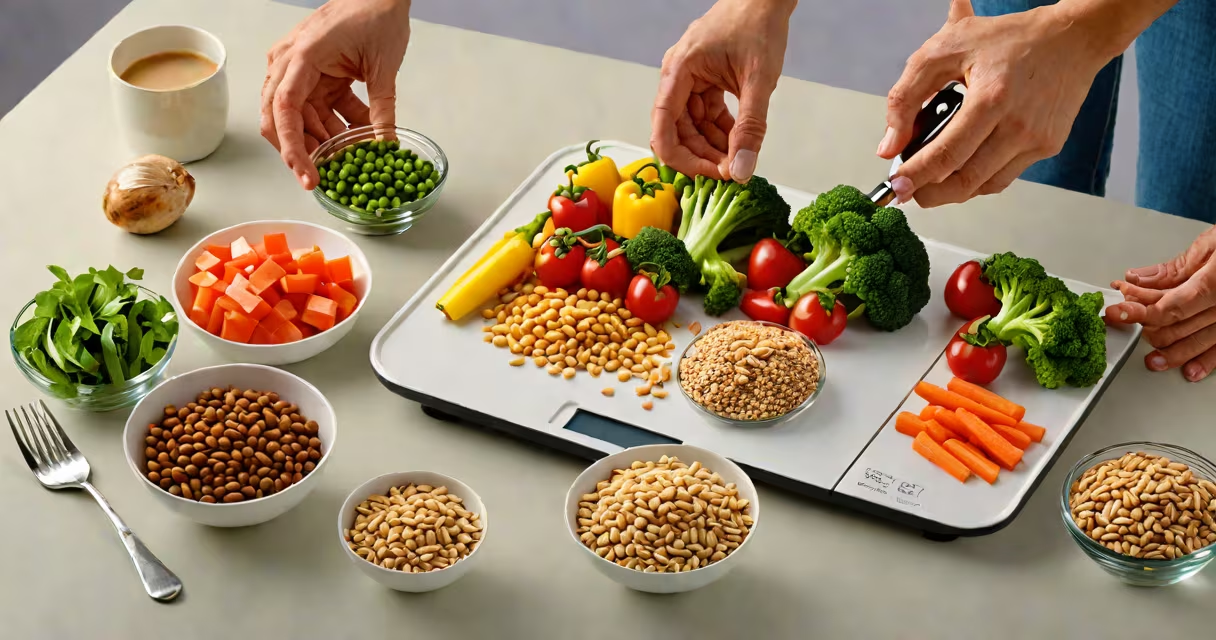
When you eat nutritious foods, exercise regularly, and follow healthy routines, yet your weight remains unchanged, you're experiencing a common phenomenon known as "eating well but not losing weight." This occurs when energy intake slightly exceeds expenditure, even if your diet appears balanced and your habits are consistent.
This state often results from subtle mismatches between calories consumed and burned. For example, a 2020 study published in The American Journal of Clinical Nutrition found that people who ate healthily but maintained a stable weight had average daily intakes within 100-200 kcal above their maintenance level-enough to prevent fat loss over time.
Body composition changes may occur without scale movement. A person can lose fat while gaining muscle, especially with resistance training. Muscle weighs more than fat, so the scale stays flat even as clothes fit better. The National Institutes of Health notes that body composition shifts often go unnoticed until measured via DEXA scans or skinfold calipers.
Weight change hinges on energy balance-the relationship between calories in and calories out. Even if you eat whole grains, vegetables, lean meats, and avoid processed snacks, consuming more calories than your body burns leads to fat storage.
For instance, a 150-pound adult woman with moderate activity needs about 2,000-2,200 kcal/day to maintain weight. Eating 2,400 kcal daily-even from healthy sources-creates a 200-kcal surplus. Over a month, that's roughly 6,000 extra kcal, equivalent to 1.7 pounds of stored fat.
Metabolic adaptation can slow weight loss after initial progress. Research from the Journal of Endocrinology shows that prolonged calorie restriction reduces resting metabolic rate by up to 15% in some individuals, making further fat loss harder without adjusting intake.
Healthy meals often contain high-calorie ingredients that add up quickly. A single avocado has 240 kcal, a cup of cooked quinoa provides 220 kcal, and a tablespoon of olive oil clocks in at 119 kcal. These aren't empty calories-they're nutrient-dense-but they contribute to daily totals.
Portion size matters. A salad with grilled chicken, mixed greens, cherry tomatoes, cucumbers, and a vinaigrette dressing can easily exceed 600 kcal if the dressing contains oil, nuts, cheese, or dried fruit. One study in Obesity Reviews found that participants underestimated portion sizes by 20-30% when measuring homemade meals.
Common missteps include:
There are three primary scenarios behind eating well but not losing weight:
| Type | Characteristics | Typical Cause |
|---|---|---|
| Stable weight on healthy diet | Consistent weight, improved energy, better blood markers | Intake ≈ maintenance needs |
| Plateau after initial loss | Lost 10 lbs then stopped, despite continued healthy habits | Metabolic adaptation, reduced NEAT (non-exercise activity thermogenesis) |
| Weight gain despite healthy choices | Scale rises slowly over months, clothing tightens | Unrecognized calorie surplus from oils, sweeteners, or larger portions |
One overlooked factor is non-exercise activity thermogenesis (NEAT)-daily movements like fidgeting, standing, walking between rooms. A 2018 study in Cell Metabolism showed that people who maintain weight loss often increase NEAT automatically, while those who regain weight reduce spontaneous movement by up to 300 kcal/day.
Many assume that "healthy" automatically equals "low-calorie." That's false. A meal of roasted salmon, sweet potatoes, broccoli, and tahini dressing can total 800 kcal-more than a fast-food burger with fries.
Another myth is that weight loss must happen linearly. The body doesn't operate on a perfect equation. Hormonal fluctuations, sleep quality, stress levels, and gut microbiome diversity influence fat storage independently of food quality.
For example, cortisol-a stress hormone-can promote abdominal fat accumulation even with low-calorie intake. A 2021 study in Psychoneuroendocrinology linked chronic stress to increased visceral fat, regardless of diet quality.
People often mistake water retention or bloating for fat gain. Bloating from sodium, fiber, or gas can cause a 2-5 pound temporary weight increase. This is not fat-it's fluid and undigested material.
Also, many confuse body fat percentage with weight. A person can drop from 30% to 25% body fat while maintaining the same weight due to muscle gain. This is normal and healthy, but it confuses the scale.
A real-world example: Sarah, a 38-year-old teacher, ate salads, grilled fish, and vegetables daily for six months. She lost 12 pounds initially but stalled. Her doctor ran a DEXA scan: her fat mass dropped 8%, but muscle mass rose 4%. Her weight stayed at 158 lbs, but she looked leaner and felt stronger. She wasn't failing-she was improving.
Food labels don't tell the full story. A "healthy" label doesn't guarantee low calories. A single 12-ounce smoothie from a popular chain can contain 600 kcal, 25g sugar, and 18g fat-more than a typical breakfast.
Tracking intake accurately is essential. Apps like MyFitnessPal or Cronometer help identify hidden calories. One user reported that after logging everything for a week, they discovered they were consuming 400 kcal more per day than estimated-mostly from sauces, dressings, and snacks.
Even small errors compound. A 200-kcal daily surplus adds up to 14 pounds of fat annually. That's not a failure-it's a mismatch between perception and reality.
If you're eating well but not losing weight, consider:
Adjusting intake based on actual data-not feelings-is key. A 2022 trial in International Journal of Obesity found that participants who logged food daily lost 1.5 times more weight than those relying on intuition alone.
Understanding eating well but not losing weight starts with seeing calories-not labels-as the driver of body change. Quality matters, but quantity determines outcome.