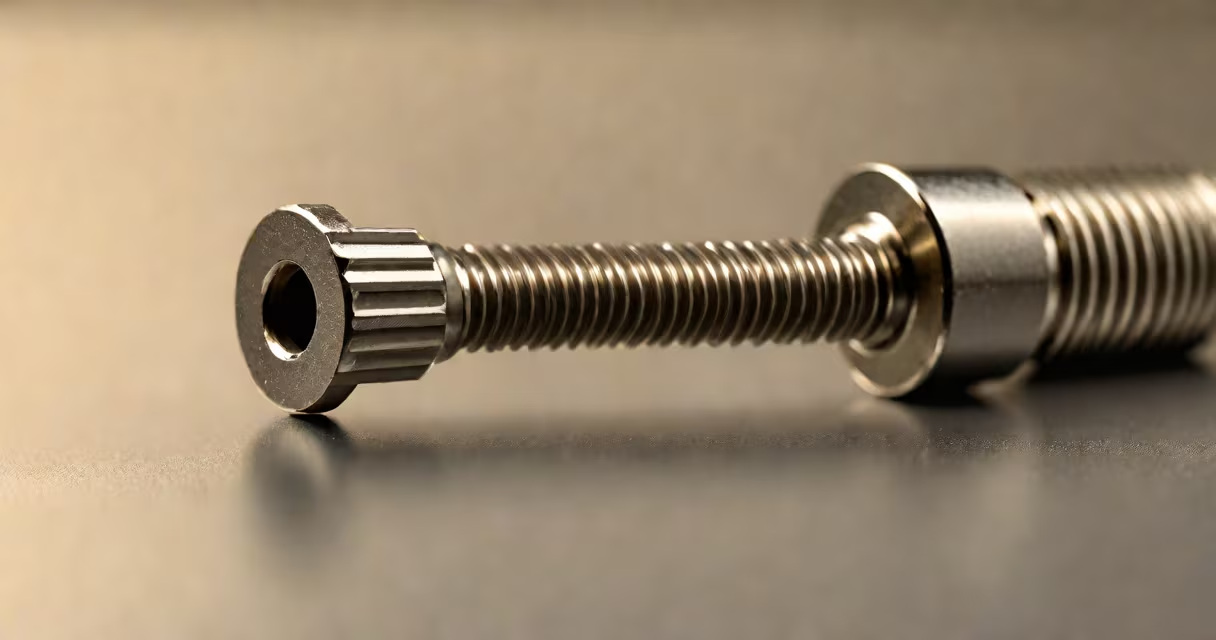
5/16 inch converts directly to 7.94 millimeters in metric. This exact value is used globally in engineering, machining, and hardware specifications where precision matters.
The fraction 5/16 represents a length measured in imperial units, commonly used in the United States and other countries still relying on inch-based systems. Converting it to metric requires multiplying the fraction by the standard conversion factor: 1 inch = 25.4 millimeters.
For 5/16 inch: (5 ÷ 16) × 25.4 = 0.3125 × 25.4 = 7.9375 mm. Rounded to two decimal places, this becomes 7.94 mm. This level of precision ensures compatibility across international standards.
Every inch contains exactly 25.4 millimeters. To convert any fraction of an inch to millimeters, divide the numerator by the denominator to get the decimal form, then multiply by 25.4.
For 5/16:
This method applies universally. For example, 3/8 inch = 0.375 × 25.4 = 9.525 mm ≈ 9.53 mm.
7.94 mm appears frequently in mechanical components, especially where standardized tools and parts are required. It's a common diameter for screws, bolts, and drill bits.
For instance, a 5/16-inch hex key (Allen wrench) measures 7.94 mm across its flat sides. This size is widely used in furniture assembly, automotive repairs, and industrial equipment maintenance.
Drill bit manufacturers list 5/16-inch bits as 7.94 mm. The ISO standard for drill bit sizes includes this dimension under the metric series, ensuring global consistency in metalworking and construction.
Understanding fractional inches and their metric counterparts is essential for anyone working with tools, blueprints, or international product specs.
| Fractional Inch | Decimal Inch | Millimeters (mm) | Common Use |
|---|---|---|---|
| 1/4" | 0.250 | 6.35 | Screw shafts, small fasteners |
| 5/16" | 0.3125 | 7.94 | Hex keys, drill bits, bolt heads |
| 3/8" | 0.375 | 9.53 | Larger fasteners, socket wrenches |
| 1/2" | 0.500 | 12.70 | Heavy-duty bolts, large fittings |
These conversions are codified in ISO 286-1:2010, which defines preferred metric sizes for tolerances and fits in mechanical design. The standard specifies that 7.94 mm falls within the tolerance range for M8 threaded fasteners when used with matching nuts.
Many assume that 5/16 inch rounds to 8 mm. While 8 mm is close, it introduces a 0.0625 mm error - about 0.78% deviation. In high-precision applications, such as aerospace or medical device manufacturing, even this small margin can cause failure.
For example, a 7.94 mm bolt used in a robotic arm joint must fit precisely into a 7.94 mm hole. Using an 8 mm bolt risks binding or misalignment, leading to mechanical stress and premature wear.
Another misconception is that metric sizes are always rounded. They aren't. The International Organization for Standardization (ISO) mandates exact values for dimensional accuracy. A 7.94 mm component is not interchangeable with an 8 mm one unless explicitly designed for tolerance.
In 2021, a European automotive supplier reported a production delay due to incorrect bolt sizing. A batch of 5/16-inch bolts was replaced with 8 mm equivalents during procurement. The mismatch caused thread interference in engine mounting brackets, resulting in 120 defective units before detection.
Root cause analysis confirmed that the purchasing team assumed "5/16 inch ≈ 8 mm" was acceptable. The error cost $43,000 in rework and delayed delivery by 11 days. The company later updated its internal training module to emphasize exact conversions.
According to the National Institute of Standards and Technology (NIST), measurement errors above 0.5% in critical dimensions lead to increased rejection rates in assembly lines. For components like shafts, bearings, and fasteners, even minor discrepancies affect performance and safety.
NIST's Handbook 44 (2023 edition) states that all commercial products sold in the U.S. must meet specified tolerance levels. When imported goods use metric measurements, they must match the equivalent imperial size within defined tolerances - including 5/16 inch to 7.94 mm.
Manufacturers using dual labeling (imperial and metric) reduce confusion. For example, a drill bit labeled "5/16" and "7.94 mm" avoids misinterpretation during cross-border projects.
Never round 5/16 inch to 8 mm unless the application allows for tolerance. In engineering, construction, and tooling, 7.94 mm is the correct metric equivalent. Always verify conversions using the formula: (fraction) × 25.4.
When selecting tools or materials, confirm that the metric size listed matches the exact conversion. A single millimeter difference can disrupt assembly, compromise structural integrity, or void warranties.