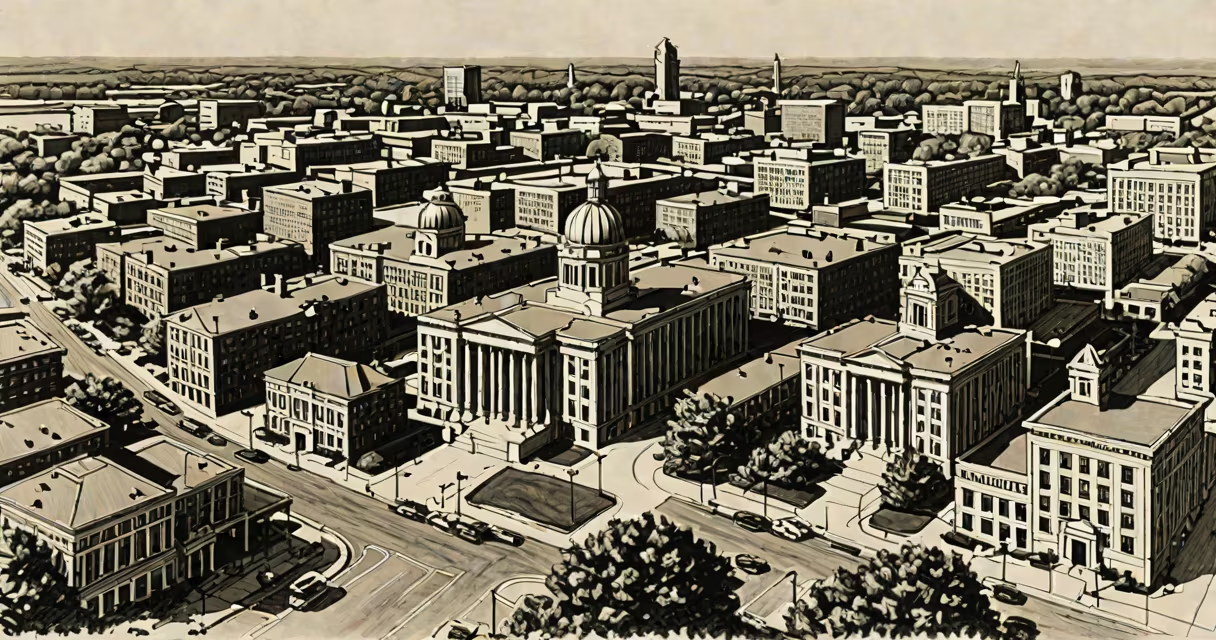
The city of Valparaiso Indiana is a municipal corporation located in Porter County, governed by an elected mayor and city council. It provides local services such as public safety, infrastructure maintenance, zoning regulation, and administrative functions under state law.
Valparaiso operates under a mayor-council form of government. The mayor serves as the chief executive officer, responsible for enforcing city ordinances, managing department heads, and presiding over council meetings. The city council consists of five members elected at-large, who set policy, approve budgets, and pass local laws. All officials serve four-year terms and are subject to term limits as defined by Indiana Code § 36-3-3-1.
City departments include Public Works, Police Department, Fire Department, Planning and Development, and Finance. These units deliver essential services such as street repair, emergency response, building inspections, and tax collection. For example, the Public Works department maintains 140 miles of city streets and 120 miles of storm sewers, according to the 2023 annual report.
Each city department reports to the mayor and is overseen by the city council. Budget decisions are made annually through a public process. The fiscal year runs from July 1 to June 30. The city's budget for 2024 totaled $38.7 million, allocated across public safety ($14.2M), infrastructure ($9.1M), and administration ($5.3M).
Residents engage with city operations through public hearings, advisory boards, and online portals. The city maintains a website with service requests, meeting agendas, and ordinance databases. Citizens can file a pothole complaint via the "Report a Problem" tool, which routes issues to Public Works within 48 hours.
A key function is land use regulation. The city's zoning code divides areas into residential, commercial, industrial, and mixed-use districts. A developer seeking to build a retail center must submit plans to the Planning Commission, which evaluates compliance with setback requirements, parking standards, and environmental impact. Approval requires a majority vote from the city council.
| Department | Primary Responsibilities | Annual Budget (2024) |
|---|---|---|
| Public Works | Street maintenance, snow removal, stormwater management | $9.1 million |
| Police Department | Law enforcement, crime prevention, traffic control | $10.4 million |
| Fire Department | Emergency response, fire suppression, medical aid | $6.3 million |
| Planning and Development | Zoning review, permit issuance, urban planning | $2.1 million |
| Finance | Budgeting, payroll, tax collection, audit coordination | $5.3 million |
For example, in 2023, the city completed repaving 18 miles of roads using state transportation funds and local matching contributions. The project was funded through a combination of the Indiana Department of Transportation's Local Road Program and a 1% city sales tax dedicated to infrastructure.
Non-emergency police reports are filed online at valparaiso.in.gov/police. The system logs incidents, assigns case numbers, and tracks resolution times. Between January and June 2023, 1,247 reports were submitted, with a median response time of 3.2 hours.
Some residents assume the city manages all property taxes. This is incorrect. Property taxes in Valparaiso are levied by multiple entities: the city, Porter County, the school district, and special taxing districts. The city collects only a portion-typically 20-30%-of the total tax bill based on assessed value.
Another misconception is that city employees are hired without competitive processes. In reality, all city positions require formal job postings, application reviews, and structured interviews. The Human Resources Office follows Indiana Civil Service Rules and publishes vacancy notices on the city's employment portal.
There is no single "Valparaiso city code." Instead, the city maintains a codified set of ordinances titled *Code of Ordinances of the City of Valparaiso*. This document, updated annually, includes chapters on animal control, noise restrictions, signage, and business licensing. The latest version is available on the city's official website under "City Government" > "Ordinances."
In 2022, I attended a city council meeting to observe the approval process for a new housing development near the intersection of Main Street and 8th Avenue. The proposal included 48 single-family homes with green space and a shared pedestrian path. After a 45-minute presentation by the developer, the council voted unanimously to approve the plan with conditions: 10% of units must be affordable housing, and drainage systems must meet EPA standards.
This example illustrates how local decision-making balances growth with community needs. The outcome was shaped by public input, technical review, and legal compliance-not arbitrary authority.
Valparaiso shares a regional identity with neighboring communities in Northwest Indiana. It is part of the Calumet Region, known for its industrial heritage and ongoing revitalization efforts. The city is approximately 45 miles from Chicago and 15 miles from Michigan City.
Valparaiso's location places it near major highways including I-65 and State Road 2. This connectivity supports economic activity and commuter patterns. The city's 2023 Economic Development Report noted a 4.7% increase in new business registrations compared to the prior year, driven largely by small retailers and professional services.
Understanding the city of Valparaiso Indiana requires recognizing its role as a local government entity with defined powers, responsibilities, and accountability mechanisms. It is not a state agency, nor is it a private organization. Its actions are bound by Indiana statutes, court rulings, and public oversight.
For official records, resident services, or to contact city staff, visit valparaiso.in.gov. The city of Valparaiso Indiana remains a functioning municipal government with transparent operations and measurable outcomes.