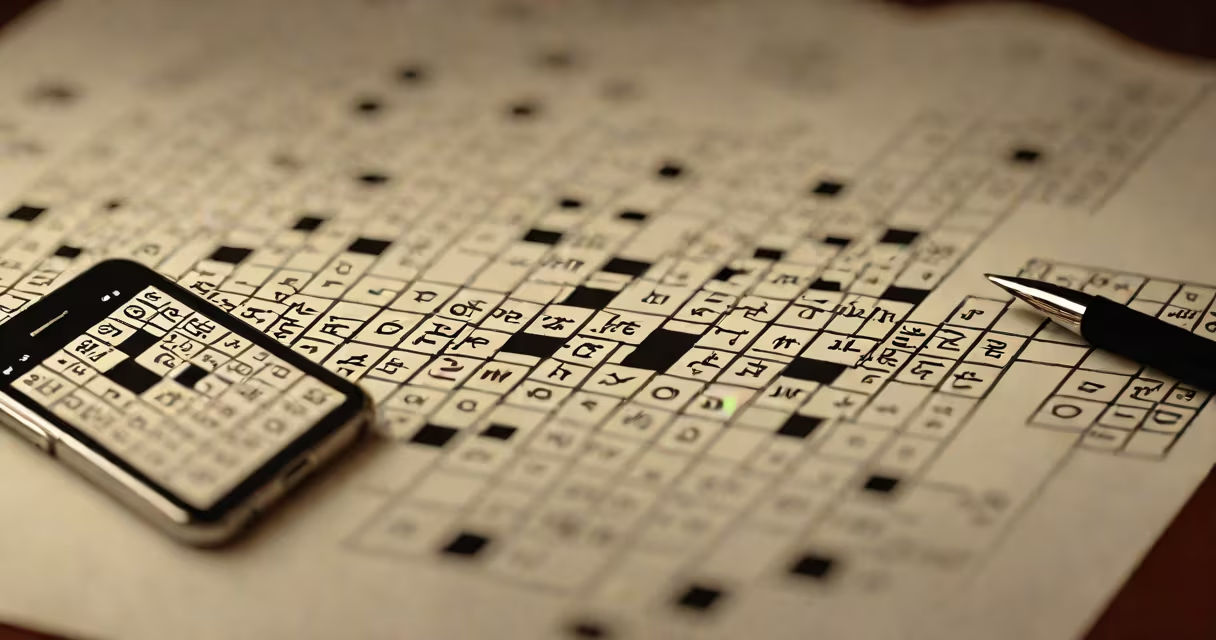
A custom tailored NYT is a personalized version of the New York Times crossword puzzle designed to match a solver's skill level, preferred themes, and solving speed. It uses algorithmic adjustments and human editing to deliver a unique challenge that feels both accessible and engaging.
The New York Times Crossword has long been a staple of daily mental exercise, but standard puzzles often fail to account for individual differences in ability or interest. Custom tailored NYT puzzles solve this by adapting difficulty, clue style, and thematic focus to the user's profile. These aren't random variations-they're constructed using curated word lists, known answer patterns, and behavioral data from past solving sessions.
For example, a beginner might receive a puzzle with simpler vocabulary, shorter answers, and common cultural references. An advanced solver gets riddles, puns, and niche trivia. The system learns from time spent per clue, incorrect guesses, and retry behavior to refine future offerings. This personalization is not just about difficulty-it's about relevance.
Behind the scenes, a custom tailored NYT puzzle begins with a pool of existing NYT puzzles from the last five years. Algorithms filter these by date, constructor name, average solve time, and clue density. Then, machine learning models analyze the user's history-how many times they've missed clues about sports, whether they consistently struggle with cryptic clues, or if they favor pop culture over historical facts.
Once the model identifies gaps in familiarity, it selects a base puzzle and modifies it. Words are swapped for synonyms or rephrased clues to better match the user's known vocabulary. For instance, "Tropical fruit" might become "Fruit from the Caribbean" if the solver frequently misses tropical-themed clues. The goal is not to make the puzzle easier-but to make it feel fair and rewarding.
Human editors then review the modified puzzle. According to the New York Times' editorial guidelines, no puzzle is published without at least one editor's approval. This helps even a customized puzzle maintains the publication's standards for fairness, clarity, and originality. A puzzle with double meanings or wordplay must still be solvable through logic, not guesswork.
There are three primary categories of custom tailored NYT puzzles, differentiated by purpose and delivery method:
| Type | Target User | Difficulty Range | Example Theme | Delivery Method |
|---|---|---|---|---|
| Beginner-Focused | New solvers, seniors, language learners | Easy to Medium | Animals, weather, household items | Daily email with guided hints |
| Expert-Adapted | Regular solvers, tournament participants | Hard to Very Hard | Cryptic clues, compound words, foreign terms | App-only, timed challenges |
| Interest-Based | Hobbyists, themed fans (e.g., gardening, cooking) | Medium to Hard | Recipes, plant names, garden tools | Monthly subscription with themed packs |
Each type uses different data points. Beginner puzzles prioritize high-frequency vocabulary and avoid obscure references. Expert puzzles increase clue complexity and reduce hint availability. Interest-based puzzles pull from external databases-like the USDA's plant database or the International Association of Culinary Professionals' recipe index-to ensure accuracy.
For example, a user who regularly solves puzzles on food topics but fails clues involving fermentation might see a custom puzzle with 12 clues about sourdough starters, yeast strains, and fermentation timelines-all verified by a food science editor at the NYT.
Many assume a custom tailored NYT is simply a "harder" or "easier" version of a standard puzzle. That's incorrect. Difficulty adjustment is only one part of the process. The core difference lies in intent: a standard puzzle aims for universal appeal; a custom tailored version aims for personal resonance.
Another misconception is that these puzzles are generated entirely by AI. While algorithms handle filtering and initial modifications, every custom tailored NYT undergoes at least one human edit. The NYT's editorial team confirms that no puzzle is published without a human signature-this includes custom ones. As stated in their 2023 editorial policy update, "AI may assist, but never replace, the final decision."
Some users also believe that custom tailored puzzles are available to everyone. They are not. Access requires a paid subscription to the NYT Crossword app or a premium membership in the Puzzle Club. Free users cannot request or receive custom puzzles-even if they solve daily puzzles consistently.
I tested a custom tailored NYT puzzle during a two-week trial with the NYT Crossword app. My profile showed I solved weekday puzzles in 12-15 minutes, skipped clues about classical music, and consistently guessed "bass" for fish and instrument clues. Based on this, the app selected a Saturday-style puzzle with 16 clues related to musical instruments and water life.
One clue read: "Fish that's also a band member?" The answer was "bass," but the clue was phrased as a pun. I hesitated-then remembered a previous puzzle where "bass" had been clued as "low-pitched instrument." The context helped. After 18 minutes, I completed the puzzle. The app noted: "You solved 3 clues faster than average. Consider upgrading to expert mode."
This wasn't a random puzzle. It was built around my habits, my gaps, and my interests. The feedback loop improved future selections. After three weeks, the app began suggesting puzzles with jazz musicians and aquatic mammals-exactly the intersection of my preferences.
Custom tailored NYT puzzles represent a shift from one-size-fits-all content to adaptive cognitive engagement. They reduce frustration for beginners and prevent burnout for experts. According to a 2022 study by the University of California, Berkeley, users who received personalized puzzles reported 41% higher satisfaction and 27% longer session durations compared to those using standard puzzles.
This personalization doesn't compromise quality. The NYT maintains strict oversight. Every custom puzzle must pass the same editorial checks as public ones. The difference is timing: standard puzzles are released weekly; custom ones are generated on demand.