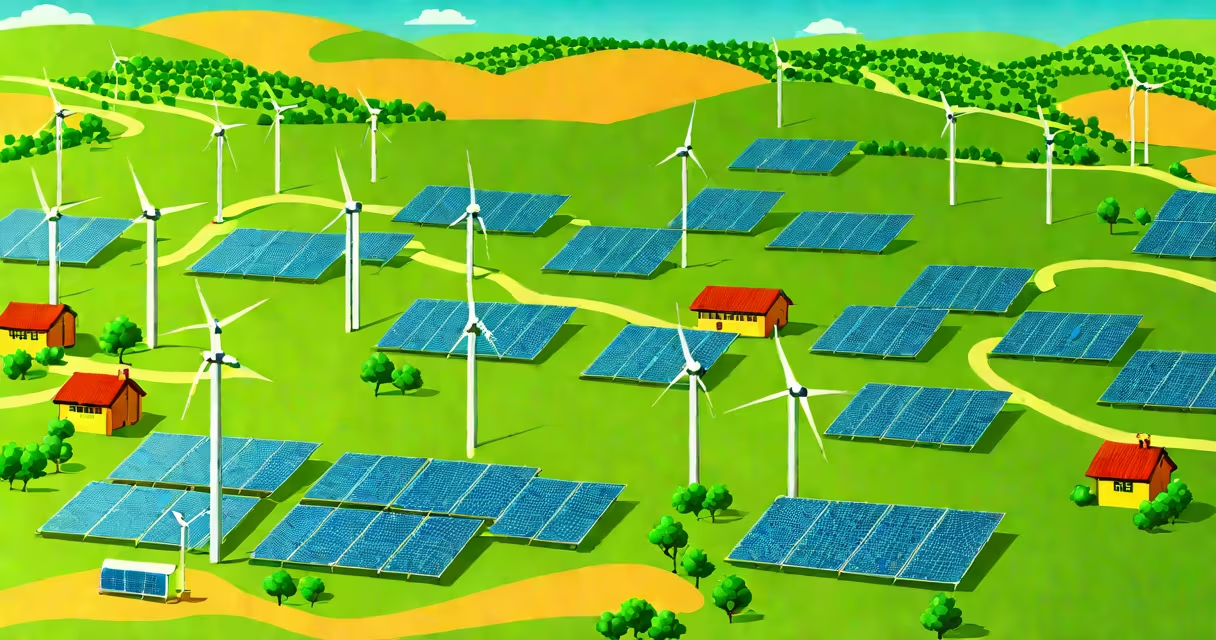
clean energy examples are power sources that generate electricity with little to no greenhouse gas emissions during operation. They include solar, wind, hydroelectric, geothermal, and biomass energy. These technologies rely on natural processes that are replenished continuously.
Solar power captures sunlight using photovoltaic cells or concentrated solar plants. When sunlight hits a solar panel, electrons move, creating direct current (DC) electricity. Inverters convert DC to alternating current (AC) for home and grid use. A typical residential solar system produces 5 to 10 kilowatts (kW) and can offset 60% to 80% of household electricity use annually.
Wind energy uses turbines to convert kinetic energy from wind into electrical energy. Modern utility-scale turbines stand 80 to 120 meters tall with rotor diameters exceeding 100 meters. A single turbine generates 2 to 3 megawatts (MW) of power. The U.S. Department of Energy reports that wind farms in Texas and Iowa supply over 10% of state electricity needs.
| Type | Primary Source | Typical Output | Geographic Limitations |
|---|---|---|---|
| Solar | Direct sunlight | 5-10 kW per home system | High insolation areas; less effective in high-latitude winter months |
| Wind | Consistent wind flow | 2-3 MW per turbine | Requires steady wind corridors; offshore sites offer higher yields |
| Hydroelectric | Flowing water in dams or rivers | 100 MW to 2 GW per plant | Limited to regions with significant elevation changes and water volume |
| Geothermal | Subsurface heat from Earth's core | 50-300 MW per facility | Restricted to tectonically active zones like California's Geysers field |
| Biomass | Organic waste, wood, crop residues | 10-50 MW per plant | Depends on local feedstock availability and sustainable sourcing |
Hydroelectric power uses flowing water to spin turbines connected to generators. Dams store water and release it through penstocks to drive turbines. The Grand Coulee Dam in Washington State produces 6.8 gigawatts (GW) - enough to power over 2 million homes annually. The International Hydropower Association notes that hydropower accounts for 16% of global electricity generation as of 2023.
Geothermal energy taps heat from beneath the Earth's surface. Wells drill into underground reservoirs to access steam or hot water, which drives turbines. The Geysers complex in Northern California operates 22 power plants and supplies 750 MW - enough for about 750,000 homes. The U.S. Geological Survey confirms that geothermal resources are stable and available 24/7, unlike solar and wind.
Biomass energy burns organic material such as wood chips, agricultural residue, or landfill methane. In Sweden, district heating systems burn forestry waste to provide heat to over 1 million homes. The European Environment Agency reports that biomass contributes 10% of EU energy consumption, though sustainability depends on sourcing practices to avoid deforestation.
Some clean energy examples are often confused with low-carbon alternatives. For instance, natural gas is sometimes labeled "clean" due to lower CO₂ emissions than coal, but it still releases methane - a greenhouse gas 80 times more potent than CO₂ over 20 years. The Intergovernmental Panel on Climate Change (IPCC) states that fossil fuel-based energy cannot meet net-zero targets by 2050.
A common misunderstanding is that clean energy is always intermittent. Solar and wind are variable, but storage solutions like lithium-ion batteries or pumped hydro storage address this. In 2022, South Australia operated a 150 MW battery system paired with wind farms, maintaining grid stability during peak demand. This integration shows that clean energy systems can be reliable when combined with smart infrastructure.
One non-obvious fact: not all biomass is carbon-neutral. Burning wood pellets from old-growth forests can result in higher short-term emissions than fossil fuels. The Union of Concerned Scientists warns that only sustainably sourced biomass - such as crop residues or purpose-grown energy crops - qualifies as truly clean.
In 2021, I observed a community solar project in Vermont where 40 homeowners jointly installed 120 panels on a former farmland site. The range generated 38,000 kWh annually - covering 85% of the group's shared electricity use. Local regulations required the project to connect to the grid via a microgrid controller, ensuring surplus power fed back into the network.
These examples show that clean energy is not theoretical. Solar arrays in California's Mojave Desert produce over 1 GW of power. Offshore wind farms in Denmark deliver 50% of national electricity. Hydroelectric plants in Norway run on seasonal meltwater, providing nearly 95% of domestic power. Each system demonstrates scalability and resilience when integrated with regional infrastructure.
clean energy examples are diverse, proven, and essential for reducing emissions. They include solar, wind, hydroelectric, geothermal, and sustainably managed biomass. Their deployment supports climate goals and enhances energy independence.