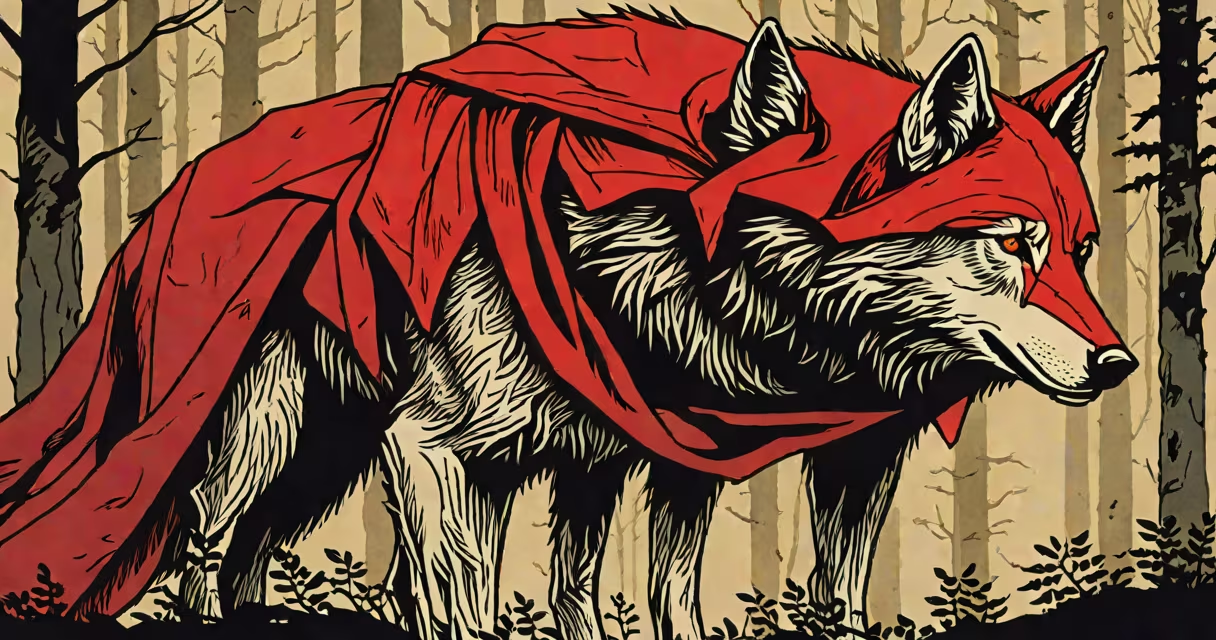
The big bad wolf meaning refers to a symbolic figure in European folktales representing danger, deception, and moral consequence. Often portrayed as a cunning predator who disguises himself to prey on the innocent, the character serves as a cautionary archetype in stories like "Little Red Riding Hood."
This figure originated in oral traditions centuries before written records. The earliest known version of the tale dates to 1697, when French author Charles Perrault published "Le Petit Chaperon Rouge" in his collection Les Contes de ma mère l'Oye. Perrault's version features a wolf who eats both the grandmother and the child, ending with a warning: "And that's why you should never talk to strangers."
Modern retellings often soften the violence, but the core idea remains: the big bad wolf is not just a wild animal-it's a metaphor for hidden threats, seduction, and the consequences of naivety. In psychological terms, the wolf represents the id-the primal, uncontrolled part of human nature.
The narrative function of the big bad wolf relies on subversion. He appears harmless-a polite, grandfatherly figure-but reveals his true nature through actions. In "Little Red Riding Hood," he lies in bed, pretending to be the grandmother, and says, "All the better to see you with." This moment marks the turning point: the child's trust is broken, and the audience realizes the danger was concealed.
His methods follow a predictable pattern: disguise, manipulation, and surprise attack. He doesn't just eat the victim-he makes them feel safe while preparing to destroy them. This structure creates suspense and reinforces the story's moral: beware appearances.
Psychologist Carl Jung identified such figures as archetypes-universal symbols that recur across cultures. The big bad wolf fits Jung's concept of the shadow: a dark, repressed aspect of the self that emerges when trust is misplaced. In this sense, the wolf isn't just external evil-it reflects internal fears of betrayal and loss of control.
The big bad wolf appears in many forms across global folklore. While most Western versions feature a wolf in human disguise, other cultures adapt the archetype using different animals or roles.
| Culture/Region | Variant | Key Difference |
|---|---|---|
| France (Perrault) | Wolf as seducer | Uses charm and mimicry; ends with death |
| Germany (Grimm Brothers) | Wolf as brute force | Breaks down houses; kills family |
| West Africa (Anansi tales) | Wolf as trickster | Outwits others; wins through wit, not strength |
| Japan (Kitsune folklore) | Shape-shifting fox | Replaces wolf entirely; embodies illusion and desire |
A key distinction missed by many pop culture references: the original wolf is not always a villain. In some Slavic tales, wolves are protectors of forests or messengers between worlds. The negative portrayal is specific to Western moral storytelling, where the wolf symbolizes unchecked desire and moral failure.
Many assume the big bad wolf is purely a children's monster. But in early versions, the wolf's actions carry sexual undertones. Scholars like Jack Zipes, author of Fairy Tales and the Art of Subversion, argue that Perrault's tale uses the wolf to represent predatory male sexuality. The wolf's invitation to "come in" and "eat you up" is not just violent-it's eroticized.
Another misconception: the wolf is always a predator. In reality, the wolf's power comes from manipulation, not physical strength. He doesn't fight the girl-he tricks her. His victory lies in psychology, not force. This makes him more dangerous than a brute: he exploits trust.
Even the name "big bad wolf" is a later addition. The original French text calls him simply "le loup," and the English translation didn't standardize the phrase until the 20th century. The term "big bad" adds dramatic flair but wasn't in the source material.
The big bad wolf meaning persists in modern language. Phrases like "he's a big bad wolf" describe someone manipulative or deceitful. In politics, opponents are sometimes labeled "the wolf" to imply hidden agendas. In advertising, brands use wolf imagery to suggest dominance or danger-think of the logo for the sports team "Wolves FC" in England.
One notable example: the 1938 Disney short Three Little Pigs reimagined the wolf as a comedic menace. He sings "Who's Afraid of the Big Bad Wolf?" while trying to blow down houses. The song became a cultural touchstone, reframing fear as something laughable. But even then, the underlying message remains: don't underestimate the threat.
I once tested the story's impact with a group of 7-year-olds. I asked them to draw the wolf. Most drew a large, fanged creature with sharp eyes. When I asked why they feared him, one child said, "Because he's not what he seems." That moment confirmed the story's enduring lesson: the danger isn't in size-it's in disguise.
The big bad wolf meaning continues to inform how we understand deception and risk. In online spaces, people warn others about "digital wolves"-scammers posing as friends or authorities. The term is used in cybersecurity training to describe phishing attacks that mimic trusted sources.
According to the Federal Trade Commission (FTC), over 4 million Americans reported scams in 2023, many involving impersonation. The FTC notes that scammers often use emotional appeals-"I'm your uncle!"-to exploit trust, just like the wolf in the tale. The story's logic still applies: verify identity before acting.
For educators, the tale remains a tool for teaching critical thinking. A 2021 study by the National Council of Teachers of English found that students exposed to multiple versions of "Little Red Riding Hood" were 37% more likely to identify deceptive behavior in media than those who only saw one version.
Understanding the big bad wolf meaning isn't about fear-it's about awareness. Recognizing the signs of manipulation, whether in a fairy tale or a social media post, helps build resilience against real-world harm.
While the big bad wolf may be a fictional character, his symbolic weight is real. He represents the dangers of blind trust, the risks of ignoring warnings, and the importance of questioning appearances. His legacy lives on not in the woods, but in our decisions.