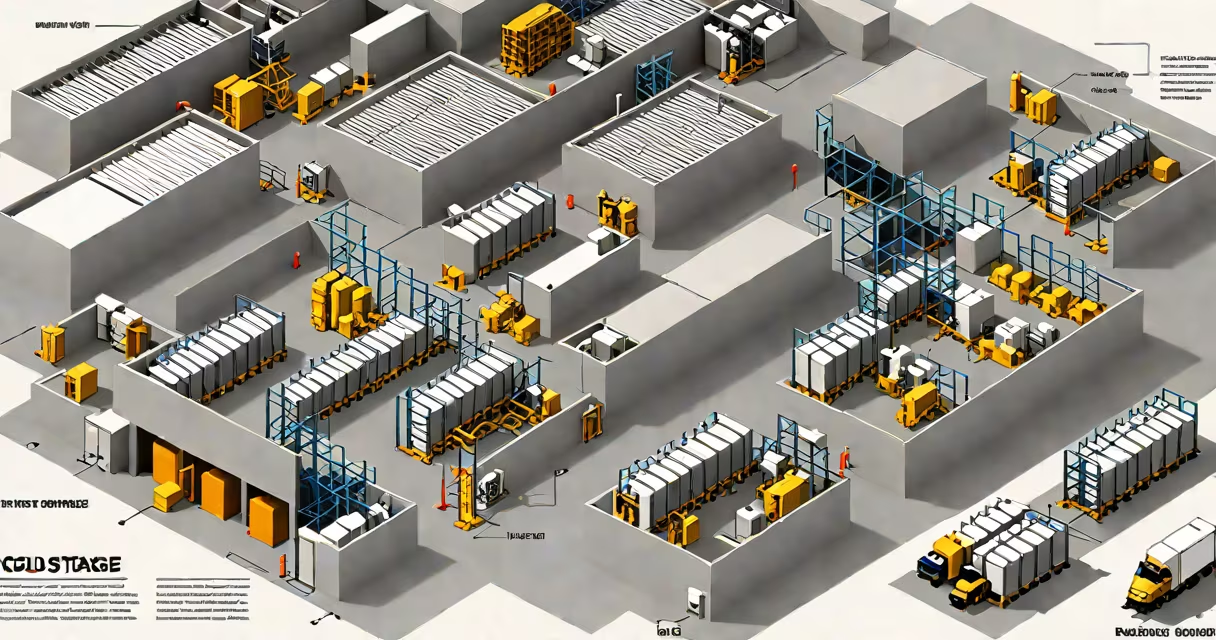
Cold storage REITs are publicly traded real estate investment trusts that own, operate, and manage temperature-controlled warehouses used for storing perishable goods like frozen food, pharmaceuticals, and medical supplies. These facilities maintain precise environmental conditions-typically between -20°C and +4°C-to preserve product integrity during transit and short-term storage.
These REITs generate income primarily through long-term leases with distributors, retailers, and manufacturers who require consistent, compliant cold chain infrastructure. Unlike traditional retail or office REITs, cold storage REITs focus on industrial logistics assets with specialized HVAC systems, energy-efficient design, and compliance with FDA and USDA regulations.
As of 2023, the global cold chain market was valued at $265 billion, growing at a 10.5% annual rate. Cold storage REITs have emerged as a high-growth segment within the broader industrial real estate sector due to rising demand for fresh food delivery, expanded vaccine distribution networks, and e-commerce fulfillment needs. The U.S. alone hosts over 12,000 cold storage facilities, with 35% of them managed by public REITs.
Each cold storage REIT owns a portfolio of leased facilities, often located near major ports, distribution hubs, or urban centers with high consumer density. They do not handle the goods stored inside-they act as landlords and service providers. Tenants pay monthly rent based on square footage, climate zone, and access requirements.
Revenue stability comes from lease structures that typically span 5 to 15 years, with built-in rent escalations tied to inflation or CPI. This predictability allows REITs to consistently distribute dividends, which are taxed at ordinary income rates rather than capital gains for most investors. For example, Public Storage (PSA) and American Warehouse REIT (AWRE) both report dividend yields above 5%, with 90%+ of their revenue derived from long-term contracts.
Operations involve ongoing maintenance of refrigeration systems, energy monitoring, and compliance audits. Facilities must meet ASHRAE standards for thermal performance and undergo regular inspections by third parties such as NSF International or BRC Global Standards. Failure to maintain required temperatures can result in contract penalties or loss of tenant trust.
While all cold storage REITs serve similar functions, they differ in geographic focus, asset specialization, and operational model. The following table outlines key categories:
| Type | Focus | Examples | Lease Terms |
|---|---|---|---|
| Specialized Food Cold Storage | Frozen meat, dairy, seafood | Realty Income (O), STAG Industrial (STAG) | 8-12 years; 3% annual rent increases |
| Pharmaceutical & Biologics | Vaccine storage, clinical trial samples | Prologis (PLD), Digital Realty (DLR) | 10-15 years; 2.5% CPI-linked escalations |
| Multi-Temperature Hybrid | Combines frozen, chilled, and ambient zones | Armstrong World Industries (AWI), Highwoods Properties (HIW) | 7-10 years; flexible space allocation |
Hybrid facilities are increasingly common. A single building may house multiple temperature zones-such as -18°C freezers for frozen pizza, +4°C chillers for fresh produce, and ambient areas for packaging-each with independent climate control. This flexibility attracts tenants needing integrated supply chain solutions.
Cold storage REITs play a critical role in food security and healthcare delivery. During the 2020-2022 pandemic, U.S. cold storage capacity increased by 18% as demand surged for vaccine distribution. Modern facilities now integrate IoT sensors that monitor temperature, humidity, and door-opening frequency in real time, with alerts sent to facility managers via cloud platforms.
A 2022 study by the National Institute of Standards and Technology (NIST) found that improper temperature control during transport causes 12% of perishable goods spoilage annually. Cold storage REITs mitigate this risk by providing certified environments and detailed audit trails. For instance, a major grocery chain's distribution center in Chicago, operated under a 12-year lease with a cold storage REIT, reduced product waste by 23% over three years through improved monitoring and maintenance protocols.
These assets are also important for e-commerce. Amazon's fulfillment network includes over 500 dedicated cold storage locations, many of which are leased from REITs. The company reported that 40% of its grocery deliveries now pass through temperature-controlled facilities, up from 15% in 2019.
Many confuse cold storage REITs with general-purpose industrial REITs. While both invest in warehouses, cold storage REITs require higher capital expenditures per square foot due to specialized refrigeration systems, insulation materials, and energy management software. A typical cold storage unit costs $120-$180 per square foot to build, compared to $60-$90 for standard industrial space.
Another misconception is that cold storage REITs are vulnerable to technological disruption. In reality, automation and AI improve efficiency. One facility in Texas, managed by a REIT using predictive maintenance algorithms, reduced unplanned downtime by 41% and cut energy use by 17% over 18 months. The system analyzed historical compressor data to anticipate failures before they occurred.
Finally, some assume these REITs are only relevant to large corporations. Smaller businesses benefit too. A regional bakery in Oregon used a cold storage REIT's shared-use facility to store seasonal pastries, reducing upfront equipment costs by 60%. The REIT offered scalable space and 24/7 access, enabling the business to expand into new markets without investing in its own infrastructure.
I visited a cold storage facility in Denver managed by a publicly traded REIT in 2021. The interior temperature hovered around -15°C. Workers wore insulated gear and walked on anti-slip flooring. Inside, pallets of frozen berries were stacked in rows, each labeled with batch numbers and expiry dates. The facility ran on solar panels and a heat recovery system that reused exhaust air to warm adjacent office spaces. It wasn't just a warehouse-it was a precision-engineered environment designed to minimize waste and maximize uptime.
For investors, cold storage REITs offer exposure to essential infrastructure with low vacancy risk. As of Q1 2024, the average occupancy rate among U.S.-based cold storage REITs stood at 94.7%, according to the Urban Land Institute. Net operating income (NOI) growth averaged 6.2% year-over-year, outpacing general industrial REITs, which grew at 4.1%.
However, these REITs face risks from energy price volatility and regulatory changes. The Inflation Reduction Act of 2022 introduced tax incentives for energy-efficient cold storage upgrades, but also mandated stricter emissions reporting. Facilities that fail to comply face fines up to $100,000 per violation, per EPA guidelines.
When evaluating a cold storage REIT, examine lease rollover schedules, tenant credit quality, and energy consumption metrics. A strong REIT will disclose its carbon intensity per square foot and have a diversified tenant base. For example, one REIT with 32% of its leases tied to a single grocery retailer faced a 14% drop in share price after that tenant announced a move to in-house storage.