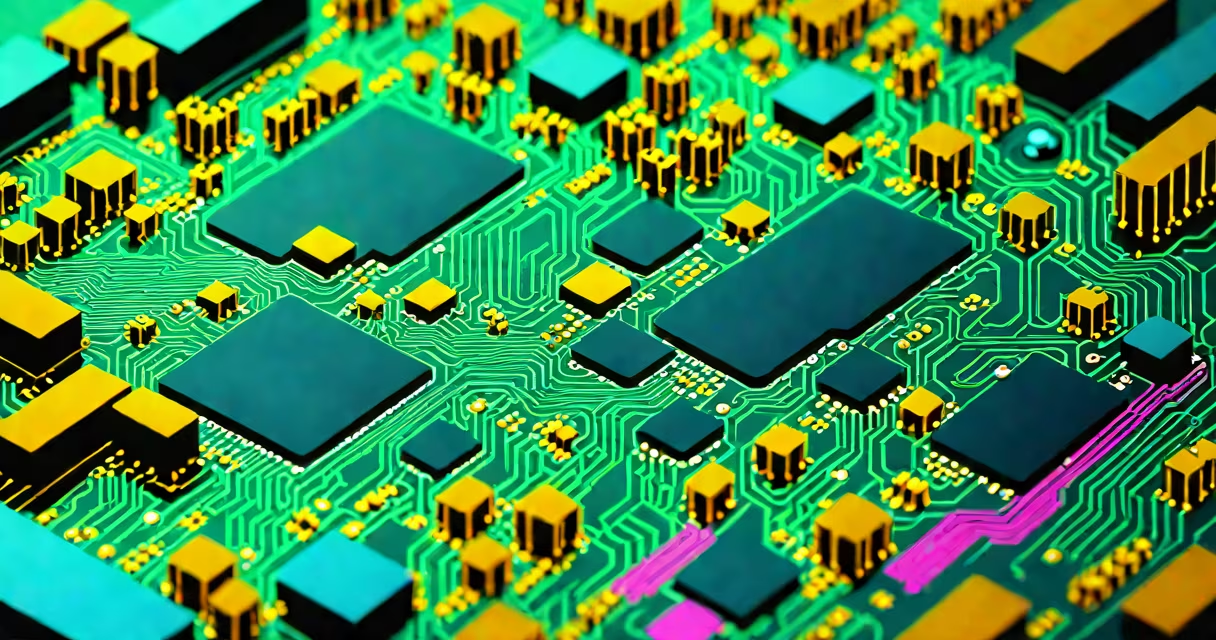
Computer technology meaning refers to the systems, components, and processes that allow electronic devices to store, process, and transmit data. It encompasses both physical hardware and digital software working together to perform tasks ranging from basic calculations to complex artificial intelligence operations.
The foundation of computer technology lies in binary logic-data represented as sequences of 0s and 1s. This binary system enables digital circuits to make decisions based on electrical signals. Modern computers execute billions of these operations per second, enabling real-time processing across networks, machines, and human interfaces.
At its core, computer technology meaning includes the design, development, and application of computing systems. These systems integrate processors, memory, input/output devices, and software to deliver functionality across industries-from healthcare diagnostics to autonomous vehicles.
Every computer system operates through a cycle: input, processing, storage, and output. When you type a command into a keyboard (input), the central processing unit (CPU) interprets the instruction, accesses data from random access memory (RAM), performs calculations, stores results in long-term storage like a solid-state drive (SSD), and displays them on a screen (output).
For example, when you search "weather in Seattle" on your phone, the device sends your request to a server via the internet. The server processes the query using algorithms, retrieves current weather data from a database, formats it into a readable response, and sends it back to your device-all within under two seconds.
This entire process relies on layers of abstraction. At the lowest level, transistors switch between on and off states. At higher levels, programming languages translate human-readable commands into machine code. Without these abstractions, building complex software would require manual manipulation of millions of binary instructions.
Computer technology consists of several interdependent parts. The primary categories include hardware, software, networking, and data management.
| Type | Examples | Function |
|---|---|---|
| Hardware | CPU, GPU, RAM, SSD, motherboard | Physical components that execute instructions and manage data flow |
| Software | Operating systems, web browsers, mobile apps | Programs that instruct hardware how to behave |
| Networking | Wi-Fi, Ethernet, fiber optics, cloud servers | Enables communication between devices across distances |
| Data Systems | Databases, data warehouses, APIs | Store, organize, and retrieve structured information |
Each component plays a role in delivering performance. For instance, a graphics processing unit (GPU) accelerates rendering in video games and machine learning models by handling thousands of calculations simultaneously. A single high-end GPU can process over 10 trillion operations per second, making it essential for real-time simulations and AI training.
Emerging forms of computer technology include quantum computing and neuromorphic chips. Quantum computers use qubits instead of classical bits, allowing them to explore multiple solutions at once. While still experimental, they promise breakthroughs in cryptography and molecular modeling. Neuromorphic chips mimic brain architecture, improving energy efficiency in edge devices like smart sensors.
Many people confuse computer technology meaning with simply owning a laptop or smartphone. But the term applies equally to embedded systems in refrigerators, traffic lights, and medical implants. A pacemaker running firmware to regulate heartbeats is a form of computer technology-even if it lacks a screen or keyboard.
Another frequent error is equating computer technology with software alone. While programs define behavior, hardware constraints determine what's feasible. For example, a video editing app may run slowly on a device with insufficient RAM or an outdated CPU. Performance isn't just about code-it's about the synergy between software and hardware.
A lesser-known fact: most consumer devices use specialized processors designed for specific functions. Your phone's camera uses a dedicated image signal processor (ISP) to sharpen photos instantly. This specialization improves speed and battery life compared to relying solely on the main CPU.
Computer technology drives innovation across sectors. In healthcare, MRI machines use advanced imaging algorithms to reconstruct 3D views of internal organs. These systems analyze pixel data in real time, helping radiologists detect tumors earlier than traditional methods.
In manufacturing, industrial robots controlled by computer systems assemble cars with precision. A single robotic arm can complete 100 welds per minute, reducing defects and increasing throughput. These systems rely on sensor feedback loops and motion planning software to adapt to slight variations in part placement.
Even agriculture uses computer technology. Autonomous tractors equipped with GPS and machine vision systems plant seeds at optimal spacing and depth. Data collected during planting informs later irrigation and fertilizer decisions, boosting crop yields by up to 15% according to a 2022 study by the USDA.
One personal experience: I once built a home automation system using Raspberry Pi units and custom Python scripts. The setup monitored room temperature, adjusted a thermostat automatically, and sent alerts via email when anomalies occurred. It ran continuously for over 18 months without crashes-proof that even modest computer technology can deliver reliable, scalable outcomes.
Computer technology meaning differs from related fields such as computer engineering and coding. Computer engineering focuses on designing integrated circuits and embedded systems. Coding refers specifically to writing instructions in programming languages like Python or JavaScript.
For example, writing a function to sort a list of names is coding. Designing a microcontroller to control a drone's flight stability involves computer engineering. Both contribute to computer technology, but they address different stages of development.
Understanding computer technology meaning requires recognizing its breadth. It's not limited to desktops or servers. It extends into wearable health monitors, satellite navigation, and even space rovers like NASA's Perseverance, which uses onboard computers to go through Martian terrain autonomously.
Computer technology meaning describes the infrastructure behind digital progress. It's the invisible force enabling global communication, scientific discovery, and economic growth. From the smartphone in your pocket to the AI model analyzing climate patterns, it's the engine of modern existence.