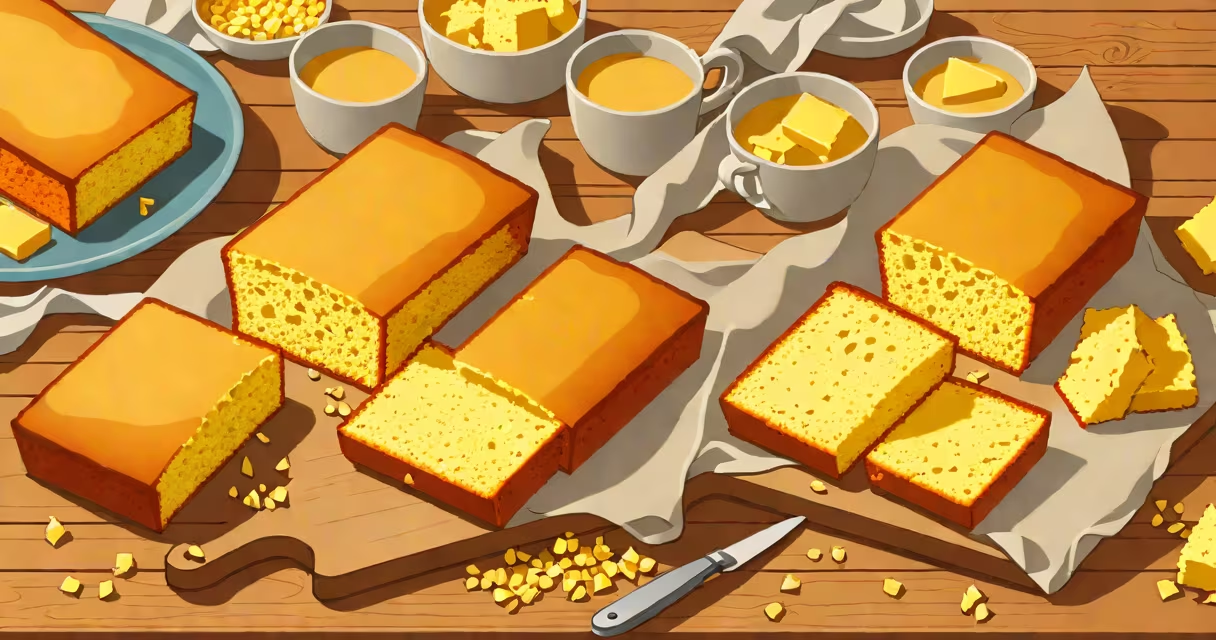
cornbread from scratch is a dense, slightly sweet baked bread made primarily from cornmeal, flour, eggs, milk, and baking powder. It's traditionally cooked in a cast iron skillet and serves as a staple in Southern U.S. cuisine. The result is a crumbly, golden crust with a tender interior, often eaten warm with butter or paired with savory dishes.
At its core, cornbread from scratch relies on a few key ingredients: yellow cornmeal for texture and flavor, all-purpose flour to balance density, leavening agents like baking powder to create lift, and dairy such as milk or buttermilk for moisture. Eggs bind the mixture, while sugar adds subtle sweetness. The batter is poured into a preheated skillet or pan and baked until the surface is golden and a toothpick inserted near the center comes out clean.
Traditional Southern recipes often omit sugar entirely, favoring a more savory profile. Modern versions, especially those influenced by American home kitchens, include 1-2 tablespoons of sugar for a balanced taste. The difference between a sweet and savory version hinges on ingredient choice, not method. A well-made batch should have a crisp exterior and soft, moist crumb-not dry or cake-like.
The structure of cornbread from scratch forms through a combination of starch gelatinization and protein coagulation during baking. Cornmeal contains less gluten than wheat flour, which limits elasticity and results in a denser texture. When heated, the starch granules absorb liquid and swell, forming a matrix that holds the bread together. Simultaneously, egg proteins denature and re-form networks, contributing to firmness.
Baking powder provides carbon dioxide gas bubbles during heating, creating small air pockets. This leavening effect is modest compared to cakes or biscuits, resulting in a compact crumb rather than a light rise. The preheated skillet plays a important role: it creates a rapid initial sear, setting the crust early and preventing excessive spreading. This technique also enhances browning via the Maillard reaction, developing complex flavors.
A common mistake is overmixing the batter. Stirring too vigorously introduces excess air and can lead to a tough, rubbery texture. Mix just until ingredients are combined-typically 20-30 seconds with a spoon or whisk. Overmixing activates gluten in the flour, which increases chewiness and reduces tenderness.
While most cornbread from scratch follows a basic formula, regional and personal variations exist. The most notable differences lie in sweetness level, fat source, and cooking vessel.
| Type | Sweetness Level | Fat Source | Typical Pan | Region/Use |
|---|---|---|---|---|
| Classic Southern | Low to none | Butter or lard | Cast iron skillet | Deep South, served with stew or chili |
| Midwest Sweet | Moderate (1-2 tbsp sugar) | Butter or oil | Loaf pan or square baking dish | Home kitchens, often with honey or maple syrup |
| Buttermilk Style | Low | Butter | Skillet or muffin tin | Used in breakfast or brunch settings |
| Vegetarian/Plant-Based | Adjustable | Oil or vegan butter | Any oven-safe dish | Modern adaptations using flax eggs and almond milk |
One lesser-known variation uses sourdough starter as a leavening agent. Though not traditional, this method produces a tangier flavor and improved digestibility due to fermentation. The starter replaces part of the buttermilk or milk, adding complexity without altering the base structure.
Many people confuse cornbread from scratch with corn muffins. While both use cornmeal and similar ingredients, corn muffins are typically smaller, individual-sized, and higher in sugar and leavening. They're baked in a muffin tin and often contain additional sweeteners like brown sugar or vanilla extract. Cornbread from scratch is larger, meant to be sliced, and usually served as a side dish.
Another frequent error is using instant cornmeal instead of stone-ground. Instant cornmeal is precooked and finely ground, leading to a gummy or pasty texture when baked. Stone-ground cornmeal retains more fiber and texture, producing a more authentic mouthfeel. For best results, use medium-grind stone-ground yellow cornmeal, available at grocery stores or specialty mills.
A third misconception is that cornbread must be served hot. While warmth enhances flavor and butter absorption, properly stored cornbread lasts up to five days in the fridge or three months in the freezer. Reheat slices in a toaster or oven at 350°F for 5 minutes to restore crispness.
I made cornbread from scratch last Saturday using a 10-inch cast iron skillet. Ingredients: 1 cup stone-ground yellow cornmeal, 1/2 cup all-purpose flour, 2 large eggs, 1 cup buttermilk, 1 tablespoon baking powder, 1/4 teaspoon salt, 1 tablespoon sugar, and 1/4 cup melted butter. I preheated the skillet in a 425°F oven for 10 minutes, then poured in the batter.
After 25 minutes, the edges pulled away from the pan, and the center felt springy under pressure. I removed it, let it cool 5 minutes, then cut it into squares. The crust was golden and crisp; the inside was moist with visible specks of cornmeal. Served with a pat of butter and a bowl of beef chili, it held up well without falling apart.
This test confirmed that preheating the skillet is essential. Without it, the cornbread spread too thin and developed a soggy bottom. The correct temperature (425°F) ensured even browning and proper set. Using buttermilk instead of regular milk added a slight tang and improved texture.
Cornbread from scratch is more than a side dish-it's a cultural artifact. According to the Southern Foodways Alliance, cornbread has roots in Native American cooking traditions, where corn was ground and baked in flat, round shapes. Early European settlers adopted the method, adapting it with wheat flour and animal fats. Today, it remains a symbol of comfort and heritage.
Research from the USDA notes that cornmeal contributes significant dietary fiber and B vitamins. A single slice (about 1/8 of a standard loaf) contains roughly 120 calories, 4 grams of protein, and 2 grams of fiber. These values increase when whole grain cornmeal is used.
Understanding cornbread from scratch begins with mastering the balance between texture and flavor. It's not a cake, not a muffin, and not a substitute for toast. It's a distinct baked good with a clear identity, rooted in history and shaped by simple ingredients.