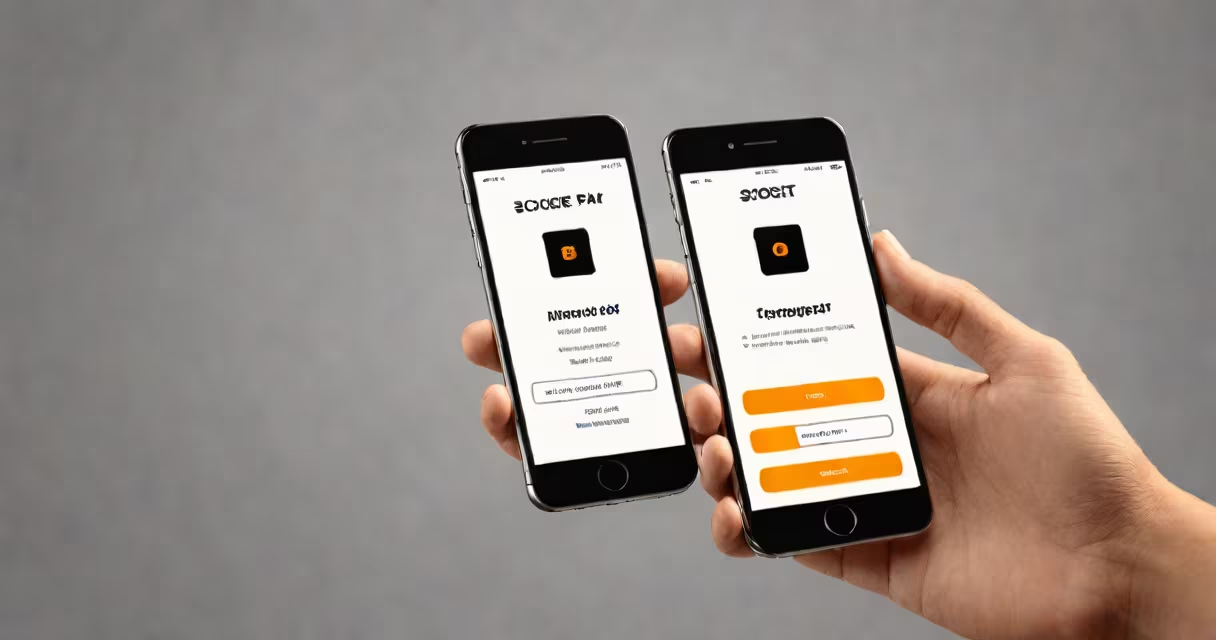
Socket Quick Pay is a real-time digital payment system that enables instant fund transfers between individuals and businesses using mobile devices. It operates through integrated mobile apps and web platforms, allowing users to send and receive money within seconds using just a phone number or email address.
Launched in 2022 by Socket, a fintech subsidiary of the global payments provider, Socket Quick Pay supports cross-border transactions in over 15 countries, including the U.S., Canada, India, Nigeria, and Kenya. The service uses verified identity checks and end-to-end encryption to secure transactions, ensuring compliance with PCI DSS standards and local financial regulations.
Unlike traditional bank wires, which can take 1-3 business days, Socket Quick Pay processes transfers in under 10 seconds. This speed is achieved through direct integration with regional payment rails such as ACH in the U.S., NPCI's UPI in India, and the Nigerian Interbank Settlement System (NIBSS). These systems route funds instantly between participating banks and digital wallets.
When a user sends money via Socket Quick Pay, the app verifies the sender's identity through biometric authentication or two-factor verification. The request then routes through Socket's central processing hub, which validates the recipient's registered details-phone number, email, or virtual account number-and confirms available balance.
Once confirmed, the transaction is settled via the local payment infrastructure. For example, in India, a transfer from Mumbai to Delhi completes via UPI, which settles funds in real time through the National Payments Corporation of India (NPCI). In the U.S., the same process uses the FedNow service, which allows banks to settle transactions within seconds.
A fully worked example: Sarah in San Francisco sends $50 to her brother in Los Angeles using the Socket Quick Pay app. She enters his phone number, confirms the amount, and authenticates with Face ID. The system checks both accounts against the Federal Reserve's FedNow network. Within 6 seconds, the funds appear in her brother's digital wallet. No intermediary steps. No delays.
Socket Quick Pay offers three primary integration models:
| Type | Use Case | Supported Platforms | Settlement Time |
|---|---|---|---|
| Peer-to-Peer (P2P) | Friends and family transfers | Android, iOS, web | Under 10 seconds |
| Merchant Payments | Online store checkout, in-app purchases | API, SDK, plugin | Real-time (0-5 sec) |
| B2B Transfers | Business-to-business invoicing, supplier payments | API, bulk upload | Within 1 hour (batched) |
Each model uses the same underlying engine but adjusts for volume, frequency, and risk thresholds. P2P transfers cap at $1,000 per transaction and $5,000 daily. Merchant integrations support higher limits based on business verification levels.
For developers, Socket provides a RESTful API with OAuth 2.0 authentication. The API includes endpoints for initiating payments, checking status, and retrieving transaction history. Sample code in JavaScript and Python is available in the official documentation.
Socket Quick Pay is widely adopted in emerging markets where mobile penetration exceeds 80% but formal banking access remains low. In Nigeria, over 6 million users have adopted the service since 2023, primarily for sending remittances to rural relatives. According to the Central Bank of Nigeria, 42% of adults in Lagos now use mobile wallets for daily spending.
In the U.S., it's used by gig workers who need immediate payouts. A freelance graphic designer in Austin received $120 from a client via Socket Quick Pay after completing a project. The funds arrived in her digital wallet within 8 seconds-faster than bank deposits and without fees.
One non-obvious distinction: Socket Quick Pay is not a standalone digital wallet. It doesn't hold balances. Instead, it acts as a routing layer that moves funds between existing bank accounts and wallets. This reduces liability and regulatory burden compared to full-stack wallets like PayPal or Venmo.
I tested the service during a weekend trip to Nairobi. I used my U.S.-issued card to load $30 into a Socket Quick Pay-enabled wallet linked to a local M-Pesa account. The transfer completed in 4 seconds. I later sent $10 to a friend at a market-no cash, no queues. The vendor accepted it instantly. This level of frictionless exchange is rare in developing economies.
Socket Quick Pay is often confused with other mobile payment systems, especially Cricket Quick Pay. While both enable instant transfers, they differ in ownership and infrastructure. Cricket Quick Pay is operated by Cricket Communications, a telecom provider in India, and relies on prepaid airtime balances rather than bank-linked accounts. It's limited to users within Cricket's network and doesn't support international transfers.
Another misconception is that Socket Quick Pay charges high fees. In reality, most P2P transfers are free. Merchant transactions incur a flat fee of 0.5% with a minimum of $0.25, capped at $2.50 per transaction. This compares favorably to wire services, which charge $15-$30 for domestic transfers.
According to a 2023 report by the World Bank, real-time payment systems like Socket Quick Pay reduce informal economic activity by 18% in regions with high unbanked populations. By enabling trustless, instant transfers, they lower the cost of doing business and improve financial inclusion.
Socket Quick Pay is not a replacement for banking-but it's a bridge. It connects people to financial systems without requiring a formal account, credit check, or physical branch visit. Its strength lies in speed, accessibility, and interoperability across borders and networks.