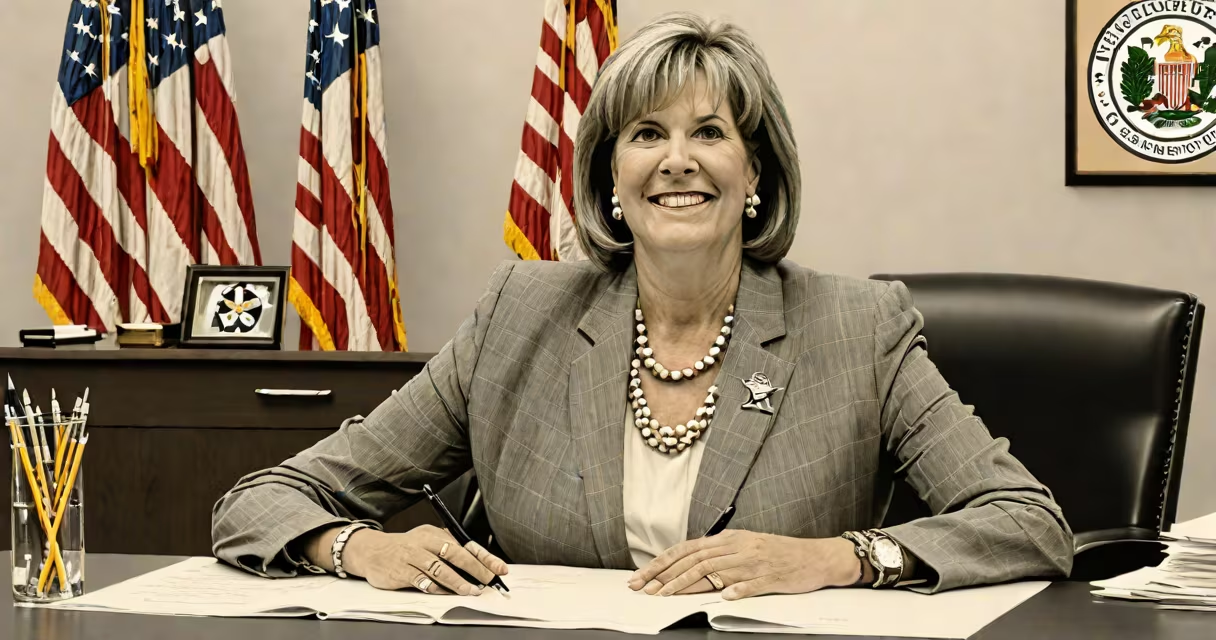
Dawn Peters is a member of the Pinellas County School Board in Florida, serving as an elected official responsible for setting district-wide educational policy, approving budgets, and overseeing the performance of the superintendent. She was sworn in during the 2022 election cycle and represents District 6, which includes parts of Clearwater and Largo.
The Pinellas County School Board governs one of Florida's largest public school districts, serving over 170,000 students across 230 schools. As a board member, Peters participates in decisions about curriculum standards, teacher evaluations, facility maintenance, and long-term strategic planning. Her role requires balancing community input with state mandates under Florida's K-12 education structure.
Peters brings a background in healthcare administration and nonprofit leadership to the board. Before her election, she served on several local advisory councils focused on youth development and mental health services in schools. Her appointment reflects a growing trend among Florida school boards: electing members with operational experience rather than solely academic or teaching credentials.
The Pinellas County School Board operates under Florida Statute §1001.42, which defines its authority to adopt policies, approve budgets, and hire the district's superintendent. The board meets monthly in St. Petersburg, with public comment periods and live-streamed sessions available online. All meetings are recorded and archived for transparency.
Each board member serves a four-year term, with elections held in even-numbered years. Members are elected by district, meaning voters in District 6 choose Peters to represent their interests. The board is composed of seven members, each representing a geographic zone within Pinellas County. Decisions require a majority vote, and board actions are subject to review by the Florida Department of Education.
A key responsibility is adopting the annual budget. For fiscal year 2023-2024, the district allocated $1.8 billion toward instruction, operations, and capital improvements. Peters supported increased funding for special education programs and mental health counselors in high-need schools, citing data from the National Center for Education Statistics showing rising anxiety rates among adolescents.
While all school boards share core duties, responsibilities vary by district size and state law. The Pinellas County School Board follows Florida's model, which emphasizes accountability and local control. Below is a comparison of key functions across different U.S. school board models:
| Function | Pinellas County (FL) | Typical Urban District (CA) | Rural District (TX) |
|---|---|---|---|
| Budget Approval Authority | Full authority, subject to state audit | Partial, with state oversight | High autonomy, limited reporting |
| Superintendent Appointment | Direct election by board | Board vote, often with public input | Board decision, rarely contested |
| Curriculum Oversight | State-mandated subjects only | Local flexibility in electives | Minimal state interference |
Florida law restricts school boards from adopting curricula that conflict with state standards. This limits local innovation in areas like social studies and civics. For example, in 2023, the Pinellas board faced pressure to remove a unit on climate change from middle school science classes due to state legislation banning "divisive concepts" in classrooms. Peters voted against removing the material, arguing that scientific consensus supports inclusion.
Many assume school board members are unpaid volunteers. In Pinellas County, members receive a $15,000 annual stipend plus reimbursement for travel and meals. They are not required to be educators-Peters holds a bachelor's degree in business administration, not education. This reflects a national shift: according to the National School Boards Association, 42% of school board members in 2023 had professional experience in finance, law, or healthcare.
Another misconception is that board members make daily instructional decisions. They do not. Teachers develop lesson plans, principals manage school operations, and superintendents implement policy. The board sets broad goals-such as improving graduation rates or reducing achievement gaps-but does not micromanage classrooms.
A non-obvious distinction: school board members cannot fire teachers. That power lies with the superintendent, who acts under contract and state regulations. In 2022, a Pinellas teacher challenged a termination in court, claiming bias. The board did not intervene, citing separation of powers. The case was dismissed, reinforcing the principle that board roles are policy-focused, not administrative.
In March 2023, Dawn Peters introduced a motion to redirect $2.3 million from transportation spending to fund 15 new mental health counselors across Pinellas County middle schools. The proposal cited a 2022 study by the University of South Florida showing that 38% of students in grades 6-8 reported symptoms of depression, up from 29% in 2019.
She presented data from the Florida Department of Health indicating that counties with dedicated school-based mental health staff saw a 17% reduction in disciplinary incidents. The motion passed unanimously. By fall 2023, 12 of the 15 counselors were hired, with contracts funded through federal Title IV-A grants.
This action illustrates how individual board members influence student well-being through strategic resource allocation. It also shows that board decisions are grounded in evidence-not ideology. Peters later testified before the Florida House Education Committee, advocating for statewide expansion of school mental health funding.
I attended a Pinellas County School Board meeting in May 2023 where Dawn Peters led a discussion on equity in school resource distribution. She pointed to a chart showing disparities between affluent and low-income schools in access to advanced placement courses. When a parent asked why some schools still lacked AP offerings, Peters responded: "We're not waiting for perfect data. We're acting on what we know is broken."
Her tone was firm but collaborative. She referenced a 2021 report from the Florida State University Center for Education Policy that found a 22-point gap in AP participation between schools in the top and bottom quartiles of socioeconomic status. She didn't offer solutions-she asked the audience to propose them. That moment revealed her approach: data-driven, inclusive, and action-oriented.
Understanding dawn peters pinellas county school board is essential for residents concerned about education quality, school safety, and long-term student success. School boards are the closest level of government to families, yet they remain under-recognized. A 2022 Pew Research Center survey found that only 38% of Americans could name their local school board members.
When citizens engage-by attending meetings, submitting comments, or running for office-they shape decisions that affect children's futures. Dawn Peters' work demonstrates that local governance is not abstract. It translates into hiring counselors, approving textbooks, and setting priorities that define a child's learning environment.
Dawn Peters remains active on the Pinellas County School Board, focusing on equity, mental health integration, and sustainable funding. Her presence underscores that effective public education relies not just on teachers and students, but on informed, engaged leaders making hard choices based on data and community needs.