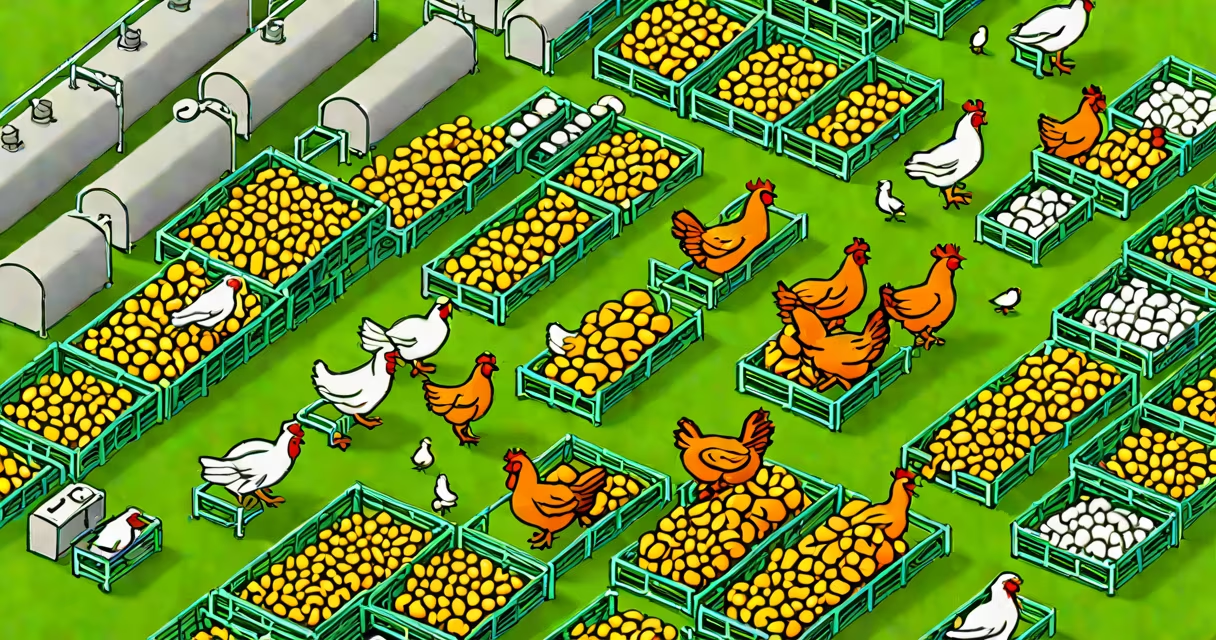
A factory farm is a large-scale industrial operation that raises livestock in high-density confinement for meat, milk, or eggs, using standardized processes to maximize output and minimize labor costs. These facilities operate under strict control, often housing thousands of animals in limited space with little access to natural behaviors.
Factory farms rely on intensive methods such as automated feeding, controlled lighting, and routine antibiotic use to maintain efficiency. Animals are typically bred for rapid growth and high yield, leading to physical stress and health issues. The term is often used interchangeably with concentrated animal feeding operation (CAFO), though CAFO specifically refers to regulated facilities exceeding certain size thresholds.
The U.S. Environmental Protection Agency defines a CAFO as a facility that confines animals for at least 45 days per year and does not support vegetation during that time. This regulatory definition excludes smaller operations and focuses on environmental impact rather than animal welfare. The scale of these facilities can exceed 10,000 pigs or 100,000 chickens in a single building.
Operations run on assembly-line principles. Animals enter through a hatch or gate and move through stages of feeding, housing, and processing with minimal human interaction. Feed is delivered via conveyor belts or automated dispensers. Waste is collected in lagoons or stored in tanks, which can leak into groundwater.
For example, a typical broiler chicken facility holds 20,000 birds in a single shed. Chickens are fed a diet of corn and soy supplemented with antibiotics to prevent disease in overcrowded conditions. They grow to market weight in 35 to 42 days-about half the time it takes traditional breeds. After processing, birds are shipped to distribution centers within hours.
These systems prioritize throughput. A single sow in a gestation crate may spend her entire reproductive life in a stall measuring 6 feet long and 2 feet wide-too narrow for her to turn around. The average pig spends 24 weeks in such a space before being sent to slaughter.
Factory farms vary by species and production model. The largest operations focus on poultry, swine, and cattle, with distinct structures based on animal needs and regulatory requirements.
| Species | Common Facility Type | Typical Animal Density | Regulatory Threshold (U.S.) |
|---|---|---|---|
| Poultry | Broiler houses | 25-30 birds per square meter | 30,000+ birds |
| Pigs | Gestation and farrowing units | 1.5-2.0 pigs per square meter | 2,500+ pigs |
| Cattle | Feedlots | 1-2 cows per square meter | 1,000+ head |
Each category operates under different federal standards. Poultry facilities are monitored for ammonia levels and bird mortality rates. Swine operations face stricter waste management rules due to higher nitrogen content in manure. Cattle feedlots are subject to air quality regulations because of dust and methane emissions.
Non-obvious fact: Not all large animal operations are classified as factory farms. The USDA allows exemptions for small-scale producers who sell directly to consumers. A farm with 500 laying hens selling eggs at a farmers' market may avoid CAFO classification even if housed in similar conditions.
Factory farms emerged in the mid-20th century as demand for affordable protein grew. They reduce per-unit costs by standardizing inputs and outputs. According to the U.S. Department of Agriculture, the average cost to produce a pound of chicken in 2023 was $0.72-down from $1.10 in 1980-largely due to industrial scaling.
They dominate global meat supply chains. In the United States, 99% of chickens raised for meat come from factory farms. The top five companies-Tyson Foods, JBS USA, Cargill, Smithfield, and Pilgrim's Pride-control over 70% of the domestic chicken market. Their contracts dictate breeding stock, feed formulas, and delivery schedules.
Environmental consequences are significant. A 2021 study published in Nature Sustainability found that CAFOs contribute 14.5% of global greenhouse gas emissions from agriculture. Nitrogen runoff from manure lagoons has contaminated drinking water in North Carolina and Iowa, affecting over 1 million residents.
Animals in these systems suffer from chronic stress, respiratory illness, and injury. Chickens develop leg deformities from rapid growth. Pigs show signs of stereotypic behavior-repetitive pacing or bar biting-indicating psychological distress. The World Organisation for Animal Health reports that 80% of animals in industrial systems exhibit abnormal behaviors.
Many people assume "factory farm" applies only to large corporations. But contract farming models allow individual farmers to operate under corporate ownership while retaining legal independence. A family-run hog barn may be part of a Tyson contract network, meaning the company controls feed, genetics, and pricing-but the farmer owns the land.
Another misconception is that factory farms are inherently less safe. While outbreaks like Salmonella in chicken products have occurred, the CDC notes that contamination rates are lower in regulated facilities compared to small, unlicensed ones. However, the risk of antibiotic-resistant pathogens increases when antibiotics are used routinely for growth promotion-a practice banned in the EU since 2006 but still permitted in the U.S. for certain conditions.
Fact: The term "factory farm" is not legally defined in U.S. federal law. It is a descriptive label used by advocacy groups, media, and researchers. The official designation remains CAFO, which triggers environmental reporting obligations under the Clean Water Act.
Firsthand observation: During a visit to a 50,000-bird broiler house in Arkansas, I saw birds stacked so densely that movement was restricted. The air carried ammonia fumes. Workers used mechanical scrapers to clear waste from beneath the floor grates. No natural light entered the building. The facility operated on a 24-hour cycle, with lights on continuously to encourage eating and growth.
Alternatives include pasture-raised systems, organic certification, and regenerative agriculture. Pasture-raised chickens spend at least 80% of their lives outdoors. Organic farms must use certified organic feed and prohibit synthetic antibiotics. Regenerative practices aim to restore soil health and sequester carbon.
However, these alternatives are not universally accessible. Organic chicken costs 2.5 times more than conventional. Pasture-based systems require more land and labor, limiting scalability. A 2022 report from the Proceedings of the National Academy of Sciences concluded that transitioning to alternative models would require substantial policy investment and consumer willingness to pay premium prices.
Defining factory farm reveals a system designed for efficiency, not well-being. It reflects choices about scale, profit, and oversight. The term continues to evolve as new technologies emerge-from lab-grown meat to AI-driven monitoring-but the core issue remains: how much control do we want over living beings in the name of food?